Overview
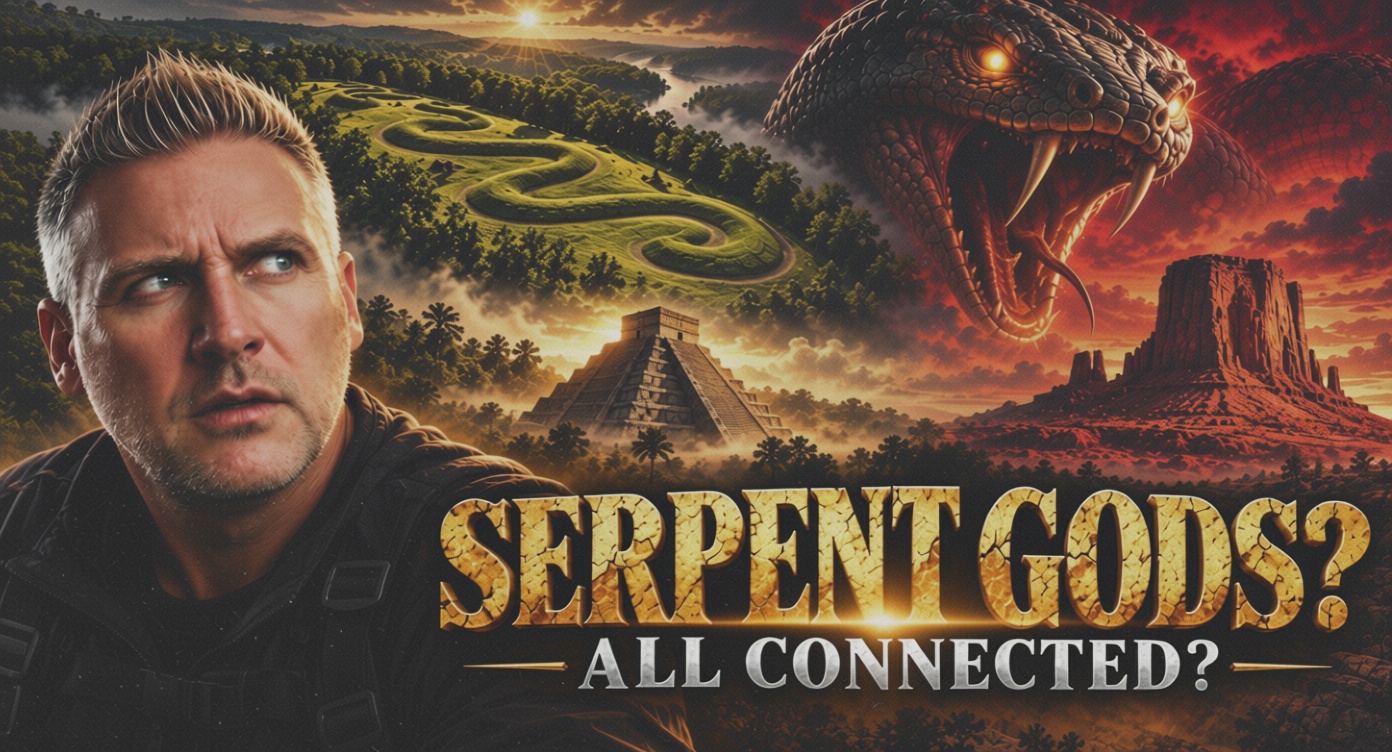
A video from The Ancient Enigma Files raises a longstanding question in comparative mythology: why do serpent deities and snake symbolism appear in ancient cultures across the world? The channel is known for exploring UFOs, UAPs, cryptids, paranormal accounts and other unexplained phenomena. However, the material provided includes only a description of the video’s subject—not a transcript or source link—so specific arguments, images and quotations from the program cannot be independently assessed.
Serpents occupy a distinctive place in human religious history. They can move silently, live close to the ground and appear to shed their skin, creating associations with secrecy, transformation and renewal. Their venom also gives them a dual character: snakes may represent both death and healing. In many societies, these qualities helped make the serpent a powerful symbol of fertility, protection, wisdom, danger and rebirth.
Examples Across Ancient Cultures
Serpent figures are documented in a wide range of traditions, although their roles differ significantly. In ancient Egypt, the cobra goddess Wadjet was associated with royal authority and protection, while the serpent Apep represented chaos and opposition to the sun god Ra. In Mesopotamia, the deity Ningishzida was connected with vegetation, the underworld and healing, and was often depicted with serpentine imagery.
Greek mythology likewise included numerous important snake figures. The healing god Asclepius was represented by a staff with a single serpent, a symbol that remains associated with medicine today. Other Greek traditions portrayed snakes as threatening or monstrous, including the Gorgon Medusa. In South Asia, naga beings were linked to water, fertility, guardianship and subterranean realms. Mesoamerican cultures honored feathered-serpent figures such as Quetzalcoatl, while Indigenous Australian traditions include Rainbow Serpent stories connected to creation, landscapes and water.
Scholarly Context
Researchers generally caution against assuming that similar symbols must have originated from a single global source. Parallel development is a more established explanation: human communities in different regions encountered the same animal and independently attached meaning to its striking behavior and physical characteristics. Snakes were familiar but difficult to understand, making them especially suitable for stories about hidden knowledge, seasonal change and the boundary between life and death.
Geography and environment also mattered. In agricultural societies, snakes could be associated with rainfall, rivers, soil and crop fertility. Their presence near settlements could make them symbols of protection—or immediate threats. Religious traditions often preserved both interpretations, presenting serpents as guardians in one context and embodiments of disorder in another.
Claims and Limitations
The subject is sometimes used to support theories that ancient serpent deities reflected contact with advanced beings, extraterrestrial visitors or a shared prehistoric civilization. Such ideas may be part of the broader paranormal framework promoted by The Ancient Enigma Files, but the summary supplied here provides no evidence that would establish those conclusions. Similar artistic motifs alone cannot demonstrate contact between distant cultures, particularly when independent historical development, trade and cultural exchange offer alternative explanations.
Final Takeaway
The worldwide appearance of serpent deities is a genuine and important feature of religious history, but it is not, by itself, proof of a single lost civilization or nonhuman influence. The strongest evidence supports a combination of shared human responses to the natural world, local environmental conditions and occasional cultural exchange. A full evaluation of the video’s claims would require its transcript or original link, especially to determine whether it distinguishes documented history from speculation.