Overview
Across the world, ancient monuments and historic infrastructure continue to attract scholarly attention because their construction, design or original purpose is not fully documented. A recent article published by Sir Storia on Sept. 24, 2026, highlights seven structures described as “baffling,” while acknowledging that uncertainty does not establish paranormal or extraterrestrial explanations. In many cases, archaeologists have developed plausible interpretations, but incomplete records and the loss of traditional knowledge leave important questions unresolved.
Monumental Engineering
The Great Pyramid of Giza, built in Egypt approximately 4,500 years ago, remains one of the clearest examples of ancient engineering on a monumental scale. Its near-alignment with the cardinal directions, enormous stone blocks and internal chambers have prompted continuing research into how workers organized quarrying, transport and construction. Although evidence points to sophisticated Egyptian planning and labor systems, the precise sequence of techniques used to raise and position the stones is still debated.
Similar questions surround Stonehenge, the prehistoric monument on England’s Salisbury Plain. Some of its sarsen stones weigh as much as 25 tons, while smaller bluestones were transported over considerable distances. Archaeological research indicates that the site developed over several phases and was likely associated with ceremony, burial and community activity. Its exact function, however, remains uncertain, with astronomical and ritual interpretations continuing to be examined.
Geoglyphs and Temples
The Nazca Lines, spread across the desert of southern Peru, consist of enormous designs depicting animals, plants, geometric forms and other shapes. Created by the Nazca culture between roughly 500 BCE and 500 CE, the geoglyphs were made by removing darker surface stones to expose lighter ground beneath. Because many figures are difficult to perceive from ground level, researchers have proposed that they served religious, ceremonial, processional or astronomical purposes. No single explanation has been universally accepted.
At Baalbek in modern-day Lebanon, the foundations of the Temple of Jupiter contain some of the largest worked stones used in the ancient Mediterranean world. The three famous blocks of the Trilithon are commonly estimated to weigh more than 800 tons each. Roman builders constructed the monumental complex on foundations that incorporated earlier structures, and studies have explored the quarrying, hauling and lifting systems that could have been used. The scale of the stones remains remarkable, but the engineering challenge is not evidence that conventional ancient methods were impossible.
Bridges, Legends and Historical Gaps
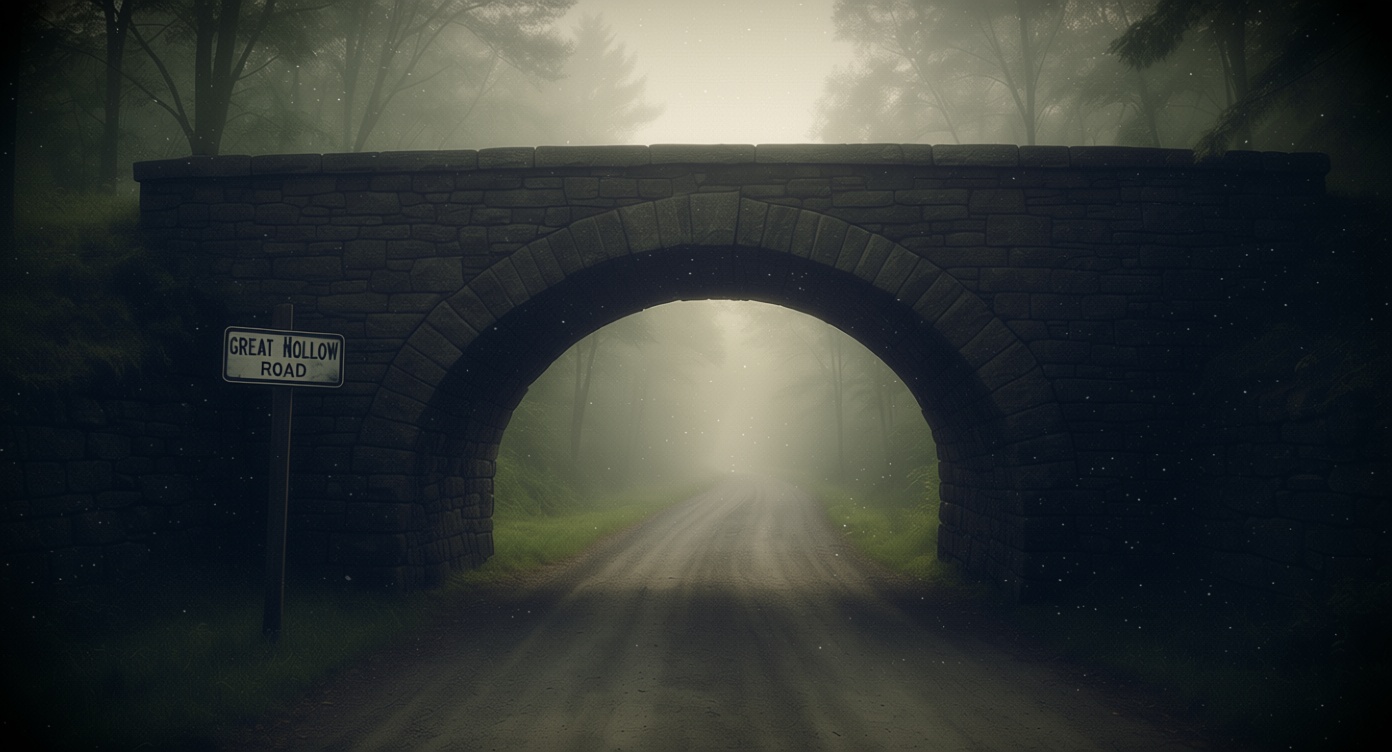
The final three entries differ substantially from the better-known archaeological sites. The Lewis and Clark Bridge in Montana, identified in the source as šųktógeja oʾípa, is presented through local stories about deaths during construction, alleged hauntings and unexplained phenomena. The Great Hollow Road Stone Arch Bridge in Hanover, New Hampshire, is a 19th-century structure whose limited documentation and distinctive design have encouraged historical and paranormal speculation. Likewise, the Old Benton-Sardis Road Bridge in Bauxite, Arkansas, is associated with local accounts of apparitions and strange occurrences, while its origins are described as unclear.
These bridges should not be classified as ancient in the same sense as Giza, Stonehenge or the Nazca Lines. Their inclusion illustrates how mystery can arise from missing records, unusual construction and oral tradition as well as from archaeological uncertainty. Local legends may be culturally significant, but reported supernatural activity requires independent, verifiable evidence before it can be treated as fact.
Continuing Investigation
Together, the seven sites demonstrate that unanswered questions often reflect the limits of surviving evidence rather than proof of extraordinary intervention. Archaeology, engineering analysis, landscape studies and archival research continue to refine interpretations of their construction and use. For visitors and researchers alike, the structures remain compelling precisely because they combine documented human achievement with gaps in the historical record.