Overview
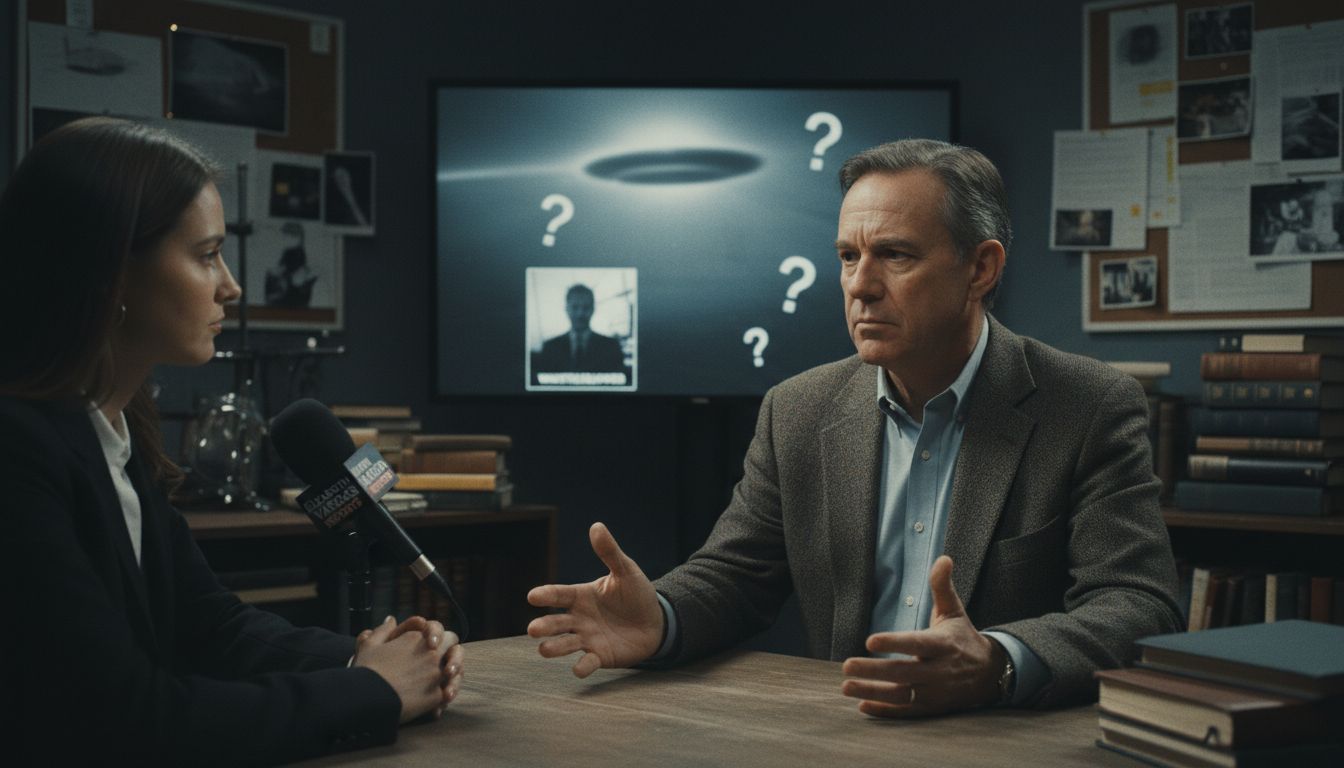
A NewsNation segment featured on “Elizabeth Vargas Reports” examines a skeptic’s challenge to a whistleblower’s claims about unidentified flying objects, or UFOs. The segment is titled “Skeptic: Whistleblower claim on UFOs isn’t ‘accurate’,” signaling a direct dispute over the reliability or interpretation of allegations made by an individual presented as a whistleblower.
The available source material does not identify the skeptic or the whistleblower, describe the specific claims at issue, or provide a transcript of the discussion. As a result, the segment’s central takeaway is limited to the skeptic’s assessment that at least one prominent claim about UFOs was not accurate.
Dispute Over the Claims
The item places the disagreement within the broader debate over UFO—or UAP, unidentified anomalous phenomena—reports. In recent years, whistleblowers and former government or military personnel have drawn public attention by alleging that officials have withheld information about unusual sightings, classified programs or recovered materials. Skeptics, however, have emphasized that allegations require verifiable documentation and independent confirmation before they can be treated as established facts.
The wording of the NewsNation segment indicates that the skeptic was not merely expressing uncertainty but was challenging the accuracy of the whistleblower’s account. That distinction is important: questioning whether a claim is accurate does not, by itself, resolve what may have occurred, nor does it establish that all UFO reports are fabricated. Instead, it highlights the need to evaluate individual assertions based on evidence, sourcing and corroboration.
Evidence and Verification
UFO investigations frequently rely on incomplete information, including eyewitness testimony, military sensor data, video footage and official records that may be classified or unavailable for public review. Each type of evidence has limitations. Eyewitness accounts can be sincere while still being affected by distance, lighting, perspective or memory. Video and sensor recordings may require technical analysis, and the absence of publicly available records can make independent assessment difficult.
For that reason, the credibility of a whistleblower’s broader allegations depends on more than professional background or personal conviction. Relevant factors can include whether the person had direct knowledge of the events, whether documentation supports the account, and whether independent witnesses or agencies confirm key details. The source information does not indicate whether the NewsNation segment presented such evidence or whether the whistleblower responded to the criticism.
Broader Context
The segment reflects a continuing tension in UFO coverage between calls for greater government transparency and demands for rigorous standards of proof. Advocates for disclosure argue that unexplained incidents deserve serious investigation, particularly when they involve potential aviation or national-security concerns. Skeptics counter that unexplained observations are not necessarily evidence of extraterrestrial technology and that public discussion can outpace the available facts.
Because the supplied page contains only the program listing and headline, no conclusion can be drawn from the source alone about the underlying UFO claims. The report documents a skeptic’s criticism, but resolving the dispute would require access to the full broadcast, the whistleblower’s precise statements and the evidence offered by both sides. Until that material is independently examined, the allegations remain contested rather than verified.


