Overview
A rare nationwide Federal Aviation Administration (FAA) ground stop on November 13 coincided with a SpaceX Starship test launch, prompting a wave of social media speculation about unidentified flying objects. Videos and photographs showing bright, expanding shapes in the evening sky were circulated online as possible evidence of unusual aerial activity. However, the images were later widely attributed to rocket exhaust and atmospheric effects produced by the Starship launch, rather than evidence of an extraterrestrial or otherwise unexplained craft.
The aviation disruption and the launch occurred within hours of each other, creating an unusual convergence of events that helped fuel the speculation. The FAA ordered departing flights across U.S. airports to stop temporarily, citing “extraordinary circumstances and for reasons of safety.” The measure lasted approximately four to five hours and was lifted at about 8:15 p.m. Eastern time.
Communications Failure Disrupted Air Traffic
Officials said the ground stop was caused by a temporary telecommunications failure affecting radar and communications systems at several air route traffic control centers. The outage disrupted the flow of information required to coordinate aircraft safely across the national airspace system.
Transportation Secretary Sean Duffy attributed the problem to aging infrastructure, including switches and routers dating back decades and systems that still rely on copper telephone lines. According to Duffy, the equipment became overloaded with data and began producing inconsistent information. The failure was described as an infrastructure and reliability issue, not as evidence of an attack.
Homeland Security Secretary Markwayne Mullin said there was “no indication yet that this was a nefarious attack” or a cyber incident, while emphasizing that investigations were continuing. The disruption was reportedly among the longest nationwide aviation stoppages since the September 11 attacks, although officials did not link it to any security threat involving unidentified aircraft.
Starship Launch Added to Confusion
At approximately 4:47 p.m. local time, SpaceX launched its 15th Starship test flight from the company’s Starbase facility in South Texas. The mission was designed to send the upper-stage vehicle, identified as Ship 42, into orbit and deploy 26 Starlink satellites.
SpaceX also sought to attempt the first dual recovery of the Super Heavy booster and Starship vehicle using the launch tower’s large mechanical “chopsticks.” The booster was ultimately diverted for an offshore splashdown in the Gulf of Mexico following a malfunction, while the ship reached orbit and remained on course for a possible return the following day.
Atmospheric Effects Mistaken for UFOs
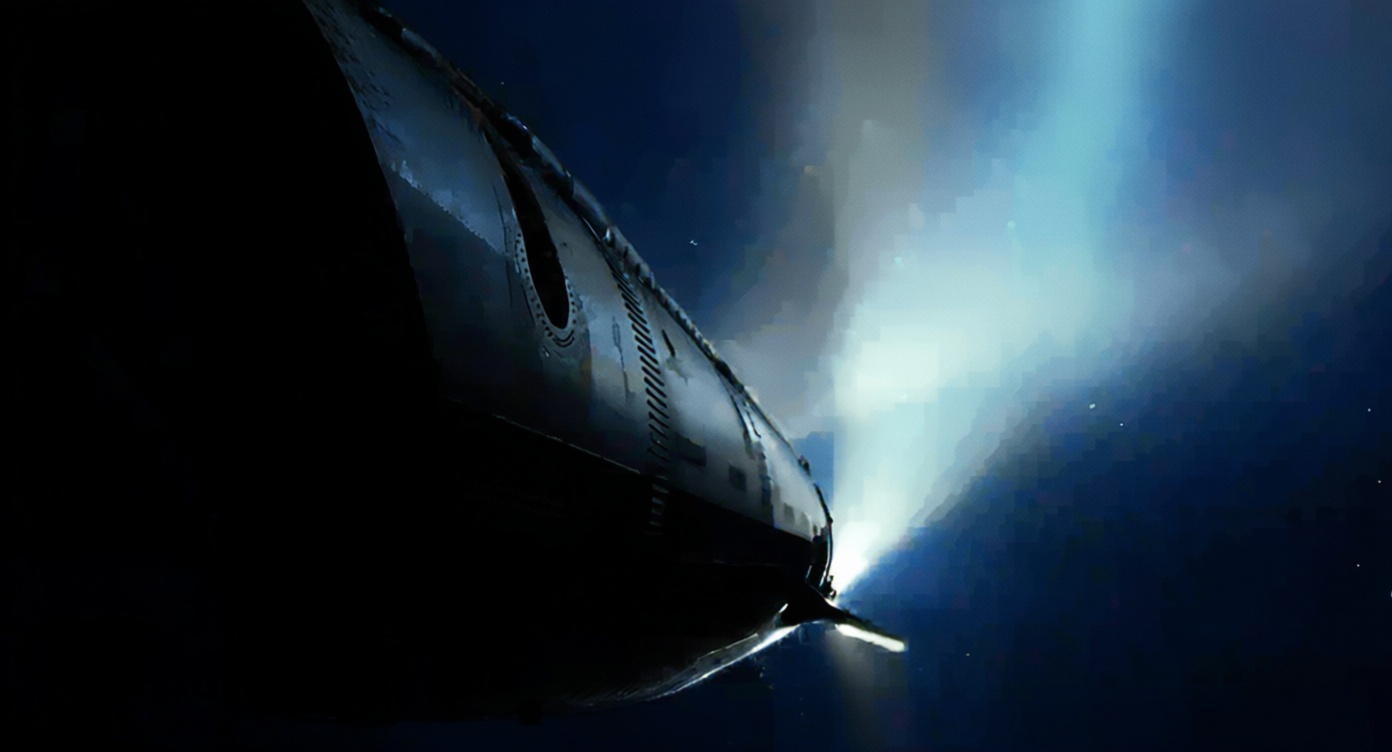
The launch produced highly visible effects in the atmosphere, including a luminous exhaust plume and broad, cloud-like formations sometimes described online as a “space jellyfish.” Such appearances can occur when rocket exhaust expands at high altitude and is illuminated by sunlight, particularly around sunset. The resulting shapes may spread across large portions of the sky and remain visible long after the vehicle itself has moved out of view.
The timing of those effects, combined with the FAA ground stop and widespread online video sharing, led some users to connect unrelated events. No information cited in the report indicated that aviation officials or other authorities had identified an anomalous craft. Instead, the available explanation linked the reported sightings to the Starship launch and its exhaust plume.
Official Findings Remain Central
The episode illustrates how simultaneous aviation disruptions and dramatic rocket launches can create fertile conditions for misinformation and UFO speculation. While investigations into the communications failure were ongoing, officials publicly characterized the ground stop as a technical safety response. The sky phenomena were likewise consistent with known launch-related atmospheric effects.
Further conclusions about the FAA outage will depend on technical reviews of the affected communications equipment and air traffic systems. For now, the incident remains best understood as the overlap of an aging aviation infrastructure failure with a highly visible commercial spaceflight—not confirmation of unexplained aerial activity.