Overview
St. Patrick’s Cathedral in Dublin has long been associated with stories of lingering spirits, and one of its most frequently cited apparitions is said to be Jonathan Swift, the 18th-century author of Gulliver’s Travels. The account, published by Moon Mausoleum on Oct. 23, 2026, places the alleged haunting within one of Ireland’s oldest religious landmarks—a building whose history spans centuries of worship, burial and public memory.
Founded in 1191, the cathedral has witnessed generations of clergy, musicians, mourners and visitors. Hundreds of people are buried beneath or around its ancient interior, creating an atmosphere that has helped sustain stories of supernatural activity. Among the dead is Swift, who served as dean from 1713 until his death in 1745.
Swift’s Connection to the Cathedral
Swift was not merely buried at St. Patrick’s Cathedral; he spent more than three decades as one of its most prominent clerics. A celebrated satirist and essayist, he was also a controversial public figure whose writing frequently challenged political and religious authority. His association with the cathedral therefore remains central to both its documented history and its ghost lore.
He was buried beside Esther Johnson, known as “Stella,” who was closely connected to Swift throughout his life. According to the account, Swift had death masks made of both himself and Johnson and requested burial beside her following her death in 1728. Their shared resting place has since become a focus for visitors interested in the cathedral’s literary and paranormal associations.
Reported Apparitions and Strange Activity
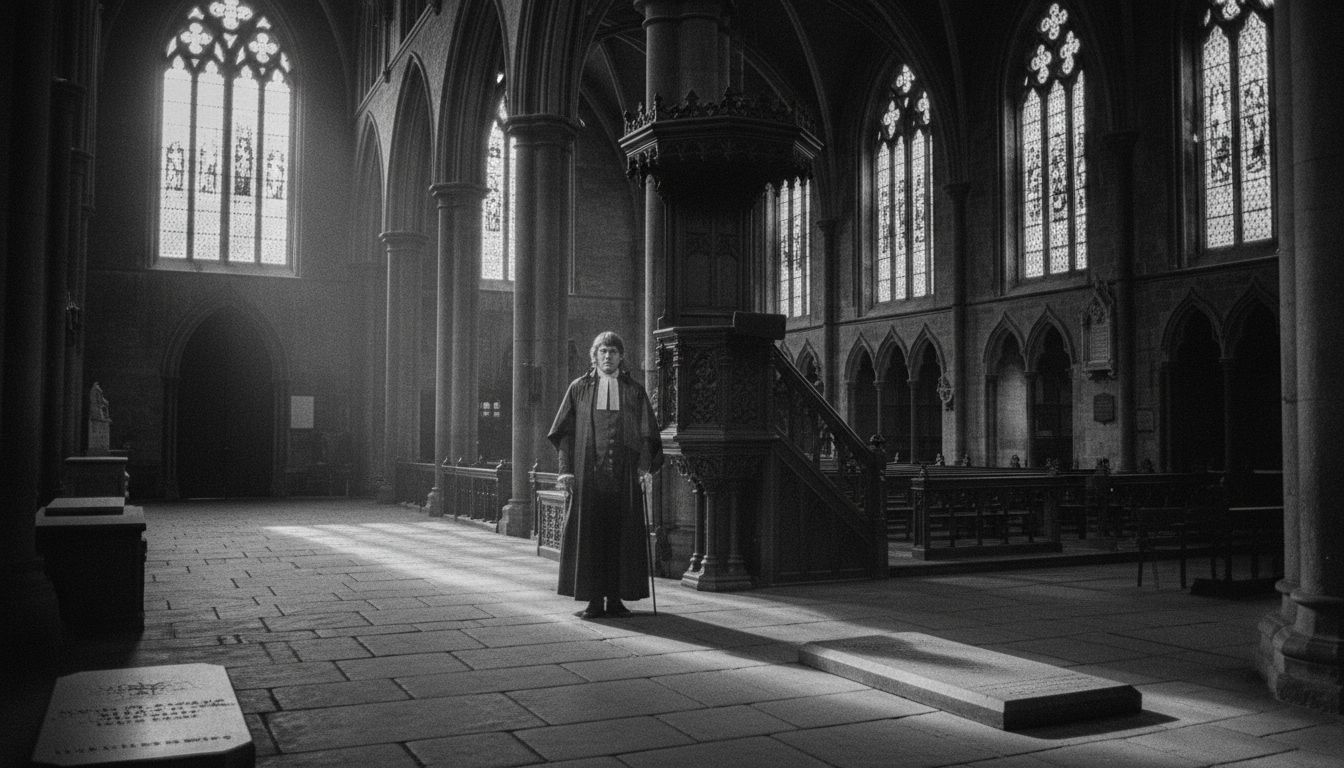
Stories attributed to visitors and clergy describe unexplained footsteps moving through the nave after dark, often stopping near the dean’s chair before disappearing. Other reports speak of shadows crossing the marble floor without an apparent source and sudden cold sensations moving along the pews. These claims remain anecdotal and have not been independently verified, but they contribute to the cathedral’s reputation as a site where history and legend overlap.
The apparition commonly identified as Swift is described as a tall figure in clerical clothing, with a pale or solemn face visible in the candlelight. The reports portray him not as an aggressive presence but as a restless one—an unseen or partially seen figure continuing familiar routines within the building he once called home.
A Dean’s Alternative Explanation
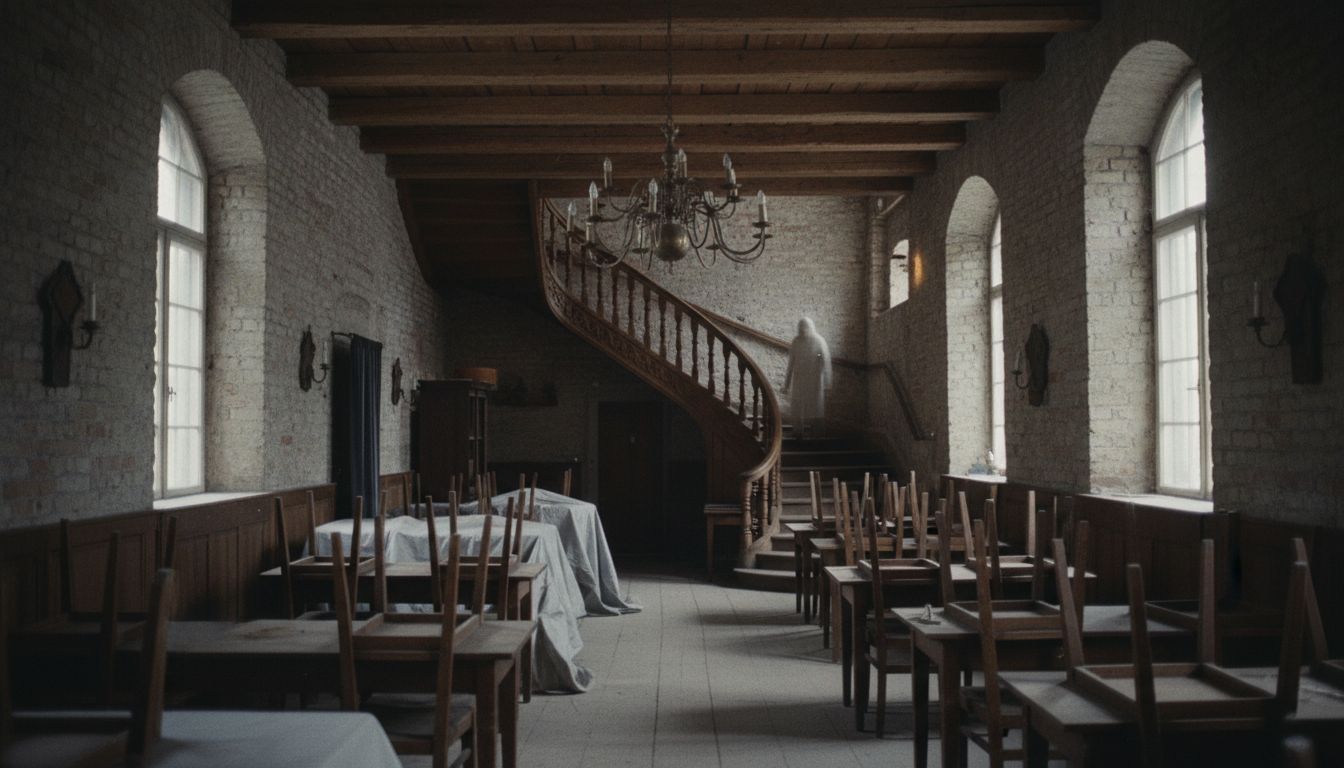
One of the more notable accounts is associated with Reverend Victor Griffin, who served as dean from 1969 to 1991. Griffin reportedly said that he saw a figure several times in the deanery, moving through the building and ascending and descending its stairs.
Although Swift is traditionally named as the cathedral’s ghost, Griffin offered a different interpretation. He believed the apparition might have been one of the staff members who cared for Swift during his final years—someone, in the story’s telling, still performing his duties after death. The possibility reflects an important feature of ghost folklore: apparitions are often shaped not only by famous individuals but also by the people and routines connected to them.
Disturbed Remains and Literary Legacy
The legend may also draw on the later treatment of Swift’s remains. In 1835, nearly a century after his death, his and Johnson’s bodies were exhumed for examination. The investigation reportedly involved William Wilde, father of poet Oscar Wilde, and included the study, measurement and casting of the skulls. For believers, the disturbance of the grave provides a possible explanation for why Swift’s spirit might remain attached to the cathedral.
Swift is also said to haunt the neighboring Marsh’s Library, where his literary and clerical legacy further connects him to Dublin’s historic institutions. No scientific evidence confirms the reported apparitions, and the accounts are best understood as part of the cathedral’s accumulated folklore. Whether interpreted as paranormal testimony or cultural storytelling, the legend of Swift’s “restless spirit” continues to add another layer to St. Patrick’s Cathedral’s long and deeply documented history.