Overview
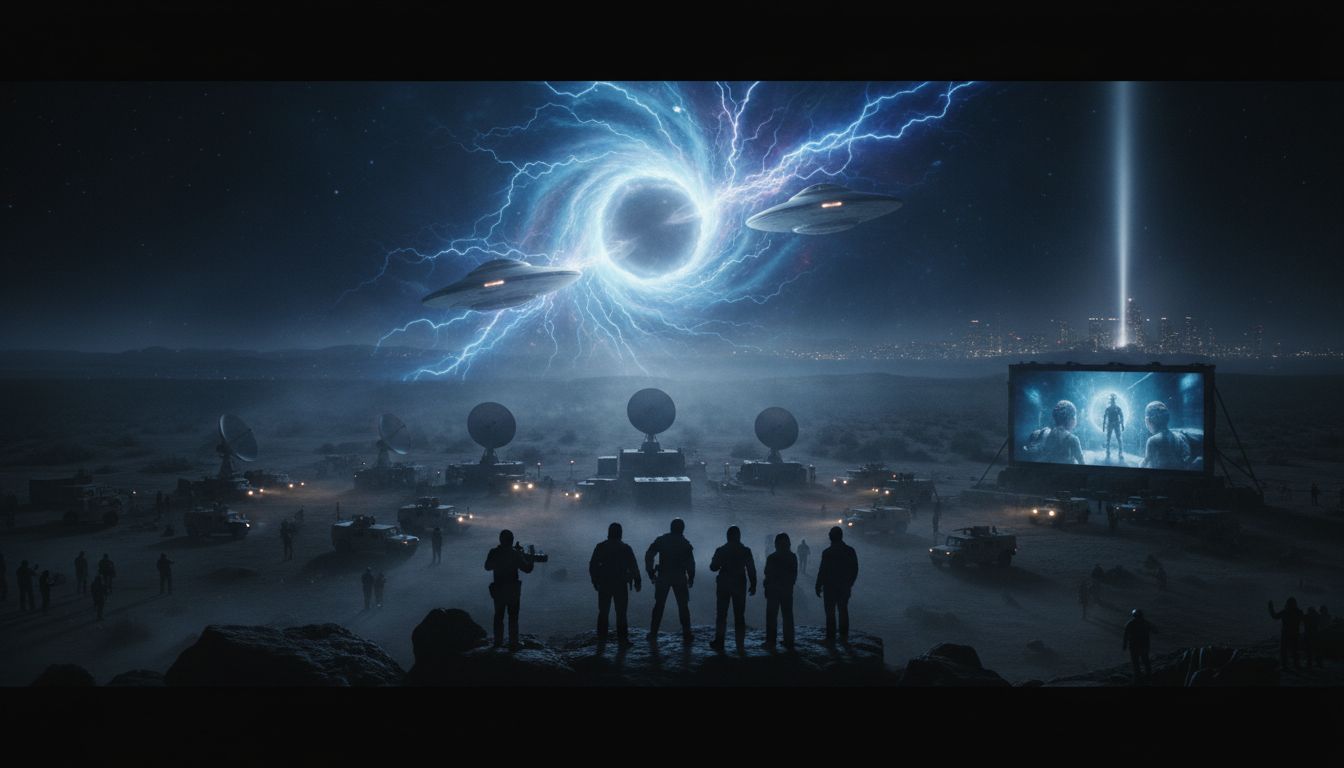
The world of UFO and UAP (Unidentified Anomalous Phenomena) enthusiasts was abuzz this week following the release of the official trailer for Steven Spielberg’s highly anticipated film, "Disclosure Day." The trailer, which debuted on social media and quickly gained traction across UFO Twitter, coincided with the circulation of a purported UAP portal sighting in Austin, Texas. The convergence of Hollywood storytelling and alleged real-world sightings has once again fueled speculation about the relationship between popular culture and the ongoing mystery of unidentified aerial phenomena.
Spielberg’s “Disclosure Day” Trailer: A Different Kind of UFO Story
The trailer for "Disclosure Day," directed by the legendary Steven Spielberg, sets a markedly different tone from traditional alien invasion blockbusters. According to Undercover ET, a prominent voice in the UAP community, "This isn't framed as an invasion, panic, or spectacle. It's framed as a reckoning, a quiet, unsettling realization that the universe may never have belonged to us alone, and that the truth has been delayed, filtered, or withheld for far too long." The trailer lingers on questions of collective knowledge and societal preparedness, asking viewers to consider, “What happens when disclosure isn’t gradual but global?”
Key lines from the trailer, such as “People have a right to know the truth. It belongs to 7 billion people,” underscore the film’s focus on universal access to knowledge and the emotional impact of sudden, worldwide revelation. Spielberg’s approach appears to prioritize curiosity, awe, and existential reflection over fear, with the film promising to explore not just contact with “the unknown,” but the human response to long-withheld truths.
Alleged UAP Portal Sighting in Austin, Texas
Simultaneously, the UAP community was captivated by new footage from Austin, Texas, allegedly showing a UAP exiting what some claim to be a “portal.” The video, reportedly enhanced with infrared (IR) technology, was submitted by a contributor named Juan and has prompted both intrigue and calls for rigorous verification. Undercover ET, while expressing enthusiasm for the footage, emphasized the importance of thorough documentation, stating, “I just want to give the audience the full spectrum of what’s going on here.” The host encouraged the submission of further footage showing the IR filter being applied and removed to provide greater transparency for viewers.
While the authenticity of such sightings remains unverified, their timing alongside Spielberg’s trailer release has reignited conversations about the intersection of media, public perception, and the search for the truth about UAPs.
Cultural Resonance and Speculation
Both the trailer and the Austin sighting reflect deeper currents in UAP discourse: a widespread sense that humanity is on the cusp of unprecedented revelations, and a hunger for credible evidence. The video’s host drew parallels between Spielberg’s narrative and personal beliefs about life beyond Earth, remarking, “For sure, we aren’t the only species... There’s different types of us, right? And I feel like there’ll be different types of [life] elsewhere.” Such sentiments echo a growing openness in both the public and scientific communities to the possibility of diverse forms of life and intelligence in the universe.
References to previous interviews and encounters, such as those with Karen Ricken Thomas and Steven Greer, further highlight how personal testimony and cultural products like Spielberg’s film continue to shape and reflect the evolving conversation around UAPs.
Looking Ahead
As anticipation for "Disclosure Day" builds and new sightings continue to emerge, the boundary between entertainment and investigation remains both blurred and fertile. Spielberg’s film may not provide answers, but by framing disclosure as a global reckoning, it invites audiences to confront profound questions about knowledge, belief, and the nature of truth. Meanwhile, the ongoing documentation and scrutiny of alleged UAP incidents underscore the community’s commitment to evidence and transparency in the search for understanding.
For many, the events of this week are a reminder that the quest for disclosure—whether cinematic or real—remains as compelling and urgent as ever.


