Overview
A small exploratory study is drawing attention in the debate over mediumistic trances by suggesting that the brain activity associated with the practice may be measurably different from other altered states of consciousness. Published in Psychiatry Research: Neuroimaging, the research focused on women who said they regularly entered trance states while channeling spirits, and found patterns of brain connectivity that the authors say do not resemble typical sleep, prayer, or psychiatric conditions. While the findings do not validate the existence of spirits or paranormal communication, they add a neuroscientific layer to a phenomenon that has long been studied mainly through religion, anthropology, and anecdotal testimony.
How the study was conducted
The work was led by Jessica Placido of the Bahiana School of Medicine and Public Health in Brazil, alongside colleagues from other Brazilian universities. Using electroencephalography, or EEG, the team examined brain activity in 28 women in Campo Grande, Brazil, recruited from local Spiritist centers. Half of the participants were experienced mediums who said they had channeled spirits for at least five years, while the other half attended the same centers and shared the same spiritual worldview but did not serve as channels. Researchers also used the Inventory of Anomalous Experiences, a self-report questionnaire that tracks claims such as out-of-body experiences, unusual intuition, and seeing spirits, to distinguish between the groups.
What the brain scans appeared to show
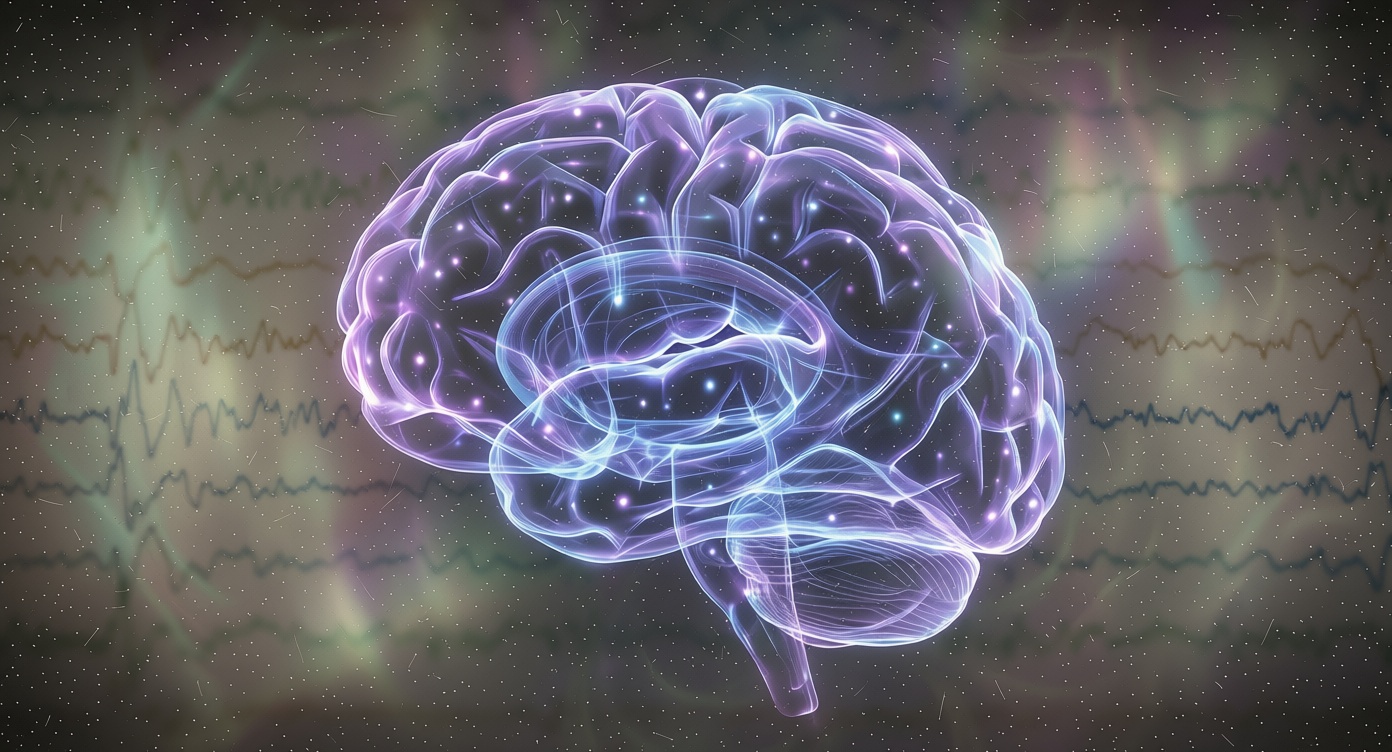
Rather than focusing only on isolated “hotspots” of activity, the researchers used functional network analysis and graph theory to examine how different regions of the brain synchronized over time. In this approach, EEG sensors become nodes in a broader network, and the relationships between them reveal how electrical signals move across the brain. According to the study’s summary, the medium group showed distinct connectivity patterns, including notable changes in synchronization between the brain’s two hemispheres. That broader network-level behavior is what led the authors to characterize the trance state as an altered form of consciousness that appears different from ordinary waking awareness.
Why researchers think the finding matters
The study arrives at a time when some scientists are trying to move beyond narrow measurements of brain “activation” and instead map the brain as a dynamic system. Earlier work on religious practice often concentrated on localized areas, but this project suggests the more important signal may lie in how brain regions coordinate, not simply where activity spikes. Supporters of the field say such studies help establish a physiological basis for experiences that are frequently dismissed outright. At the same time, the research remains small and preliminary, and its authors do not claim to have proven any supernatural explanation for mediumship.
A wider debate over parapsychology
The report also reflects a broader effort to position parapsychology closer to mainstream scientific inquiry. Proponents often point to institutional resources such as the University of Cambridge’s psychical research archive as evidence that paranormal studies are no longer entirely relegated to the fringes. Even so, the field remains controversial, with critics noting that anomalous experiences are difficult to test under controlled conditions and may be influenced by expectation, culture, and individual belief. For now, the new EEG findings are best understood as an early attempt to examine a longstanding spiritual practice through the lens of modern neuroscience—one that may help clarify what happens in the brain during trance, even if it cannot settle what, if anything, the experience means beyond it.