Aberfan and the Question of “Psychic” Experiences
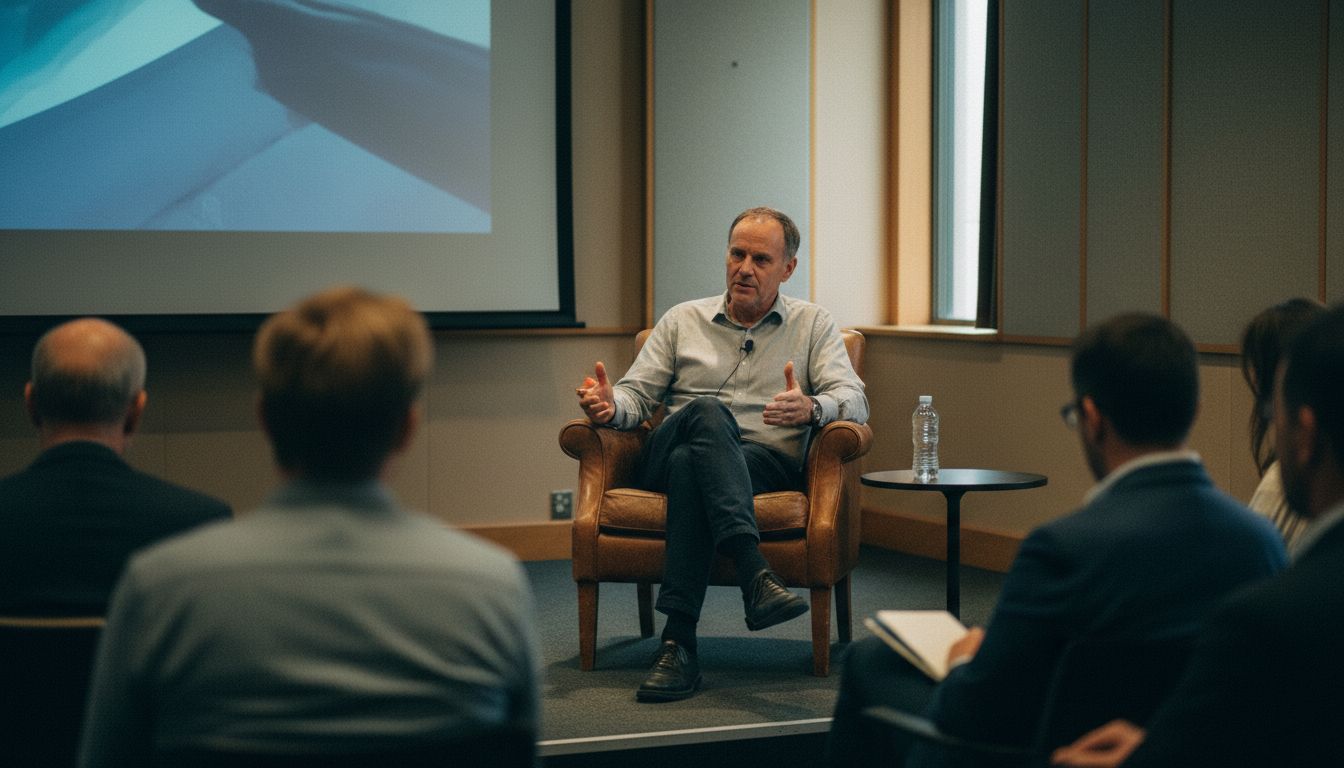
A survey led by psychologist Olafur S. Palsson has examined why some people report experiences that appear to defy ordinary explanation, including premonitions, déjà vu, unusual coincidences and out-of-body sensations. The research links these reports to a psychological trait Palsson calls “subconscious connectedness”—the degree to which conscious awareness interacts with non-conscious thoughts and impressions.
The study’s subject is illustrated by accounts surrounding the Aberfan disaster in Wales. On October 21, 1966, after days of heavy rain, a coal-waste heap collapsed above the mining village, sending a mass of black sludge down the hillside and burying Pantglas Junior School. One hundred sixteen children died, along with 28 adults. In accounts later associated with the disaster, eight-year-old Paul Davies reportedly drew figures digging into a hillside beneath the words “The End,” while 10-year-old Eryl Mai Jones told her mother she had dreamed that “something black” had descended over the school. Both children died in the collapse.
A Trait Linking Conscious and Subconscious Processes
Palsson’s peer-reviewed research, published in Psychology of Consciousness: Theory, Research, and Practice in 2025, found that people who frequently report anomalous experiences also tend to score higher on measures associated with subconscious connectedness. The concept does not necessarily refer to paranormal perception. Instead, it describes people whose conscious thoughts and behavior may be more strongly influenced by subtle, non-conscious mental processes.
“Some people have a much closer connection with the non-conscious or subconscious parts of their mind,” Palsson said. “Their conscious and subconscious mind influence each other to an unusually high degree in everyday life.”
The experiences associated with the trait included dissociation, or feeling detached from one’s thoughts or identity; magical thinking; absorption, in which attention becomes intensely focused; and intuitive thinking based on immediate impressions rather than deliberate reasoning. Participants also reported meaningful “synchronicities”—events that appear connected despite having no obvious causal relationship.
What the Findings Do—and Do Not—Show
The survey suggests that anomalous experiences are widespread rather than limited to a small group. According to the source material, 84 to 86 percent of adults repeatedly experience at least one type of event covered by the research. However, a statistical association between such reports and subconscious connectedness does not establish that individuals possess heightened perceptiveness, predictive abilities or extrasensory powers.
One possible interpretation is that the mind unconsciously registers details that never reach conscious awareness. A person may notice changes in behavior, environmental conditions or other subtle cues and later experience an intuition that seems inexplicably accurate. In that framework, a “premonition” could reflect rapid, unconscious processing rather than knowledge of the future.
Limits and Context
The findings also do not eliminate other explanations, including coincidence, memory reconstruction or the tendency to give special significance to events that match an earlier dream or impression. Accounts such as those surrounding Aberfan are especially difficult to evaluate because they were recalled and circulated after a devastating event. The children’s experiences remain emotionally powerful, but they cannot by themselves demonstrate a paranormal mechanism.
Palsson’s work therefore offers a psychological framework for understanding why some people are more likely to interpret intuition, dreams and unusual coincidences as anomalous. It provides evidence of a relationship between mental traits and reported experiences—not proof that people can foresee disasters or access information beyond the senses.