Overview
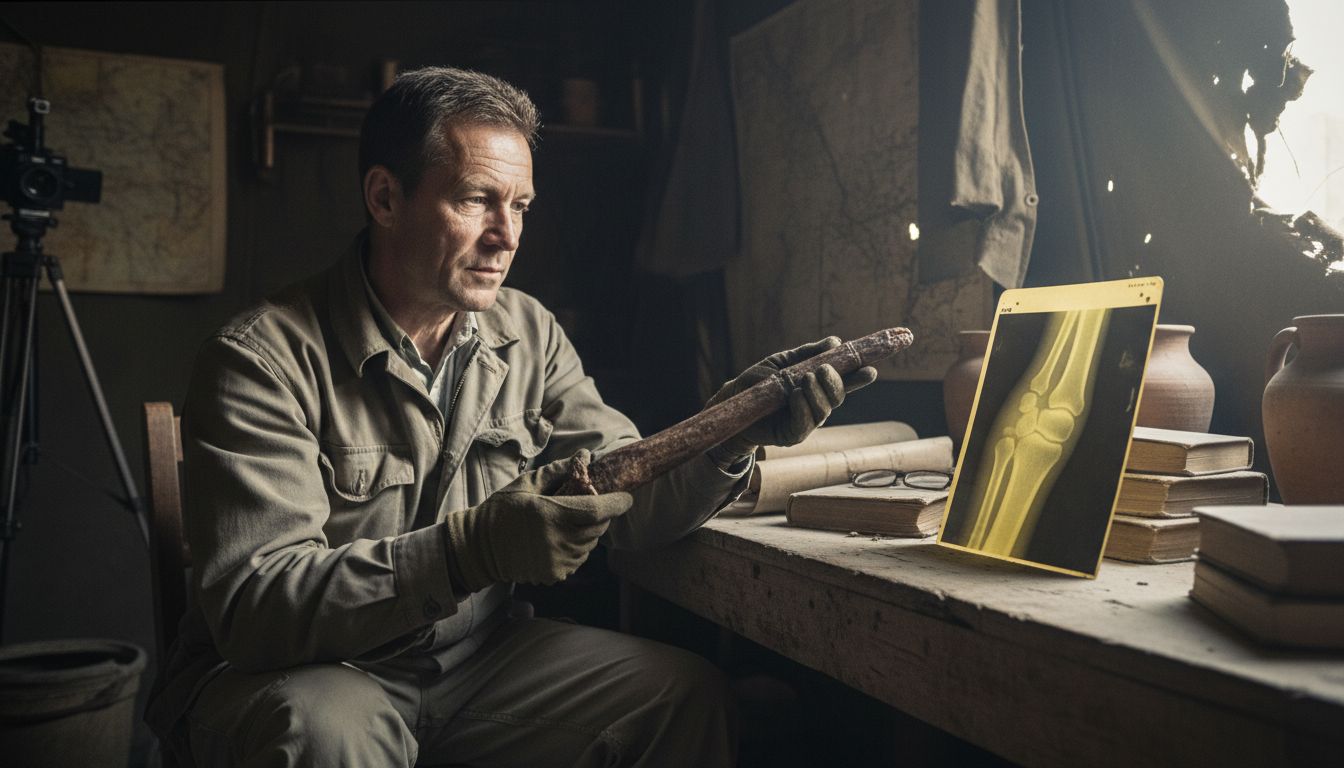
A reported encounter in Egypt involving a 35-centimeter mummified finger has reignited debate over one of archaeology’s most enduring fringe questions: whether the relic points to a lost race of giants or to an elaborate hoax. According to a report from Ancient Origins, the item was reportedly handled by a Swiss traveler and was accompanied by an old X-ray, adding to the intrigue surrounding what the site describes as the “Relic of Bir Hooker.” The story has attracted attention because it sits at the intersection of antiquarian mystery, Egyptology, and the long-running public fascination with anomalous human remains.
The Relic and the Reported Evidence
The central claim is striking: a single finger, said to measure 35 centimeters in length, was reportedly preserved in mummified form and examined outside the context of a modern museum or laboratory setting. The mention of an X-ray is important because it suggests some degree of physical documentation, even if the provenance of the object remains uncertain. In the world of historical artifacts, such supporting material can lend a story credibility — but it can also deepen the puzzle if the chain of custody is unclear or if the evidence cannot be independently verified.
Ancient Origins presents the relic as an object that has long fueled speculation about the possibility of giant humans in antiquity, a theme that appears periodically in popular writing about ancient Egypt and other civilizations. Supporters of that idea often point to oversized bones, unusual burial claims, or oral traditions describing larger-than-life beings. Skeptics, however, note that many such cases are rooted in misidentification, exaggeration, or outright fabrication. Without transparent documentation, the Bir Hooker finger remains in the category of intriguing but unconfirmed.
Claims of Giants vs. Skeptical Interpretations
Claims of giants have a long history in popular culture, but they are rarely supported by rigorous archaeological evidence. Egypt, in particular, has generated countless legends due to its monumental architecture, preserved tombs, and the enduring mystery of its elite burials. In that environment, unusual artifacts can quickly become the focus of theories that go far beyond what the evidence can sustain. The reported finger is no exception: its extraordinary size naturally invites speculation, but extraordinary claims require extraordinary proof.
There is also a more grounded explanation that historians and archaeologists routinely consider: the relic could be a manufactured curiosity, an altered specimen, or a misrepresented object whose story grew over time. The fact that the item is being discussed through a secondary account, rather than through a peer-reviewed excavation report or museum catalog entry, makes caution essential. In the absence of provenance records, materials analysis, and independent scholarly review, the artifact’s origin cannot be confidently established.
Why the Story Resonates
Even with unanswered questions, the Bir Hooker relic continues to draw interest because it taps into a broader cultural tension between scientific skepticism and the appeal of hidden history. Objects like this invite people to ask whether accepted historical narratives are complete, or whether unexplained remains could point to overlooked chapters of the past. That curiosity helps explain why Ancient Origins frames the finger as a mystery worthy of examination rather than a settled case.
For now, the reported mummified finger stands as a reminder of how quickly archaeology can move from evidence-based inquiry into speculation when documentation is thin. Whether it proves to be a genuine anomaly, a misunderstood artifact, or a well-traveled hoax, the story underscores the importance of verifiable context in evaluating extraordinary claims about the ancient world.