Overview
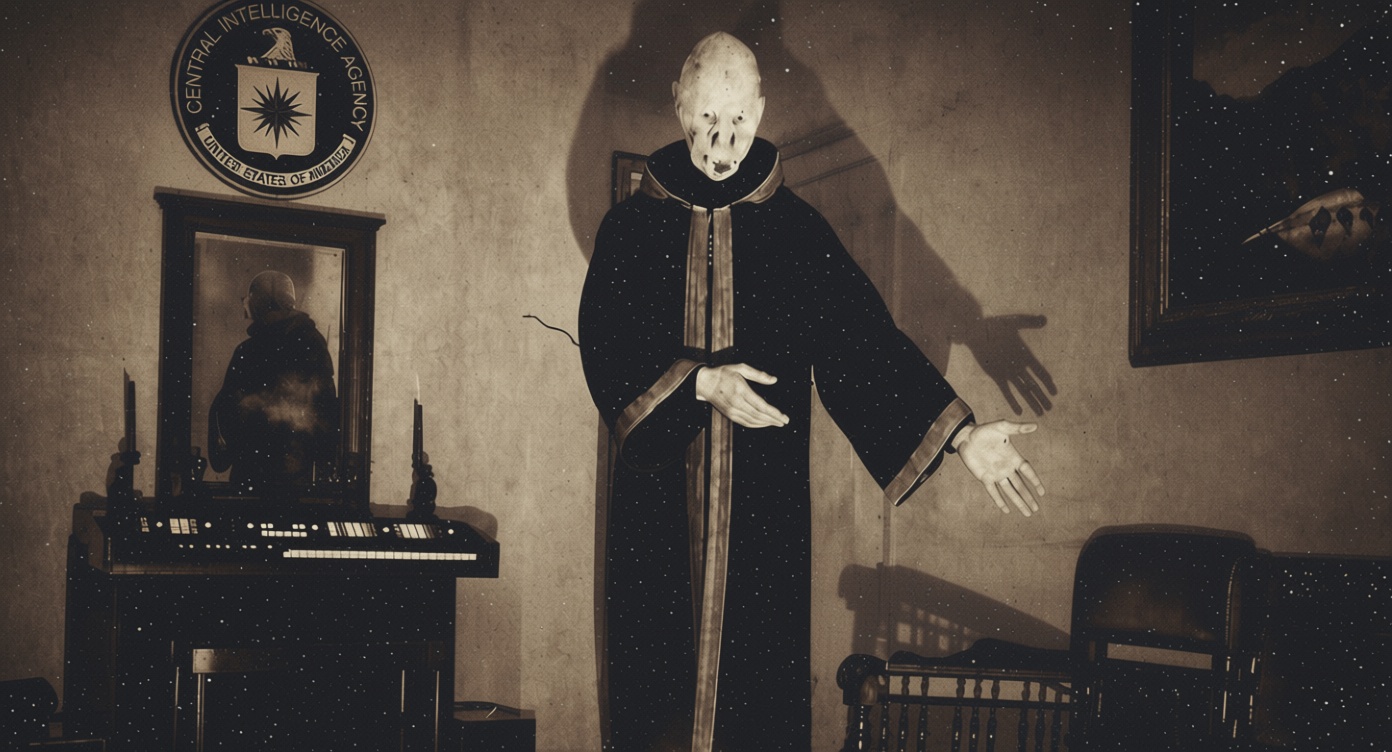
Taylor McMahon’s September 1 essay, “The Occult History of the CIA,” examines alleged connections between occult practices, state power and intelligence operations. Published on McMahon’s website, the article argues that governments have periodically treated astrology, psychic phenomena and related practices not simply as matters of belief, but as potential tools of psychological warfare and strategic deception.
The essay builds on themes McMahon says appeared in an earlier article about Jeffrey Epstein and occultist Aleister Crowley. According to the author, the relationship between esoteric traditions and government institutions extends from Elizabethan England to Nazi Germany and the Cold War-era intelligence community. The available excerpt, however, provides only an introduction to the broader claims, and does not present a complete evidentiary record for every historical connection described.
Wartime Propaganda and Astrology
One of the examples associated with this history is the alleged British use of fabricated horoscopes during World War II. The reported objective was not necessarily to practice astrology as a method of prediction, but to manipulate perceptions among German audiences and officials. Such efforts would fit within a wider wartime pattern in which governments used rumors, forged documents, symbolic messaging and controlled information to influence enemy decision-making.
The distinction is important: the use of occult imagery or astrological material as propaganda does not establish that officials believed supernatural claims were scientifically valid. It may instead demonstrate that intelligence services recognized the psychological power of those beliefs. McMahon presents this history as part of a broader argument that occult themes could be operationalized because they generated uncertainty, fear or misplaced confidence.
Soviet and U.S. Interest in ESP
McMahon also discusses reported Soviet and American interest in extrasensory perception, or ESP, during the Cold War. The United States military and intelligence establishment did investigate claims involving remote viewing and other forms of anomalous cognition. Declassified records show that U.S. agencies supported and reviewed programs connected to psychic intelligence, most notably the remote-viewing effort later known as Stargate.
Those records confirm institutional interest and experimentation, but they do not establish that ESP produced reliable intelligence. Official evaluations of the programs were mixed, and the broader effort was eventually discontinued. Similarly, reports of Soviet research into psychic phenomena reflected Cold War competition and concern that an adversary might gain an unconventional advantage—even when the underlying claims remained scientifically disputed.
Claims of Human Experimentation
A more serious element of McMahon’s argument is the assertion that governments experimented on citizens while exploring whether occult or psychic capabilities could be developed. This claim intersects with documented episodes of unethical intelligence research, including CIA-sponsored drug and behavioral experiments under MKULTRA, many of which occurred without informed consent. Public investigations and declassified records established that individuals were subjected to harmful experimentation, although those records do not prove the existence of supernatural abilities.
McMahon’s framing links such programs to a perceived strategic threat: if rival governments believed occult practices could yield intelligence or influence, agencies might investigate them regardless of scientific validity. That interpretation places alleged occult research within the history of secrecy, psychological warfare and institutional fear rather than treating it as evidence of paranormal success.
Evidence and Unresolved Questions
The essay raises a legitimate historical question about how intelligence agencies respond to unconventional beliefs and uncertain threats. Documented interest is not the same as demonstrated effectiveness, and allegations involving the CIA or other governments require careful separation between archival evidence, later interpretation and speculation. McMahon’s article contributes to an ongoing discussion about the boundaries of intelligence research, but readers should distinguish verified programs from claims that remain unsubstantiated or contested.