A Haunting on the Wiltshire Road
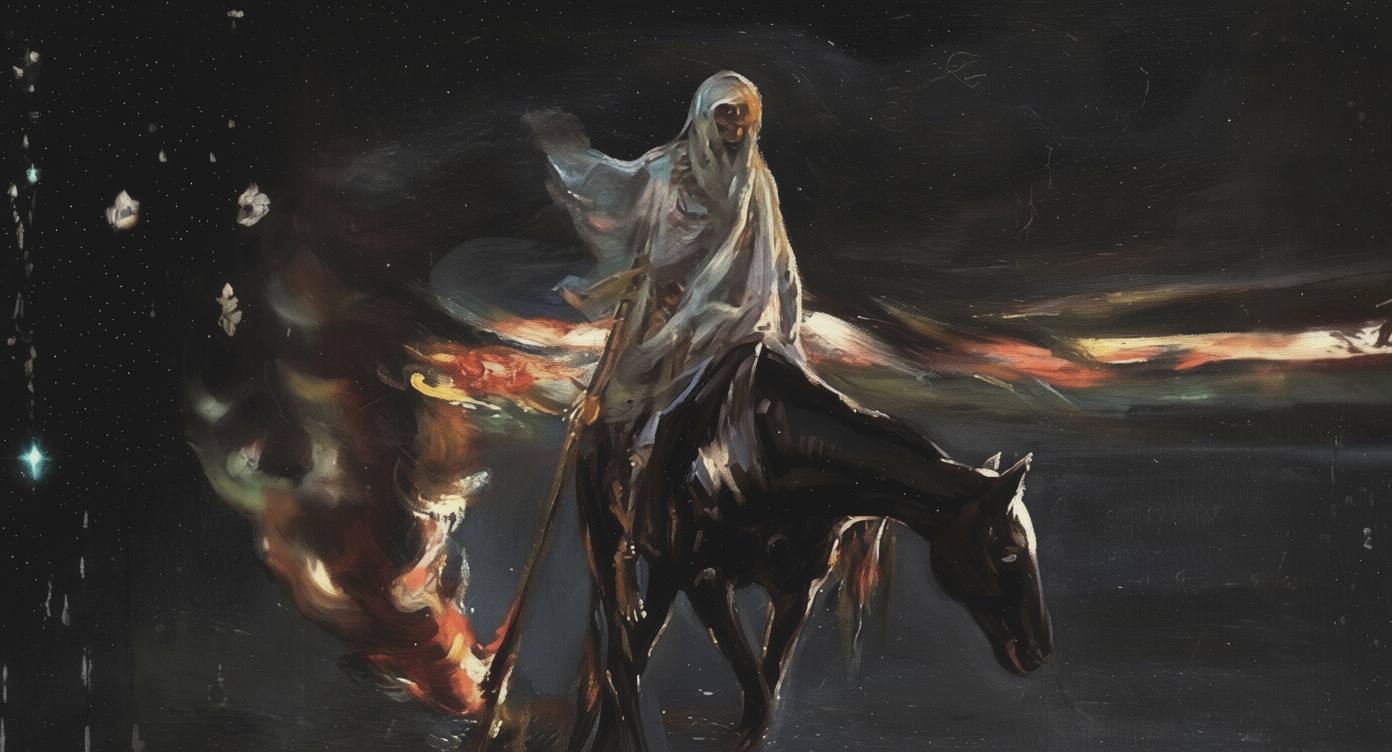
Around 1671, the Revd. Symonds, parson of Garsdon church in north Wiltshire, reported an encounter that became part of an unusual chapter in the history of British science. Riding home late one night, Symonds said that a spectre leapt up behind him and travelled alongside him until they reached the parsonage. The apparition then dismounted, turned toward him and “gap’d at him”. Symonds identified it as John Estcourt, a gentleman who had died approximately two years earlier.
The account might appear, by modern standards, to belong to folklore rather than scientific investigation. Yet in 17th-century England, reports of ghosts, witches and other supernatural events were increasingly treated as subjects for evidence-gathering and debate. The central question for many educated observers was not simply whether a haunting was frightening, but whether testimony could establish that such an event had genuinely occurred—and how it might be distinguished from fraud, error or natural causes.
The Royal Society and the Supernatural
The debate unfolded partly within the intellectual culture surrounding the Royal Society, founded in 1660 and England’s leading scientific institution. Joseph Glanvill, a fellow of the society, became one of the most prominent defenders of the existence of spirits and witches. His 1681 book, Saducismus Triumphatus, sought to demonstrate the reality of supernatural phenomena by compiling detailed reports of alleged encounters.
Glanvill’s argument was also theological. He maintained that to deny the existence of spirits and witches was, in effect, to deny the existence of God. His approach reflected a period in which the boundaries between what would now be called science, theology and natural philosophy were still developing. Investigating extraordinary claims could therefore be seen as part of understanding the full order of nature, rather than as a rejection of rational inquiry.
John Aubrey’s Cautious Record
Symonds’ story was recorded by John Aubrey, another Royal Society fellow, in his extensive survey of Wiltshire’s natural world. Begun in 1656, John Aubrey’s Natural History was the first attempted English county survey devoted to nature. Its contents were wide-ranging and sometimes eccentric, including discussions of alleged dragons, giants and other extraordinary subjects. Near the end of the work, a chapter titled “Accidents” gathered accounts of unusual events, including supernatural reports.
Aubrey agreed with Glanvill that such claims deserved serious consideration, but he regarded Glanvill as too willing to believe them. Aubrey’s own position was notably qualified: “Though I myselfe never saw any such things,” he wrote, “yet I will not conclude that there is no truth at all in these reports.” He allowed that some apparitions might be genuine, while warning that “where one is true, a hundred are figments.”
Evidence, Fraud and Early Scientific Method
That skepticism is significant because Aubrey did not merely collect stories that supported belief in hauntings. He also documented cases in which alleged supernatural events were exposed as deliberate deception. Among them was Katherine Waldron, who pretended to be bewitched and endured pins being driven into her flesh as supposed evidence of her condition.
For Aubrey, recording extraordinary testimony—including reports he doubted—was consistent with the aims of contemporary natural history. The purpose was to gather evidence from which broader explanations and theories might eventually be developed. The investigations did not produce modern proof of ghosts, but they show early scientists attempting to assess witness accounts, preserve conflicting evidence and separate credible observation from fraud and exaggeration. In that sense, the 17th-century study of hauntings formed part of a broader effort to determine where natural explanations ended and claims of the paranormal began.