Overview
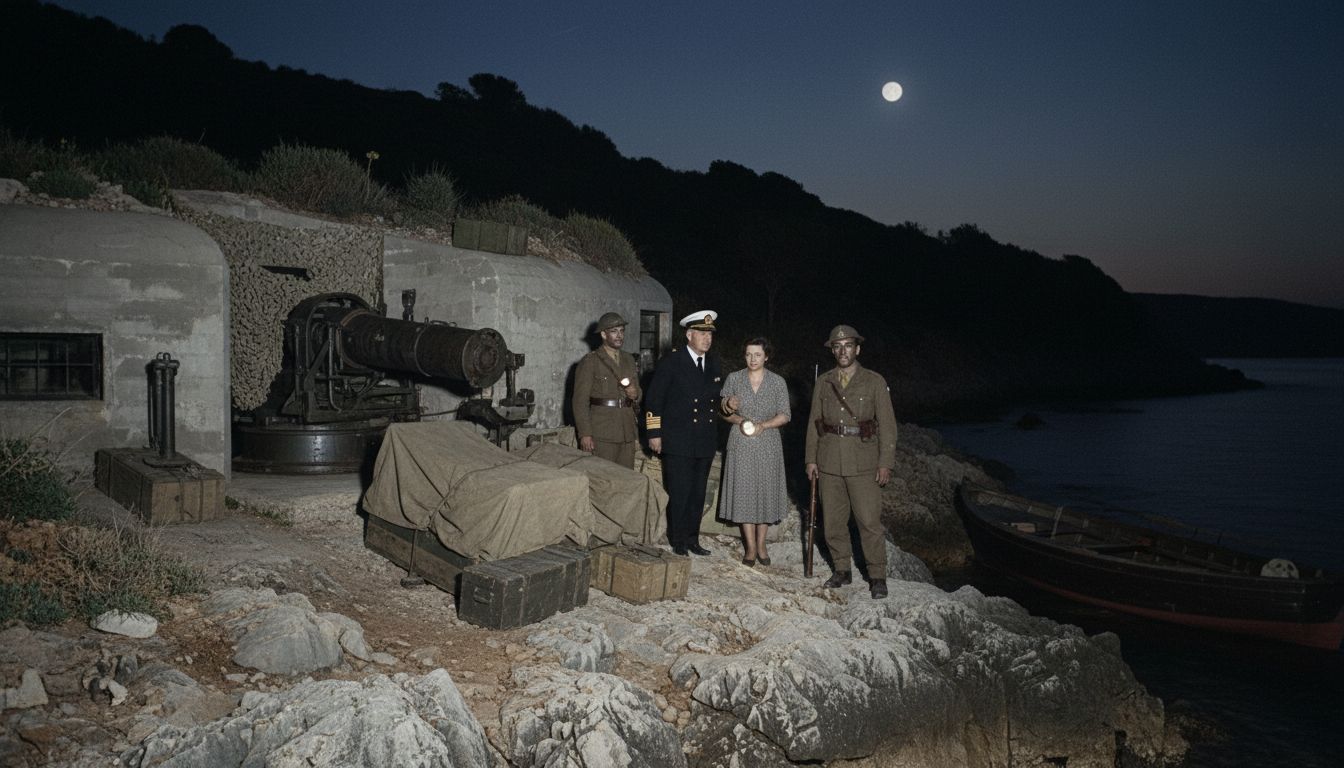
A wartime operation involving a senior Italian naval officer, his wife and a quantity of technical material is being reexamined through British and American archival records. The episode took place in September 1943, when British commandos associated with 30 Commando removed Italian Admiral Minisini and his wife from a torpedo installation. The operation was not simply an intelligence raid aimed at documents or equipment: the account describes the capture and movement of people with specialist knowledge alongside material considered valuable to the Allied war effort.
The surviving British record is catalogued by the National Archives of Singapore, which provides access to a file from the United Kingdom’s National Archives. Its formal title is “ADM 223/214: A History of 30 Commando,” covering the years 1947–1948. The catalog identifies the material as an overseas record written in English and notes that viewing is permitted, while reproduction and wider publication require authorization from the copyright holder. The file offers a postwar account of the unit’s activities, including the 1943 seizure.
The September 1943 Operation
The operation occurred during a particularly fluid phase of the Second World War. Italy’s armistice with the Allies, announced in September 1943, created uncertainty over Italian military facilities, personnel and weapons technology. Against that background, the removal of Minisini and his wife appears to have been part of a broader effort to secure expertise and equipment before they could be destroyed, transferred or placed beyond Allied access.
According to the account summarized from the records, the commandos took technical material connected with Italian torpedo development as well as the admiral and his wife. The inclusion of Minisini’s wife in the operation is a notable detail, both because it illustrates the personal dimension of wartime intelligence missions and because later retellings have tended to focus primarily on the officer and the technology. The available description does not establish every tactical detail of the raid, and the archival catalog itself is a finding aid rather than a full transcription of the underlying history.
From Seizure to the McGregor Project
American records reportedly trace what happened next through a program known as the McGregor Project. The material was examined through engineering work and research into torpedo countermeasures, reflecting Allied interest in understanding not only the design of Italian weapons but also methods for detecting, evading or defeating them. Such exploitation was consistent with wartime naval practice, in which captured hardware, technical papers and specialist personnel could be studied together.
The records also follow the movement of the project between Navy facilities and institutions. Those transfers suggest that the operation’s importance extended beyond the initial capture: the seized material became part of a continuing technical effort rather than a one-time intelligence discovery. The account further indicates that Minisini and the associated group eventually returned to Italy, adding a later chapter to a story often presented as a dramatic wartime extraction.
Reassessing the Public Narrative
The archival trail is also being used to reassess a later public account associated with John Steinbeck. Steinbeck’s version helped shape popular understanding of the episode, but the comparison with American records raises questions about chronology, emphasis and how much of the technical work was subsequently documented. That does not automatically invalidate the literary or journalistic account; it does indicate that it should be read alongside operational histories and government records.
Taken together, the documents portray the episode as more than an unusual commando adventure. It was an example of wartime technology exploitation involving military action, scientific analysis and the management of captured expertise. The British file preserved by the National Archives of Singapore provides an important lead, while the American records described in the examination help extend the story from the September 1943 seizure through the McGregor Project and the group’s eventual return.