Overview
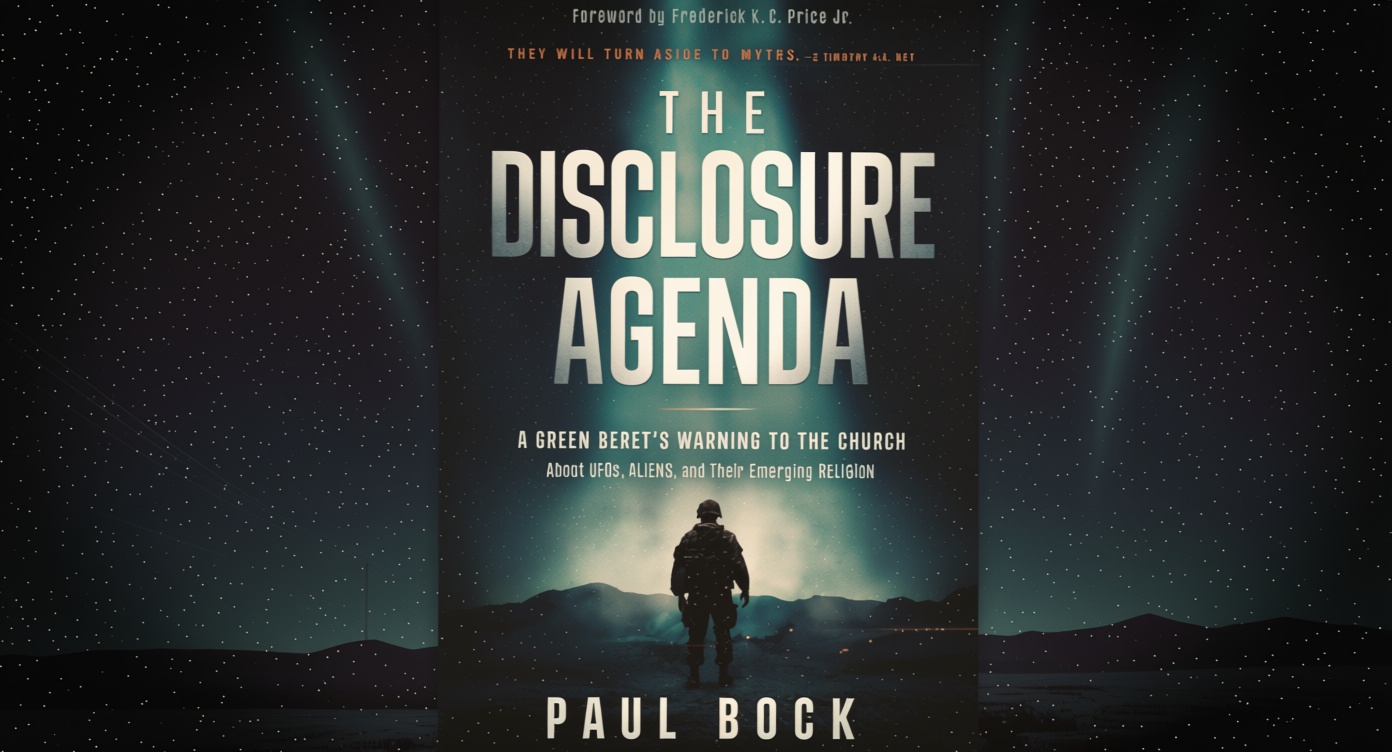
A new book circulating in online UAP-disclosure communities is framing the debate over unidentified aerial phenomena as more than a question of technology or government secrecy. The Disclosure Agenda: A Green Beret’s Warning to the Church About UFOs, Aliens, and Their Emerging Religion, by Paul Bock, presents disclosure as a potential challenge to established religious beliefs and institutions. The book has been shared widely in #UAPDisclosure discussions on X, where supporters and critics of disclosure frequently debate whether reported encounters represent advanced technology, psychological phenomena, spiritual experiences, or some combination of interpretations.
The book is listed by Amazon under ISBN 9781636416465, with the product page identifying Bock as its author. Its subtitle signals the central concern: that public disclosure of alleged non-human intelligence could generate belief systems resembling a new religion. The wording also describes Bock as a “Green Beret,” positioning the author’s warning through a military identity, although the supplied listing does not provide additional biographical details or independently verify that background.
The Argument Suggested by the Title
Based on the available description, Bock’s work appears to examine what he regards as the belief systems developing around UFOs, aliens and disclosure claims. In recent years, the UAP issue has expanded beyond reports of unexplained objects. It now includes questions about alleged crash-retrieval programs, non-human intelligence, secrecy, consciousness and the possibility that a future revelation could reshape public institutions and culture.
The phrase “emerging religion” suggests that the author is less focused on determining whether particular sightings are genuine than on the social and spiritual consequences of how such claims are interpreted. UAP communities can include people with sharply different views, ranging from those seeking strictly scientific investigation to others who connect the subject with spirituality, transcendence or long-standing religious narratives. Bock’s warning is directed specifically toward the Christian church, according to the subtitle, indicating that the book is intended partly as a theological or pastoral response.
Context Within the Disclosure Debate
The publication arrives amid renewed public attention to UAPs in the United States. Congressional hearings, military pilot testimony and official investigations have increased scrutiny of objects that witnesses say they could not identify. At the same time, government agencies have generally emphasized that unidentified does not automatically mean extraterrestrial. An unexplained observation may reflect incomplete data, sensor limitations, misidentification or technology that has not been publicly identified.
That distinction is important to evaluating arguments about an emerging religion. Claims about a new belief system involve cultural interpretation rather than proof that aliens or non-human intelligences exist. Likewise, the existence of a large online disclosure movement does not establish that a coordinated disclosure program is underway. The book’s warning therefore enters an area where documented incidents, contested testimony and broader philosophical speculation are often discussed together.
Online Reception and Open Questions
The supplied source material does not include a detailed synopsis, excerpts, reviews or statements from Bock explaining the book’s evidence and conclusions. As a result, the scope of his research and the specific cases he examines cannot be independently assessed from the Amazon listing alone. It is also unclear whether the book relies primarily on military history, Christian theology, interviews, UAP reports or analysis of online communities.
For now, The Disclosure Agenda is best understood as a contribution to the growing debate over what disclosure could mean—not only for national security and science, but also for religion and public culture. Its circulation on X demonstrates continuing interest in the subject, while the book’s central premise remains an argument to be examined against verifiable evidence rather than treated as confirmation of extraterrestrial activity or an organized disclosure agenda.