Overview
The Dullahan, Ireland’s legendary headless horseman, is portrayed in Irish folklore as a supernatural harbinger of death. According to an account published by Moon Mausoleum on October 1, 2026, the figure rides through the night calling the names of those whose lives are about to end. Once a person hears their name, tradition holds, death is unavoidable. The story places the Dullahan among Ireland’s most ominous supernatural figures, alongside the banshee and other beings associated with mourning, fate and the boundary between the living and the dead.
The legend is presented as folklore rather than documented history or evidence of a real phenomenon. Its enduring appeal comes from the stark imagery of a rider who cannot be stopped by ordinary barriers and who appears only when a soul is believed to be approaching its final moment.
The Rider Without a Head
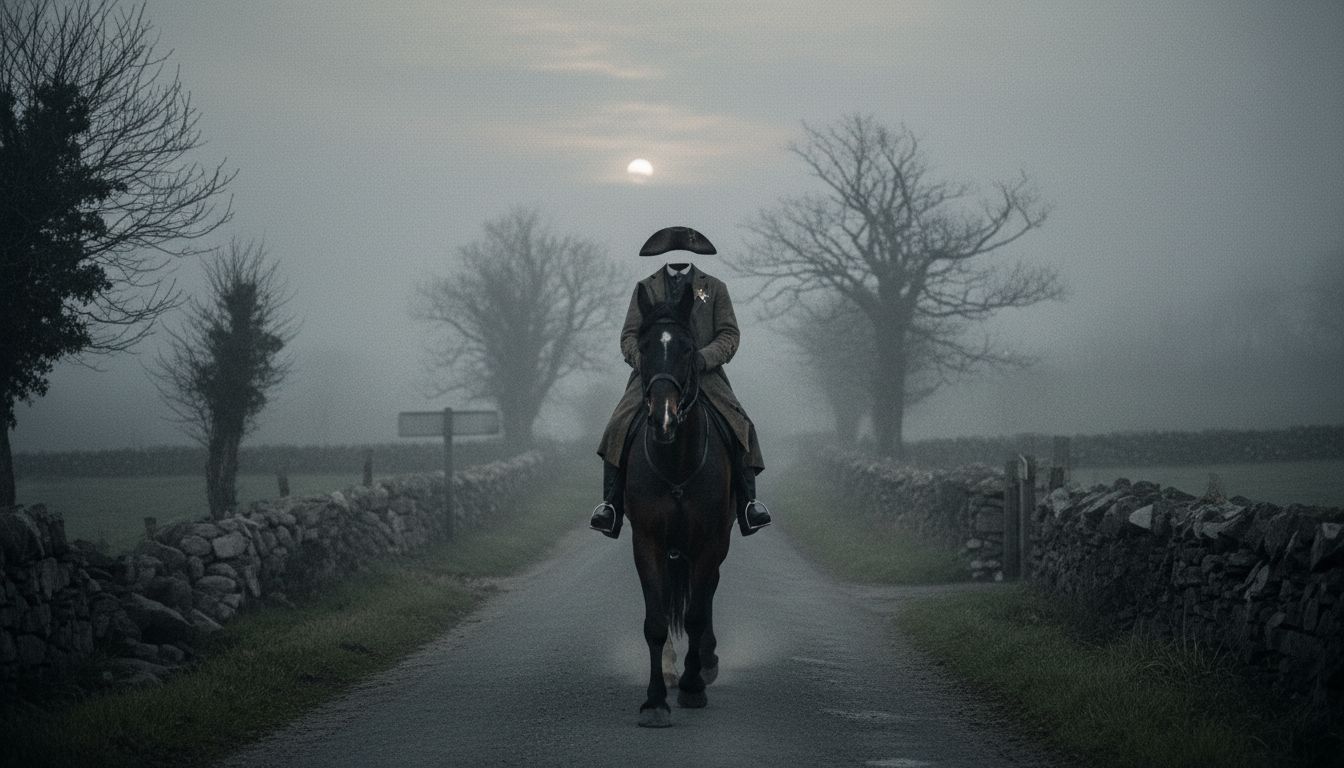
Known in some traditions as the Dúlachán or Gan Ceann, meaning “Headless One,” the Dullahan is said to travel on a black horse across lonely roads and open countryside. He carries his severed head in one hand and uses a whip made from a human spine. Stories describe the head as pale and grotesque, with a grin extending from ear to ear and eyes capable of seeing over great distances—even through walls and locked doors.
The horse is similarly supernatural. Folkloric accounts describe it as black as night, with sparks issuing from its nostrils and flames appearing in the rider’s wake. The sound of pounding hooves, the sudden silence of animals and dogs whimpering in fear are all treated as warnings that the Dullahan is nearby. In some versions, merely seeing the figure is enough to signal that death is close.
A Messenger—and Collector—of the Dead
The Dullahan differs from the banshee in one important respect. While the banshee is traditionally associated with lamentation and an impending death within a household, the Dullahan is often depicted as an active agent who summons or collects the dead. Some versions connect him with the Cóiste Bodhar, or “Deaf Coach,” a spectral death coach that carries souls away.
The rules of the encounter vary between tellings. In one recurring motif, the Dullahan calls a person by name, marking that individual for death. Another warns that anyone who looks back after hearing the call will die. Other stories claim that the rider’s arrival at a house foretells bloodshed before morning, while his stopping in a particular place indicates that someone there will soon perish.
Origins and Cultural Context
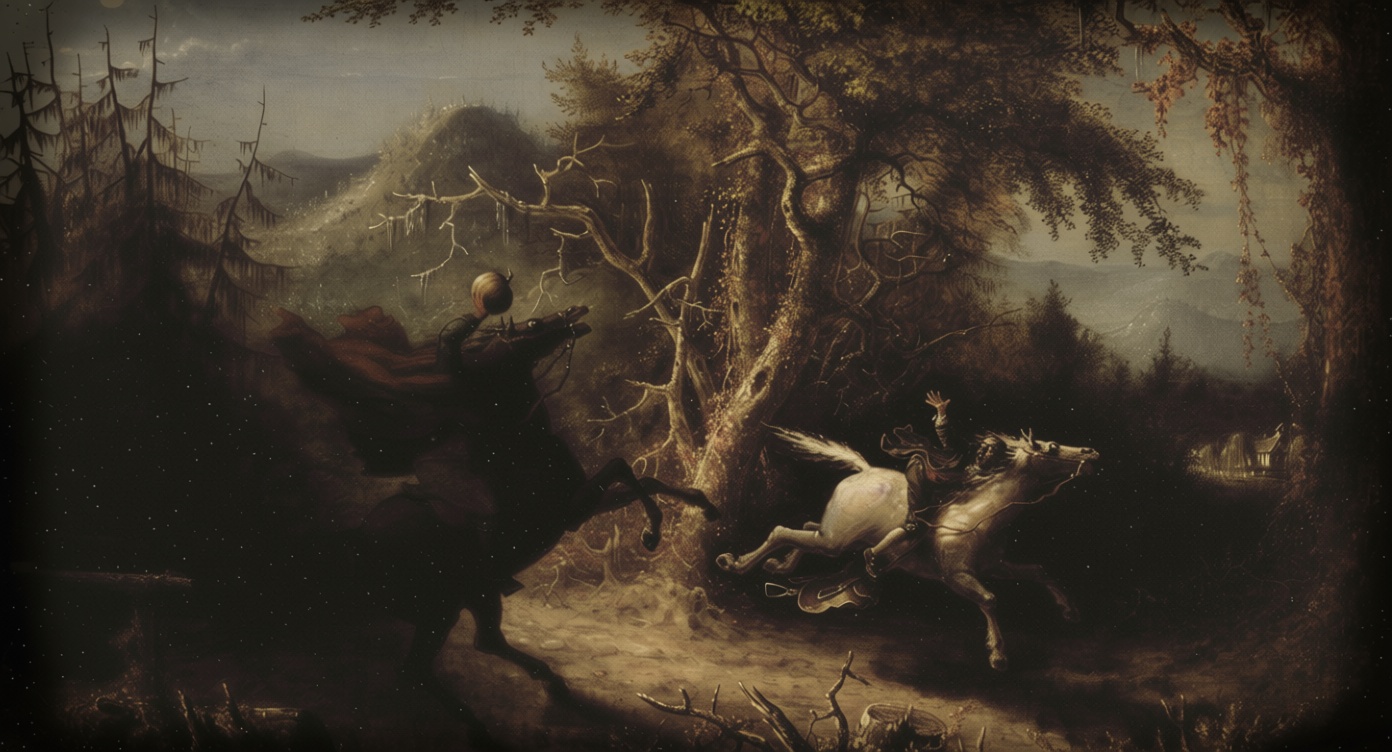
The headless horseman is not exclusive to Ireland. Similar figures have appeared in European folklore since at least the Middle Ages, and the broader archetype is now widely associated with Washington Irving’s “The Legend of Sleepy Hollow,” which drew on German and other European traditions. Moon Mausoleum notes that the Dullahan’s precise Irish origins remain uncertain.
Some interpretations have suggested links to older Celtic beliefs, including possible associations with Crom Dubh, a figure connected in certain traditions with fertility and seasonal ritual. Such connections remain speculative, however, and the surviving folklore does not establish a single, definitive origin for the legend.
A Legend That Endures
Whether understood as a Christian-era warning against pagan practices, a story shaped by older Celtic beliefs, or part of a wider European tradition of supernatural riders, the Dullahan continues to occupy a distinctive place in Irish folklore. His combination of a deathly summons, an unnatural appearance and an unstoppable journey gives the legend its particular force.
At its core, the tale reflects a familiar human fear: that death may arrive without explanation, and that fate, once announced, cannot be escaped.