The Pursuit
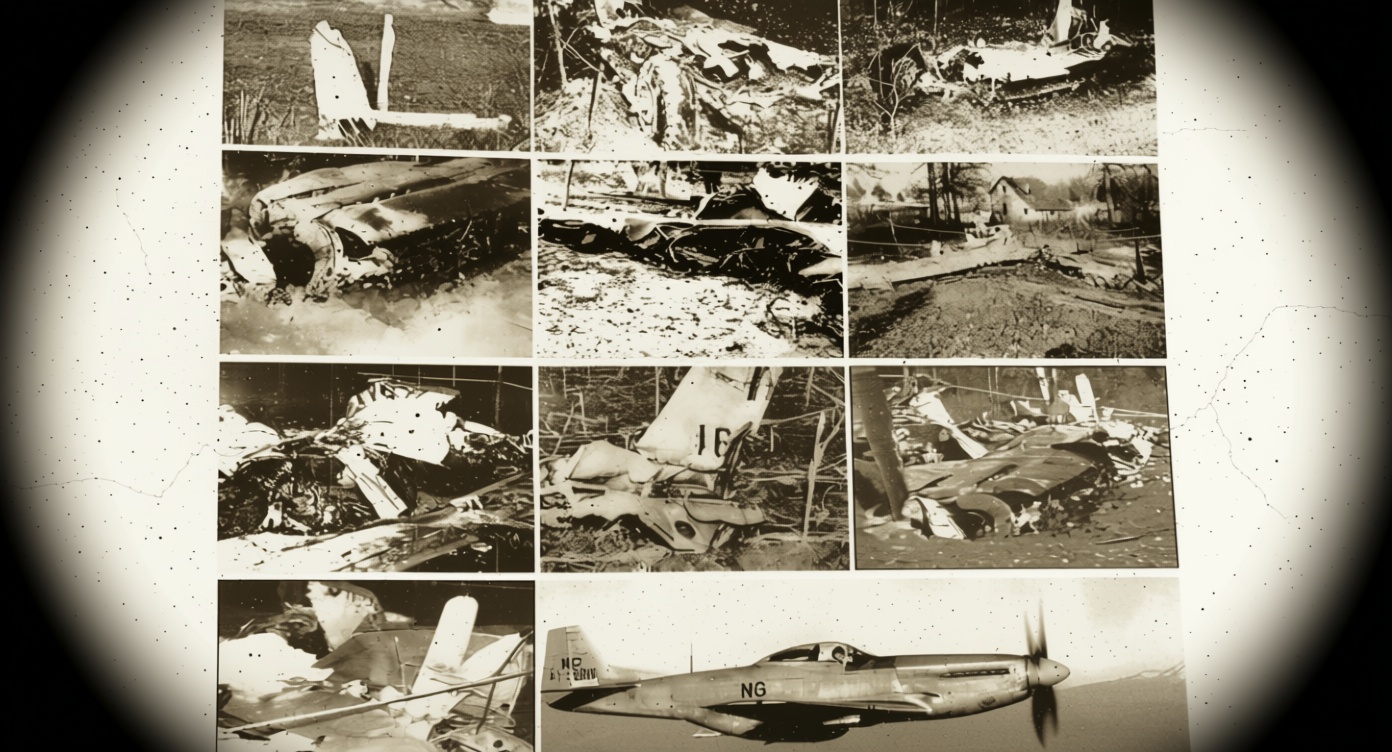
On January 7, 1948, U.S. Air Force Capt. Thomas Mantell died while pursuing an unidentified object near Fort Knox, Kentucky, an incident that quickly became one of the most consequential early “flying saucer” cases in the United States. Mantell, an experienced pilot, was reportedly directed toward an object observed over the area. He and other aircraft attempted to investigate, but Mantell’s P-51 climbed to a high altitude and ultimately disappeared from view. The fighter later broke apart, killing Mantell in the crash.
The episode occurred only months after civilian pilot Kenneth Arnold reported seeing a chain of nine unusual objects near Washington’s Mount Rainier on June 24, 1947. Arnold’s account helped propel “flying saucers” into the national conversation, generating reports of objects described variously as “chromium hub caps,” “dimes,” “tear drops,” and “pie plates.” Against that backdrop, Mantell’s death was treated not simply as an aviation accident but as a possible encounter with an unknown aerial vehicle.
Project Saucer
The Air Material Command at Wright Field, Dayton, Ohio, began its formal investigation of unidentified aerial reports under Project “Saucer,” officially established on January 22, 1948—just over two weeks after Mantell’s death. According to the project’s later digest, the command’s Technical Intelligence Division was responsible for collecting, investigating and interpreting reports of unidentified objects.
By the time the account was prepared in 1949, Project Saucer had reviewed more than 240 domestic and 30 foreign incidents. Investigators said they had identified approximately 30 percent of the cases as conventional aerial objects, while additional reports were expected to be explained through comparisons with weather-balloon locations, aircraft movements and atmospheric conditions. The project listed a broad range of ordinary causes, including astronomical phenomena, military research, migratory birds, flare-gun activity, optical illusions and practical jokes.
The report also emphasized the limits of what investigators could claim. Its evaluators stated that “no definite and conclusive evidence” had been found either to prove or disprove that some remaining cases involved real aircraft of unknown or unconventional design. At the same time, the document said the unresolved reports had produced “no alarming probabilities.” That cautious language is important: the official record did not endorse an extraterrestrial explanation, but neither did it claim that every report had been conclusively solved.
The Oxygen-Deprivation Explanation
The later accident investigation offered a conventional explanation for Mantell’s fatal pursuit. According to the documentary account summarized here, oxygen deprivation at extreme altitude caused Mantell to lose consciousness. Once incapacitated, he could no longer control the fighter, leading to the aircraft’s loss of control and airborne breakup.
That finding reframed the incident as a tragic combination of uncertain visual identification, a demanding aerial pursuit and the physiological hazards of high-altitude flight. It did not necessarily resolve what Mantell or other observers believed they had seen from the ground. Instead, it addressed the more specific question of how the pilot died: the available explanation was that hypoxia incapacitated him before the aircraft disintegrated.
What Remained Unresolved
Project Saucer’s broader conclusions placed the Mantell case within a landscape of competing possibilities. Officials considered whether sightings might reflect advanced technology, but the report described the existence of sufficiently small and powerful engines as “highly improbable.” Visits from other planets were likewise regarded as almost impossible. The project’s working position was therefore neither a blanket dismissal nor confirmation of extraordinary craft.
Mantell’s death remains significant because it illustrates the distinction between an unidentified observation and proof of an extraordinary vehicle. The object reported over Kentucky was not conclusively identified in the surviving account, while the pilot’s fatal accident received a terrestrial explanation centered on oxygen deprivation and loss of control. In that sense, the case became an early example of how the UFO debate developed: an unresolved sighting, an independently investigated accident and explanations that continued to follow long after the aircraft fell.