Overview
The former Lier Hospital, located outside Drammen in southeastern Norway, is being remembered both for its troubled medical history and for the ghost stories that have surrounded its abandoned grounds. In a report published by Moon Mausoleum on October 30, 2026, the site is described as one of Norway’s most frequently cited haunted locations, despite the demolition of most of its original buildings.
The hospital’s reputation is rooted less in documented paranormal evidence than in the suffering associated with its past. Stories of unexplained sounds, apparitions and a lingering presence have circulated for years, but those accounts remain part of local folklore rather than independently verified findings. The physical ruins, meanwhile, have become symbols of an era when psychiatric patients were often isolated from society and subjected to treatments now regarded as unethical or dangerous.
A Psychiatric Institution With a Troubled Legacy
Lier Hospital officially opened in 1926, at a time when mental illness was still poorly understood. According to the source, construction of the wider complex continued for roughly five years and ultimately produced six patient blocks designed to accommodate 552 people. At its peak, the hospital reportedly housed around 600 patients with conditions ranging from relatively mild disorders to severe and chronic illnesses.
The institution was presented as a modern psychiatric facility, but its history reflected broader developments in twentieth-century mental-health care. Patients were treated with methods including electroconvulsive therapy and lobotomy, procedures that were often performed under standards far removed from contemporary expectations of informed consent and patient protection.
The report characterizes Lier as a major center for lobotomies in Norway, a country that had one of the highest rates of the procedure relative to its population in Europe. Denmark reportedly recorded a higher rate. The article does not provide a complete patient-by-patient record or a precise total for Lier, but links the hospital to a substantial share of the procedures carried out in Norway.
Drug Experiments and Patient Deaths
Lier’s history also includes claims of experimental drug testing. Moon Mausoleum reports that the hospital became one of Norway’s most active institutions for testing new medicines, including treatments intended to induce sleep. At least seven patients reportedly died in connection with this sleep treatment before 1940, although the available source does not specify the exact drugs used, the circumstances of each death or the findings of any official investigations.
The hospital was also associated with LSD experiments, reflecting a period when psychiatric researchers in several countries investigated psychoactive substances as possible tools for studying or treating mental illness. Such work was often conducted under oversight standards that would not meet modern ethical requirements. The source presents Lier’s experimentation as part of a wider pattern of institutional authority, limited patient autonomy and inadequate safeguards.
From Hospital Grounds to Haunted Ruins
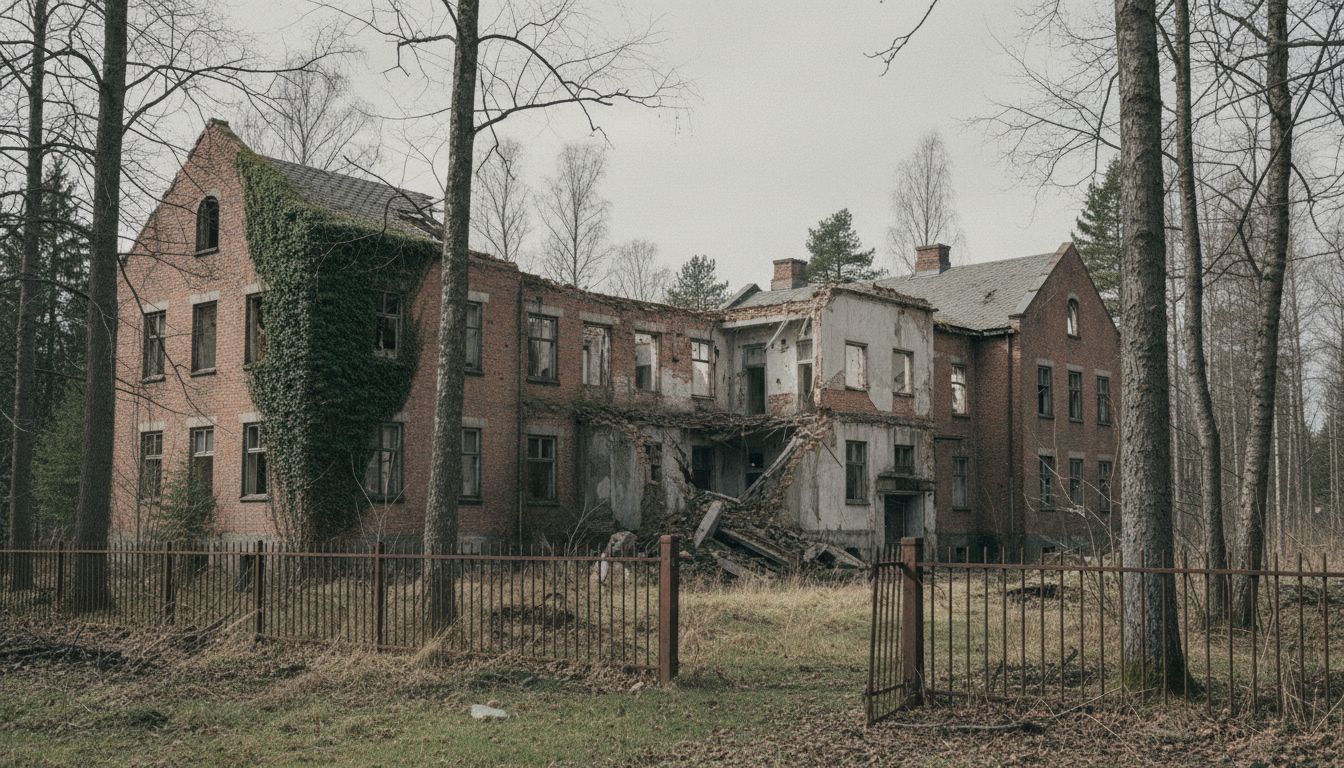
Lier Hospital eventually closed in the 1980s. As buildings deteriorated and many were later demolished, the remaining structures acquired a reputation for being unsettling and dangerous. A photograph included in the report shows the hospital’s B building in September 2017, before further changes to the site.
The site’s alleged hauntings are therefore inseparable from its documented history. Reports of a “haunted” atmosphere may reflect a combination of abandoned architecture, public memory and awareness of the patients who lived and died there. While paranormal claims cannot be confirmed on the evidence provided, Lier’s legacy is firmly grounded in real questions about psychiatric treatment, medical experimentation and the protection of vulnerable people.