Overview
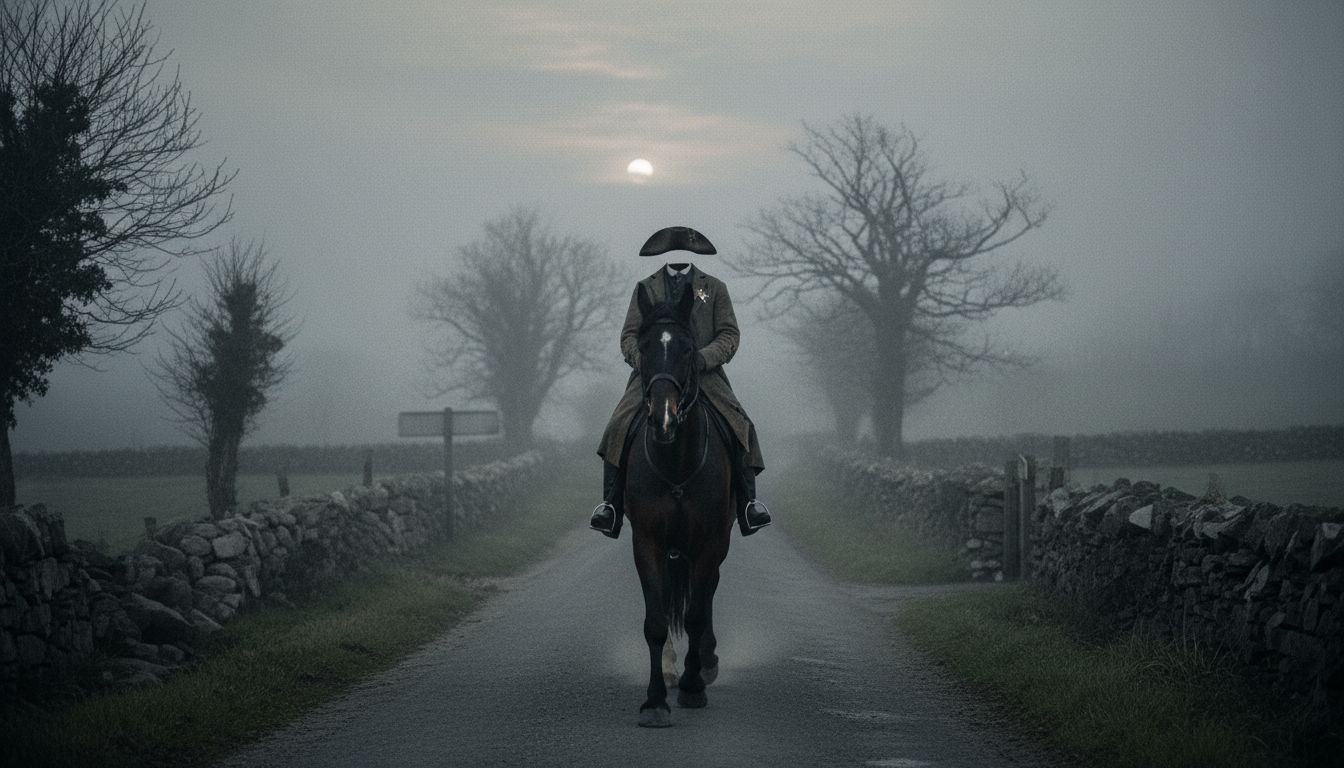
A Dublin ghost story associates Jones’s Road in Drumcondra with the spirit of Frederick E. Jones, better known as Buck Jones, a former Dublin sheriff who is said to appear as a headless horseman. According to the account published by Moon Mausoleum on October 21, 2026, the apparition rides near the road named after him, particularly at night when traffic and pedestrians have disappeared.
The legend describes the sound of “ghostly hooves” approaching through the darkness, followed by the appearance of a shadowy rider on a pale horse. Some versions say the horseman carries his severed head beneath one arm; others claim no head can be seen at all. There is no documented evidence confirming that the apparition exists, and the story is best understood as part of Dublin’s longstanding tradition of local supernatural folklore.
The Sheriff’s Decline
The narrative presents Jones as a once-influential figure who enjoyed wealth, social standing and a comfortable home at Clonliffe House, also known as the Red House on Clonliffe Road. He was reportedly regarded as handsome and well mannered, with an interest in culture and the theatre.
His fortunes allegedly changed because of gambling. The account says Jones began wagering beyond his means, eventually losing his property and financial security. His troubles deepened after the failure of his theatre, leading to imprisonment in a debtors’ jail. After his release, he is said to have lived in a small cabin provided by friends before dying in 1834.
According to the legend, Jones blamed the people around him for his downfall. In the story’s most dramatic detail, he died cursing the men he believed had ruined him and declaring that his spirit would not rest until he had taken revenge. That element provides the supernatural explanation for his supposed return, transforming a tale of financial collapse and betrayal into a ghost story.
The Headless Rider
Moon Mausoleum’s account places the first reported sightings shortly after Jones’s burial and says stories continued into the 20th century. The alleged encounters follow a familiar pattern in Irish and wider European ghost lore: a rider appears on a dark road, often amid fog, wind and an unusual sense of cold, before disappearing as quickly as he arrived.
The setting has helped sustain the legend. Jones’s Road runs near Croke Park, one of Dublin’s best-known landmarks, and its name gives the story a direct connection to the historical figure. The account says the horseman can be heard galloping along the road, with witnesses describing the ride as “fast, furious, and unrelenting.”
Folklore and Historical Caution
The story blends potentially historical details—such as Jones’s name, his association with Dublin and the Red House—with motifs common to supernatural storytelling. The headless horseman is a recurring figure in ghost traditions, frequently representing violent death, unresolved grievance or punishment beyond the grave.
However, the source does not provide archival records, contemporary newspaper reports, police accounts or named witnesses to substantiate the alleged sightings. It also does not establish whether Jones’s reported career, gambling losses or deathbed curse can be independently verified. As a result, Buck Jones remains a compelling figure in Dublin folklore, but not a historically documented haunting. For those walking Jones’s Road after dark, the hoofbeats are best regarded as part of the city’s storytelling heritage rather than evidence of a restless sheriff still seeking revenge.