Overview
Austad Estate, a historic manor in Drammen, Norway, is now part of the city’s museums. Before becoming a public heritage site, however, the property was associated with wealthy and influential residents—including county governor Paul Glud and his wife, Ingeborg Marie Glud. Local tradition holds that Ingeborg’s ghost remains on the grounds, appearing as “the Lady in Black.”
The account was published by Moon Mausoleum on Nov. 12, 2026, and presents the haunting as a mixture of reported encounters, historical events and unresolved speculation. There is no indication in the source that the supernatural claims have been independently verified. The story’s central historical episode—Ingeborg’s death in 1706—was treated as a suspicious shooting at the time, but her husband was acquitted.
Reported Apparitions
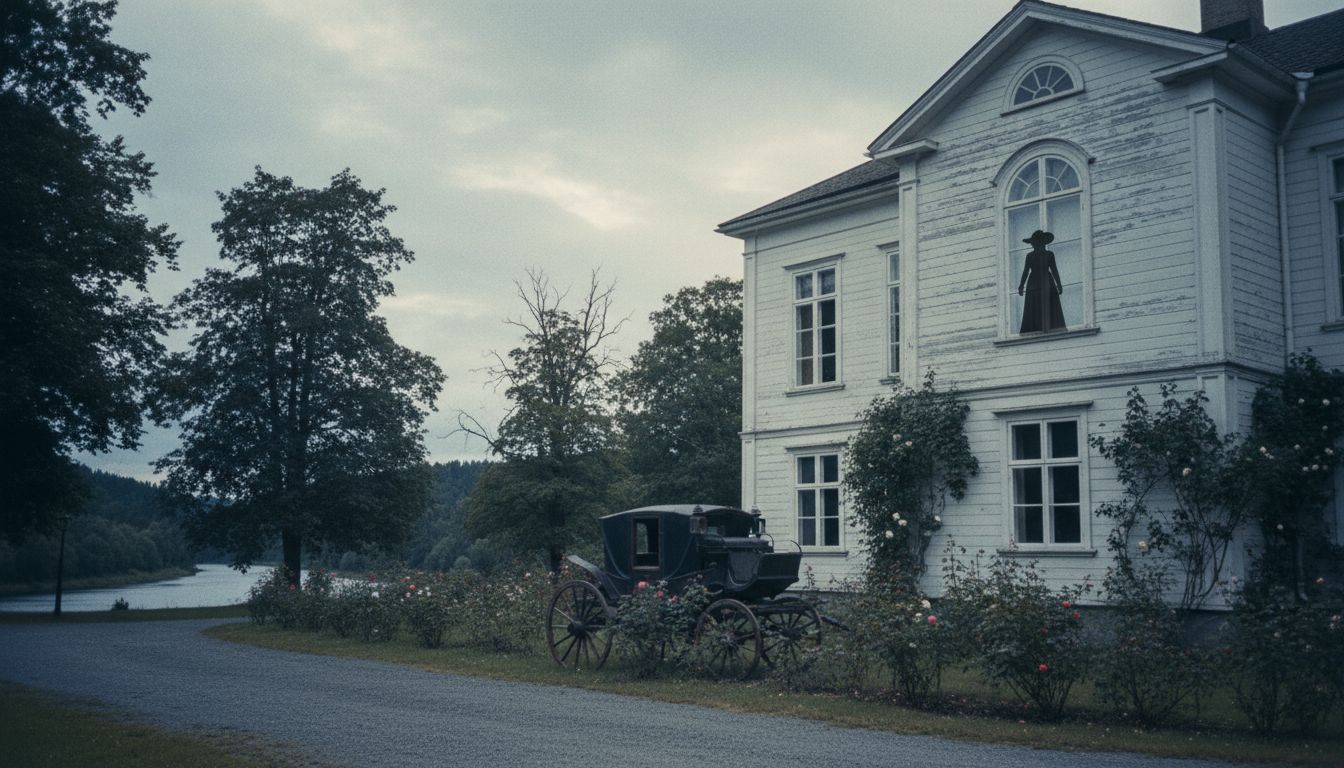
According to the account, hikers and local visitors have described seeing a woman walking slowly along the tree-lined avenue leading to Austad Estate. She is said to wear old-fashioned black clothing and move silently between the trees. When witnesses approach, the figure reportedly “dissolves into the air like smoke.”
Other alleged signs are said to occur inside the manor. Flickering lights in the dining room are linked by local storytellers to the death of Ingeborg Marie Glud, who is believed to have been the model for the estate’s ghostly resident. These reports form part of a broader tradition of haunted historic buildings, in which unexplained activity is connected to violent or tragic events from the past.
The source does not identify individual witnesses, provide dates for the alleged sightings or describe any formal investigation. As a result, the Lady in Black remains a matter of folklore rather than an established historical or scientific finding.
The 1706 Shooting
The legend is rooted in an incident said to have taken place on the second day of the New Year in 1706. Paul and Ingeborg Glud were having a late breakfast in the manor’s dining room, with a maid elsewhere in the house. The current Austad building stands on foundations associated with the estate occupied by the couple.
The account states that the couple heard a disturbance outside and discovered two elk on the property. Paul Glud reportedly went to retrieve a rifle that was kept loaded on the wall, supposedly for hunting and protection against burglars. When Ingeborg approached him, the weapon discharged. She was struck by the shot and died immediately.
Glud was arrested and charged with killing his wife. The case attracted considerable attention because of his social position; the source describes him as the first—and last—man of comparable stature in the country to face a murder accusation. Despite suspicions surrounding the circumstances, the court found insufficient evidence to convict him and acquitted him of the charge.
History and Legend
Doubt reportedly persisted after the verdict, particularly after Glud remarried the wealthy Maren Pedersdatter Moss. The timing fueled gossip and later helped shape the story that Ingeborg may have been deliberately killed by her husband, although the available account does not establish that claim as fact.
Today, Austad Estate’s historical significance rests on its architecture, its connection to the Glud household and its place in Drammen’s cultural heritage. The Lady in Black adds a layer of enduring local mythology—but the distinction between documented history and supernatural tradition remains essential. Ingeborg Marie Glud’s death was investigated in the 18th century; her alleged return as a ghost belongs to the realm of legend.