Overview
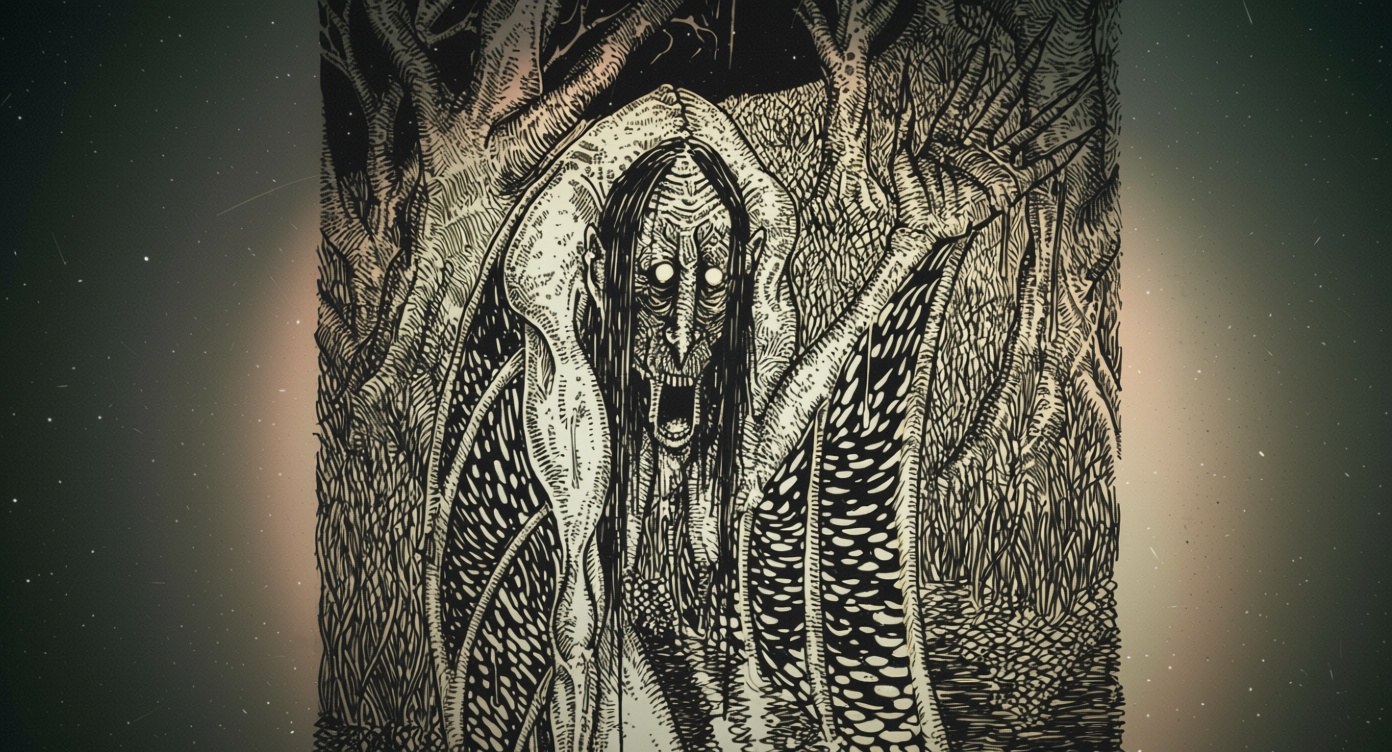
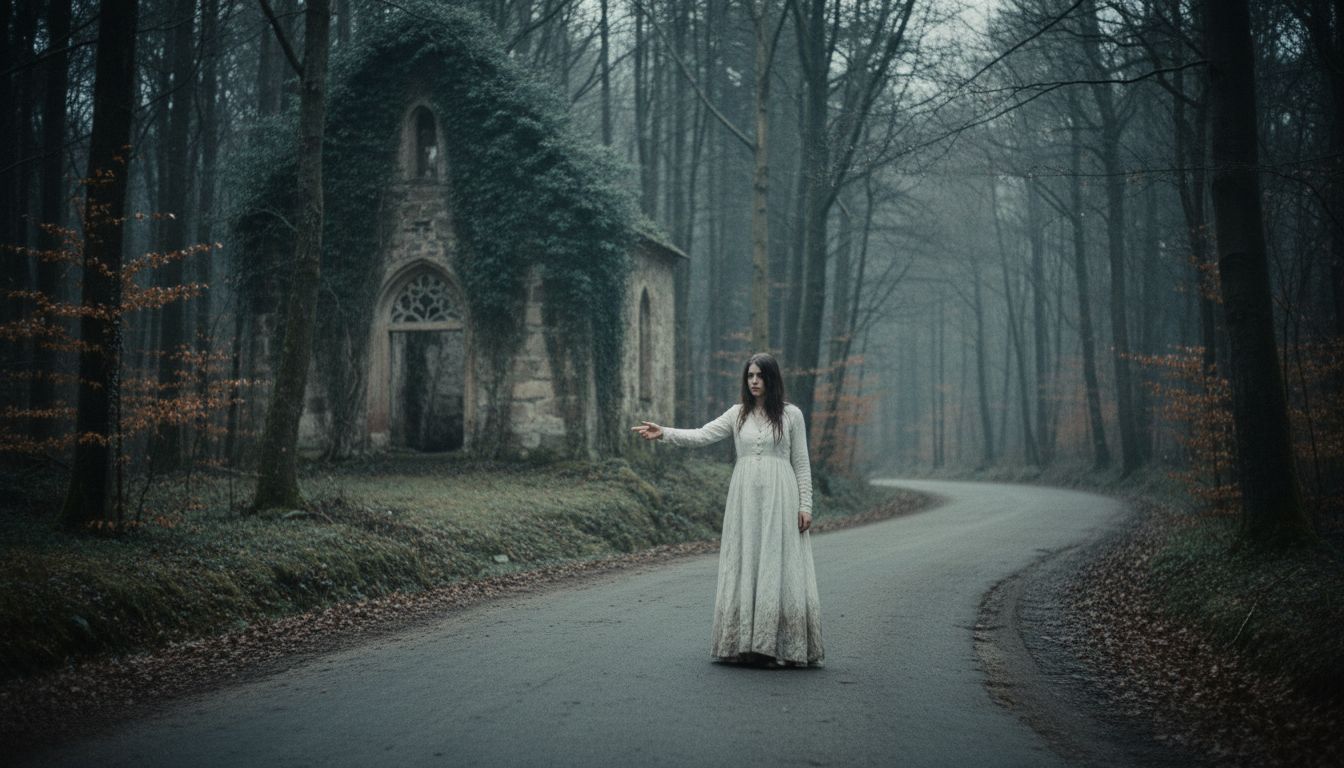
In the heart of Bavaria’s Ebersberg Forest, a legend continues to circulate around the Hubertus Chapel: a spectral woman in white who is said to appear to lone travelers and punish those who refuse her a ride. Known locally as the Lady in White, the figure belongs to a familiar European ghost tradition — the vanishing hitchhiker — but the setting gives the story a distinct regional character. The forest, one of Germany’s largest continuous woodland areas, has long been associated with mystery, and the tale has endured despite modern changes to the road network around the chapel.
The Chapel at the Center of the Legend
The legend is anchored to a specific location: a sharp bend near State Road 2080, between Ebersberg and Schwaberwegen, where the Hubertus Chapel stands at the junction with Scheibenweg. The chapel itself is dedicated to Saint Hubertus, patron saint of hunters and marksmen, and the oldest surviving reference to it appears on a map from 1783; the current structure dates to 1859. According to local lore, this is where the Lady in White haunts the roadside, allegedly appearing to motorists or travelers and warning of trouble to come. The story says that if she asks for a ride and is ignored, the consequences can be severe — in some versions, even fatal.
Accidents, Skepticism, and Enduring Belief
There is a practical explanation for why the legend took hold. The bend near the chapel was reportedly a site of many traffic accidents before road improvements widened and altered the curve. Skeptics point to that history as the likely origin of the haunting narrative, suggesting that repeated crashes gave rise to a supernatural explanation for a dangerous stretch of road. Even so, belief in the Lady in White persists, and the road known as B2R is still described by some as a place where accidents occur often enough to keep the legend alive. In folklore terms, that persistence matters: once a site becomes associated with danger, stories of hauntings can reinforce local memory long after the physical hazard has been addressed.
A Forest Full of Unanswered Stories
What makes the Ebersberg legend especially intriguing is that it does not stand entirely alone. The forest’s history stretches back centuries and is closely tied to a Benedictine monastery founded in 934, giving the area a long religious and cultural background that has helped sustain local traditions. The source material also suggests that the Lady in White may not be the only unexplained presence linked to the woods, hinting at a broader body of “legends and mysteries” said to remain unresolved in the darkness between the trees. Whether viewed as a cautionary roadside tale, a remnant of older beliefs, or simply regional folklore, the story of the Lady in White continues to shape how the Ebersberg Forest is imagined — not just as a place of natural beauty, but as one where history, accident, and superstition still overlap.