Overview
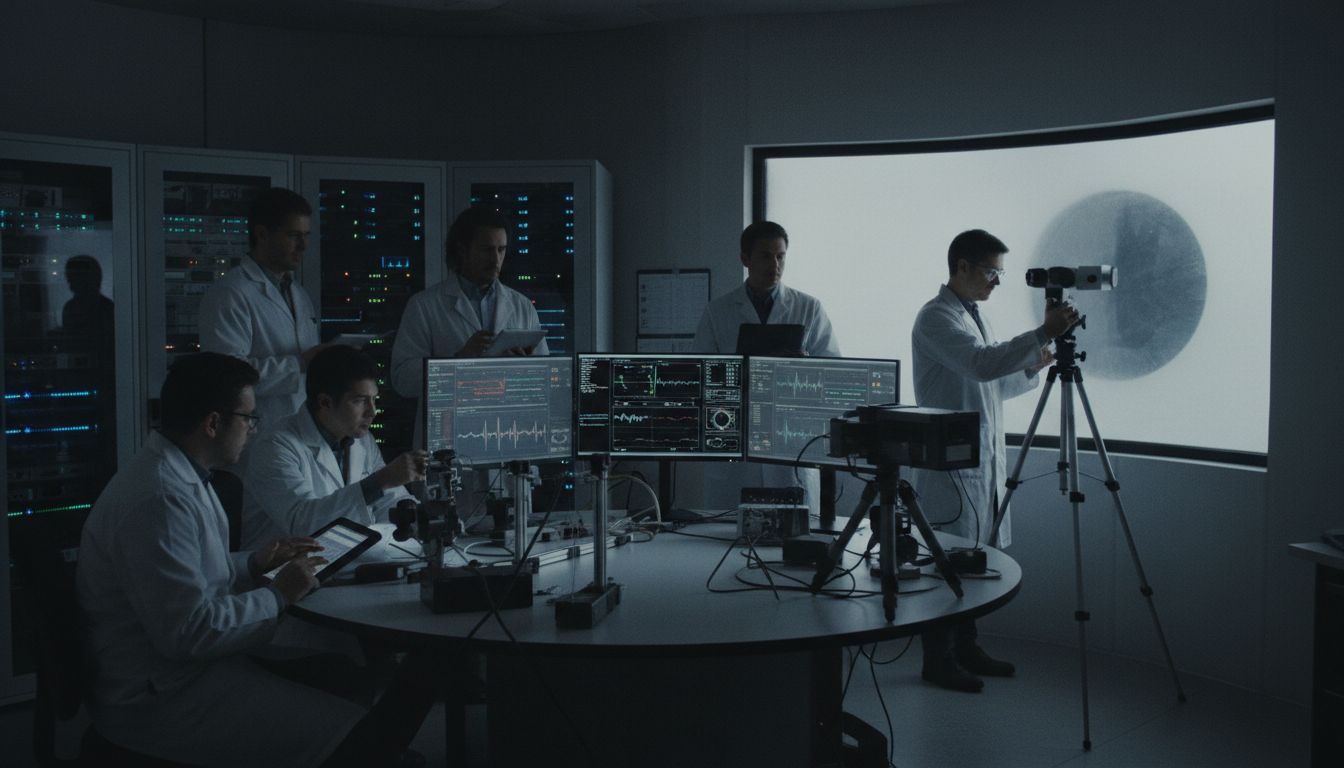
The conversation around UAP disclosure is increasingly shifting from what people think they saw to what can be measured, verified, and reproduced. A recent commentary argues that the next major advance in transparency will not come from more anecdotes or dramatic claims, but from better measurement — including stronger sensors, more disciplined data collection, and more rigorous analysis. The central idea is straightforward: if officials, researchers, and the public want to move beyond speculation, they need observations that are standardized enough to be compared and tested.
Why Measurement Matters
For years, UAP discussions have often been shaped by incomplete videos, eyewitness reports, and fragments of military or civilian sensor data that are difficult to interpret in isolation. That has made the subject highly visible but not always scientifically useful. The article’s argument is that credible disclosure depends on improving the quality of the evidence itself, not just releasing more of it. Better instrumentation would help distinguish unusual aerial events from ordinary causes such as drones, balloons, sensor glare, atmospheric distortion, or data-processing errors.
This approach would also strengthen transparency efforts by making them more verifiable. When observations are collected under consistent standards — with accurate timestamps, geolocation data, sensor calibration, and full metadata — analysts can compare cases more reliably across locations and platforms. In that sense, the next step in UAP disclosure is not simply more openness, but more trustworthy openness.
Building a Stronger Evidence Base
The article suggests that a modern UAP framework should rely on a wider range of sensors and cross-checks, including radar, infrared, optical systems, and passive electromagnetic monitoring where appropriate. No single tool is likely to solve the problem on its own. Instead, the value comes from multi-sensor confirmation, which can reveal whether an object is truly behaving in an unusual way or whether the apparent anomaly is a product of one instrument’s limitations.
That kind of rigor would also help reduce the public confusion that often surrounds UAP reporting. Standardized observation protocols would create a clearer path for separating credible cases from weak ones. Over time, this could give researchers and oversight bodies a more durable record — one less vulnerable to exaggeration, selective editing, or the gaps that have long complicated the subject.
A Step Toward Credibility
The broader implication is that measurement is a disclosure issue as much as a scientific one. If government agencies and independent researchers want public confidence, they need systems that can capture unusual events with precision and preserve the resulting data in a form that others can review. That means moving beyond isolated incidents and toward repeatable methods, transparent benchmarks, and better analytical standards.
In practical terms, the article frames UAP transparency as entering a new phase: one in which the most meaningful breakthroughs will likely come not from sensational revelations, but from the quieter work of instrument design, data integrity, and disciplined analysis. If that happens, the debate over UAPs may become less speculative — and more evidence-driven.


