Overview
Misinformation has become a persistent feature of modern public life, circulating across politics, health and science at a speed that often exceeds the ability of institutions to verify or correct it. An article published by Meer on September 26, 2026, examines one particularly durable form of misleading communication: pseudoscience, or claims that adopt the language and appearance of science while disregarding the methods that make scientific knowledge reliable.
The article argues that pseudoscience is not merely “bad science.” Rather, it presents itself as an alternative source of knowledge while avoiding essential scientific practices, including testing, falsification, peer review and openness to revision. Historical examples include alchemy, phrenology, miracle cures and paranormal claims. In the digital era, social-media platforms and online communities have given such ideas a global reach, allowing unsupported claims to spread, reappear and adapt long after they have been challenged.
What Separates Science From Pseudoscience
Scientific conclusions are provisional. They are developed through hypotheses, experiments or observations, public discussion, criticism and attempts at replication. Evidence that contradicts a favored explanation is not supposed to be treated as an attack; it is part of the process through which scientific understanding improves. As the article notes, “Science is inherently self-correcting.”
Pseudoscientific claims often behave differently. Failed predictions may be ignored or reinterpreted, while contradictory findings are dismissed as evidence of bias or conspiracy. The article also highlights the longstanding philosophical “demarcation problem”—the difficulty of drawing a perfect line between science and non-science. Karl Popper’s influential standard held that scientific claims should be falsifiable, meaning that some conceivable evidence could prove them wrong. Yet the source cautions that falsifiability alone is not an infallible test: legitimate theories may be difficult to evaluate in their early stages, while unsupported claims can sometimes be designed to evade disproof.
Why the Distinction Matters
The consequences extend well beyond academic debate. Public decisions concerning medicine, disease prevention, climate policy and emerging technologies depend on the ability to distinguish evidence from assertion and to understand uncertainty. Scientific literacy, the article emphasizes, is not simply the memorization of facts. It also involves understanding how knowledge is produced, tested, challenged and revised.
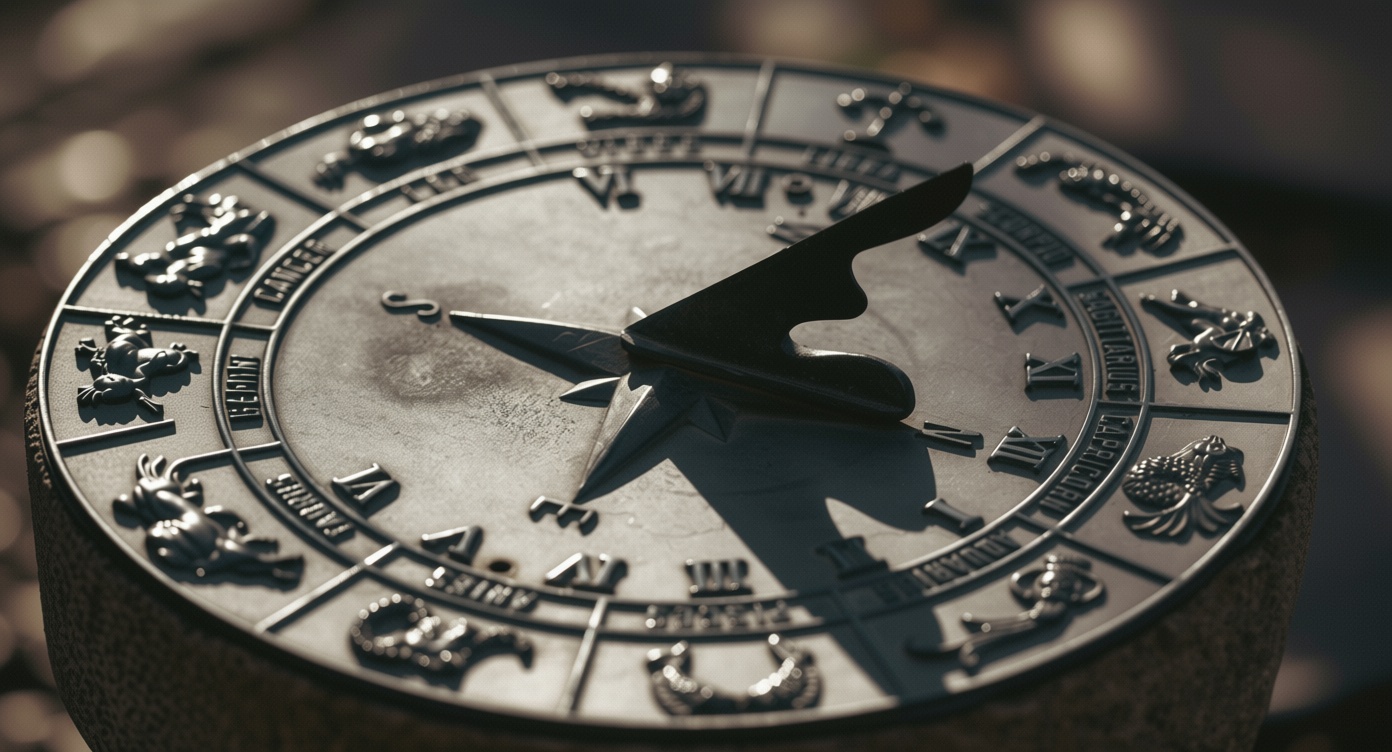
The article cites the use of belief in astrology by the U.S. National Science Foundation as a rough indicator of whether people can distinguish science from pseudoscience. It stresses that casually reading a horoscope is not itself the central concern. More important is the reasoning pattern that accepts claims without empirical support because they feel intuitive, culturally familiar or emotionally satisfying. That pattern can also contribute to vaccine skepticism, medical conspiracy theories and false information about treatments.
Relevance to UFO and UAP Claims
These standards are particularly relevant to reports involving unidentified flying objects, now commonly called unidentified anomalous phenomena, or UAP. An unexplained observation is not automatically evidence of extraterrestrial technology, just as an unusual image or testimony should not be dismissed without examination. A responsible assessment asks what was observed, how reliable the data are, whether alternative explanations were considered, and whether independent investigators can evaluate or replicate the analysis.
The distinction is therefore between an unresolved observation and a proven explanation. UFO and UAP discussions can involve legitimate questions about aviation safety, sensor performance, atmospheric phenomena and national security. But claims that move beyond available evidence require proportionate support. Confidence, dramatic presentation or appeals to secrecy cannot substitute for verifiable data.
Applying Critical Thinking
The article concludes that pseudoscience often succeeds by offering certainty, simple explanations and a sense of control in an unpredictable world. It may also portray established experts as corrupt or engaged in a hidden agenda, making criticism appear to confirm rather than weaken the claim. Readers can resist that pattern by asking whether evidence is independently available, whether the claim makes testable predictions, how contradictory information is handled and whether the source distinguishes facts from opinions.
In an information environment where scientific language can be used to make unsupported ideas appear authoritative, critical thinking is not the rejection of unusual possibilities. It is the discipline of matching conclusions to evidence, acknowledging uncertainty and remaining willing to revise beliefs when better information becomes available.