Overview
For decades, the alleged Dulce Base story has occupied a prominent place in American UFO lore. The account centers on Thomas “Tom” Castello, described as a former security officer at a supposed joint human-extraterrestrial installation beneath or near Dulce, New Mexico. According to versions of the story that circulated from the late 1970s onward, the underground complex housed human personnel, Grey aliens and reptilian humanoids, while lower levels were allegedly used for genetic experimentation.
The story has never been supported by independently verified employment records, authenticated facility documents or confirmed evidence that Castello existed in the role attributed to him. Later accounts claimed that Castello, his wife and their son went into hiding after he left the facility and eventually disappeared, but no independent evidence establishing those alleged deaths or disappearances has been documented. The account is therefore best understood as an influential UFO narrative—and, according to the source material, a hoax—rather than a substantiated disclosure.
How the Story Emerged
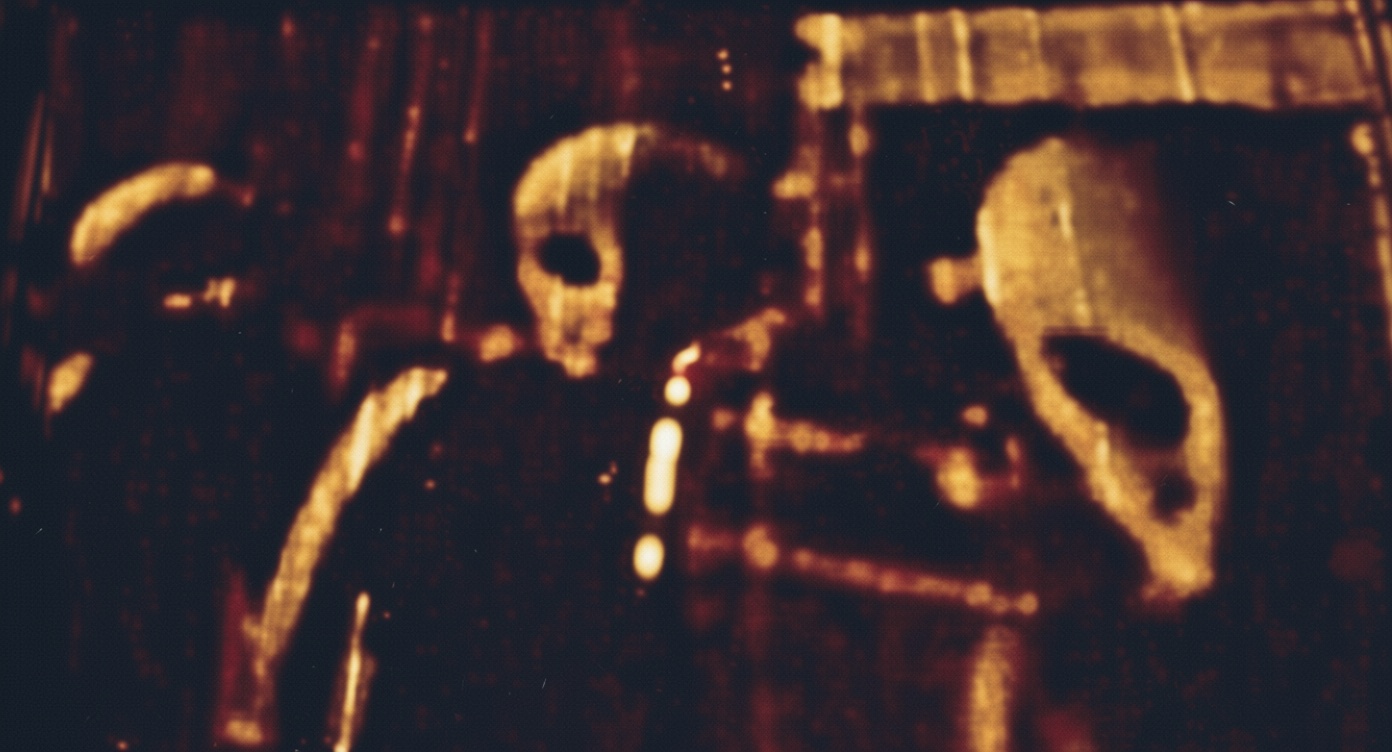
The earliest documented version of the Castello evidence narrative appeared by December 1987, when UFO researcher John Lear wrote about an alleged former Dulce security officer who had supposedly left the facility in late 1979. Lear’s account said Castello had removed photographs, videotape and documents from the installation.
The chronology is significant because later retellings sometimes presented the material as if it had emerged directly from Castello in 1979. In an April 2008 Project Camelot interview, however, Lear said the Dulce story began circulating in 1987 after UFO researcher Tom Adams gave him a note from a source identified only as “Mr. X.” Lear said Mr. X showed him pencil drawings allegedly copied from photographs Castello had left behind. Lear then reproduced the faint sketches in black ink for wider distribution.
A December 13, 1987 letter from Lear refers to and encloses what he called “the Dulce papers,” indicating that the material was already circulating under that name before the story received broader exposure in UFO publications.
Evidence Claims and Later Retellings
The narrative expanded in the February–March 1991 issue of UFO Universe, where William F. Hamilton III and Tal LeVesque stated that Castello had escaped with more than 30 photographs, a security videotape and other documents. A later question-and-answer account attributed to Castello described five evidence packages, each allegedly containing 27 sheets of 8-by-10-inch photographs, videotape and additional paperwork.
Despite those detailed claims, no complete original evidence package has ever publicly surfaced. Instead, the story has primarily been transmitted through letters, reproductions, interviews and secondhand testimony involving Lear, LeVesque, Hamilton and others, including Cherry Hinkle in later discussions of the Dulce material. The absence of verifiable originals is central to assessments that the account was fabricated or substantially embellished.
Assessment and Context
The Dulce Base story reflects a recurring pattern in UFO culture: an alleged secret facility, a mysterious insider, missing evidence and claims of intimidation or disappearance. Such elements can make a narrative compelling while also making it difficult to test. In this case, the publicly available record establishes that the claims circulated among UFO researchers by the late 1980s, but it does not establish that Castello worked at Dulce Base, that the facility existed as described, or that the claimed evidence was authentic.
From the first documented references in 1987 through later discussions extending to 2016, the Castello account remained dependent on unverified identities and materials that were never independently authenticated. Its historical importance lies in how it helped shape modern Dulce Base mythology—not in evidence demonstrating an underground human-alien installation in New Mexico.