Overview
AL.com’s latest look at UFO hotspots taps into a fascination that has only deepened in recent years: where, exactly, are people most likely to spot something unidentified in the sky? The piece uses that enduring curiosity to point readers toward the U.S. locations that generate the most UFO reports, framing the subject less as science fiction and more as a question of geography, visibility and reporting patterns. While the story leans into the familiar “the truth is out there” appeal, it also reflects a broader public shift: unidentified aerial phenomena are no longer confined to tabloid culture or late-night cable specials, but have entered mainstream conversation.
What Makes a UFO Hotspot
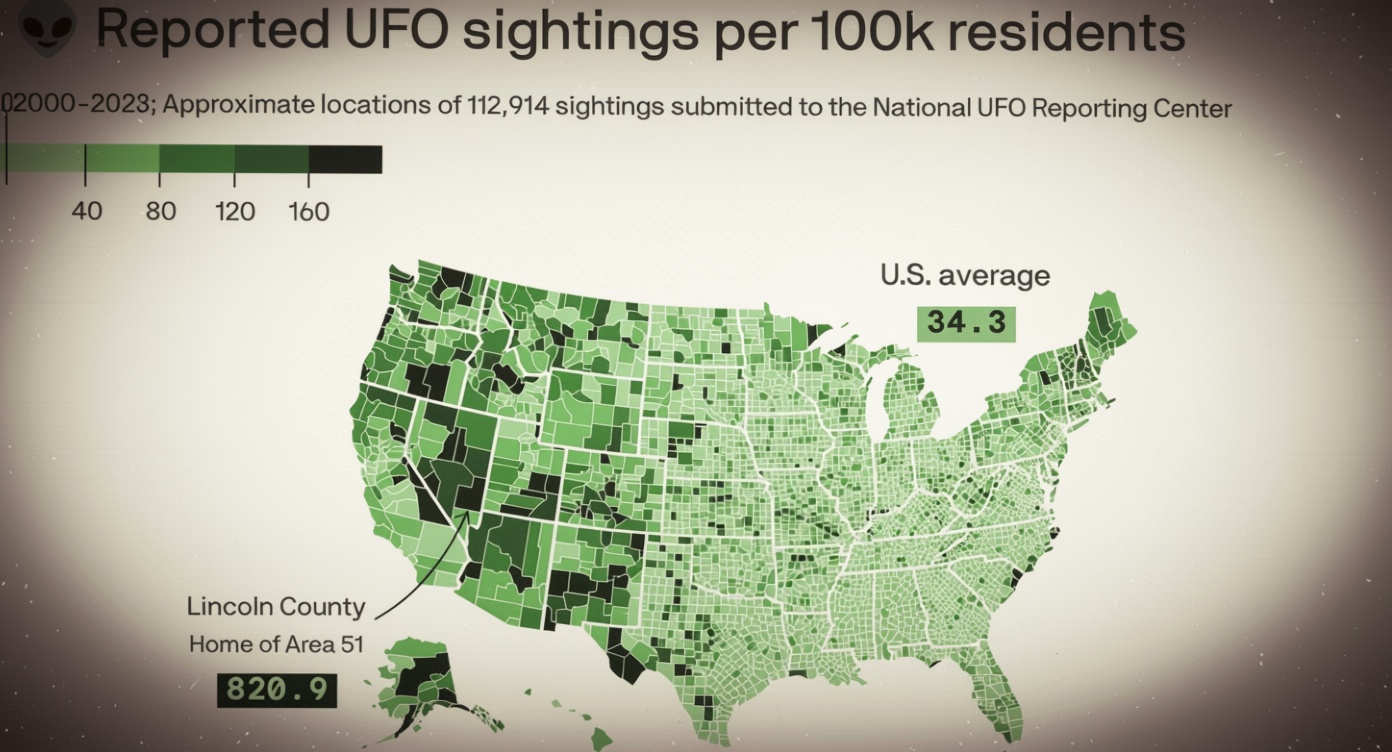
The key takeaway is that UFO sightings tend to cluster in places where people are already looking up — and where conditions make unusual lights or objects easier to notice. Dense reporting often comes from regions with clear night skies, wide open terrain, and active aviation or military corridors. In other words, a “hotspot” is not necessarily a place where more strange things are happening, but where more people are able, and willing, to report them. AL.com’s roundup highlights that the locations most associated with UFO encounters often combine low light pollution, high visibility and a strong local awareness of unexplained sightings.
Regional Patterns Across the U.S.
Although the fascination with UFOs is national, the most frequently reported sightings have long been associated with western and southern states, where open landscapes and dark skies can make unusual objects stand out more dramatically. Desert regions, mountain towns and sparsely populated stretches of highway are often cited by researchers and enthusiasts alike as places where anomalous lights are more likely to be noticed. At the same time, larger population centers can generate high report counts simply because more people are present to see and describe unexplained events. The result is a mix of classic “UFO country” and heavily traveled urban-adjacent airspace.
Why These Places Keep Drawing Attention
There is also a cultural effect at work. Communities with a long UFO history often attract both visitors and more sightings, creating a feedback loop of attention and reporting. Well-known destinations associated with unexplained aerial activity — from desert outposts to locations near sensitive military or aerospace operations — tend to remain part of the national conversation because they have already been embedded in the public imagination. That makes every new light in the sky feel more significant, even when the explanation may turn out to be conventional: aircraft, satellites, drones, weather phenomena or celestial objects.
A Mystery That Keeps Finding an Audience
AL.com’s article ultimately underscores why UFO coverage continues to resonate. Even as official UAP investigations and government transparency efforts have made the topic more serious, the appeal remains the same: people want to know whether they are alone, and whether the strange lights overhead are something extraordinary. The piece invites readers to think about where sightings are most commonly reported, but it also reminds them that the phenomenon is as much about human perception and pattern recognition as it is about anything in the sky. For now, the mystery remains unresolved — and that may be exactly why the subject continues to draw attention.