Overview
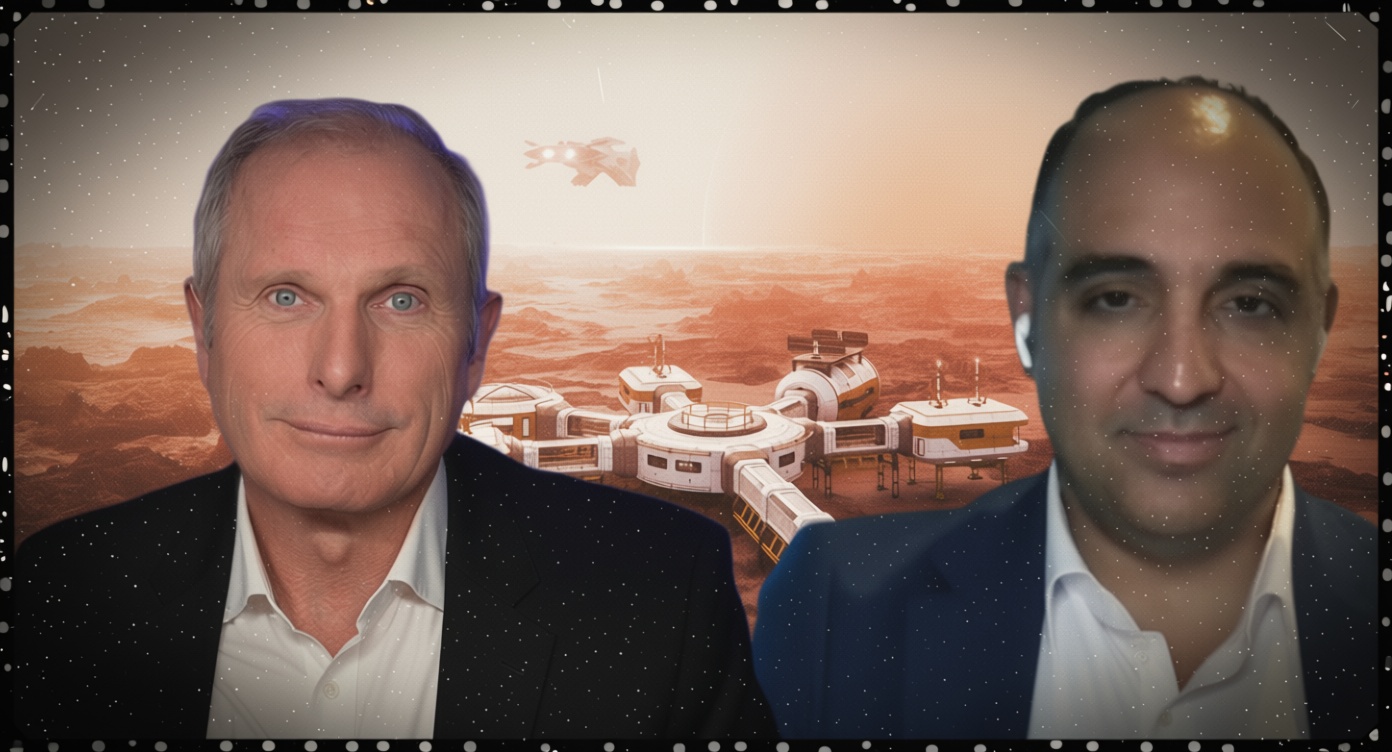
A new episode of Reality Check on VibeWire Magazine has revived an old question in a more technical frame: could Mars preserve the ruins of an ancient civilization? In the discussion, host Ross Coulthart speaks with theoretical physicist and philosopher of physics Maaneli Derakhshani, who walks through a range of unusual lunar, Phobos, and Martian features that he argues deserve closer scrutiny. Rather than claiming proof of alien architecture, the conversation is presented as a theoretical examination of anomalies that some researchers believe have been prematurely dismissed. The episode begins on the Moon, touches on the Phobos 2 mission and an object once described in NASA literature as a monolith, and then shifts to the Martian surface, where formations such as the “glass worm,” rectilinear structures near the Atlantis basin, and the famous “face on Mars” are discussed as possible clues to something more than geology.
What the Physicist Examines
According to the source material, Derakhshani applies fractal analysis—a technique used in scientific and defense settings to help distinguish natural terrain from engineered forms—to imagery from Mars and Phobos. The aim, he suggests, is not to force a conclusion but to test whether some features are better explained by chance, erosion, or something intentionally structured. The episode revisits the Phobos 2 spacecraft, the “monolith” NASA-related mission references, and the reason SETI reportedly found the object worth studying. From there, the discussion broadens to surface features on Mars that have long fueled debate among anomaly hunters, including formations in Aram Chaos, the Atlantis basin, and Renaudot Crater. Derakhshani also invokes Carl Sagan’s standard for evidence of past life, arguing that extraordinary-looking structures should at least be treated as open questions rather than automatically dismissed as optical tricks or pareidolia.
The Broader Scientific and Historical Context
The episode’s framing matters because it places speculative interpretation alongside mainstream scientific caution. Mars has been examined for decades by orbiters, landers, and rovers, and the overwhelming scientific consensus remains that the planet’s surface features are the result of natural processes, not confirmed ruins. Still, the source highlights why these claims persist: certain images appear to show sharp angles, repeating geometry, or unusually human-like contours, and those impressions are often amplified by mission-era photo limitations, low-resolution datasets, and public fascination with the possibility of ancient life. The show also raises questions about who controls Mars imagery and how much data is publicly accessible, a concern that tends to resonate in fringe and independent research communities alike.
Caution, Curiosity, and the Limits of the Evidence
What makes the conversation notable is not that it proves a civilization existed on Mars, but that it attempts to formalize the debate using a scientific lens. Even so, the evidence described in the source remains interpretive: images, geometric comparisons, and pattern analysis do not amount to confirmation of artificial origin. The episode ends by asking whether any of the features could indicate cities, villages, or buried structures, but it stops short of a definitive answer. For now, the article’s central takeaway is more measured: Mars continues to inspire serious questions, and while most of its supposed anomalies may ultimately prove natural, some researchers believe they are still worth testing rather than ridiculing outright.