Overview
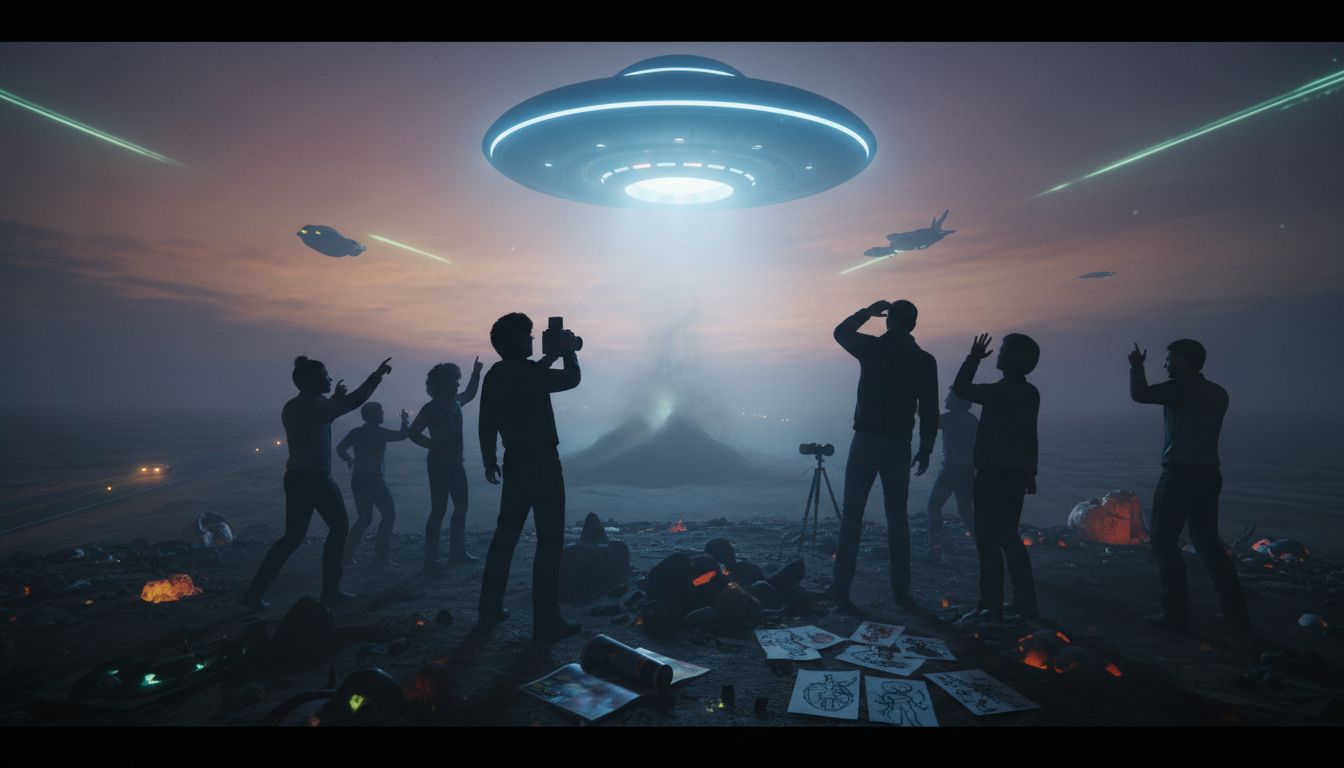
A new compilation on the entertainment site JoBlo brings together a range of celebrity testimonies about unidentified flying objects (UFOs). The article, which draws on interviews, social‑media posts and past television appearances, showcases everything from brief, “lights in the sky” sightings to more elaborate narratives involving alleged abductions and whispers of government concealment. While the claims vary in detail and credibility, the collection underscores how the UFO phenomenon continues to capture the imagination of high‑profile public figures, even as official agencies in the United States and elsewhere have begun to treat the subject with a measure of seriousness.
Celebrity Accounts
Among the most frequently cited names is John Travolta, who has spoken publicly for decades about his fascination with extraterrestrials. In a 2024 interview with a radio program, Travolta recalled a night in the early 2000s when a “bright, disc‑shaped object hovered silently over his backyard” before disappearing at high speed. Similarly, Tom Cruise recounted a 1998 experience while driving through the Nevada desert, describing “a series of pulsating lights that moved in a way no aircraft could.” Actress Miley Cyrus posted a brief video in 2023 showing a flickering orb she described as “something I’ve never seen before,” adding that the incident left her “both curious and a little uneasy.” The JoBlo piece also references statements from Rob McElhenney, co‑creator of It’s Always Sunny in Philadelphia, who claimed a “sudden, silent blackout” over his Los Angeles home was accompanied by a “low‑hum sound and a metallic smell,” which he linked to a possible craft.
Outlandish Anecdotes
Beyond simple sightings, the article highlights several more sensational narratives. Actress Olivia Munn allegedly recounted an “abduction” in which she was taken aboard a craft for a brief, “telepathic interview” before being returned unharmed—a story she later clarified as a “dreamlike experience” rather than a literal event. Musician Kanye West is quoted as saying he received a “sealed envelope” from an unnamed “government source” warning him to keep silent about a “classified aerial phenomenon” he allegedly witnessed at a private concert venue. While JoBlo notes that these claims have not been corroborated by independent evidence, their inclusion reflects a broader trend of celebrities leveraging UFO lore for personal branding or artistic inspiration.
Expert Perspective
UFO researcher Dr. Jacques Vallée, a veteran of the field, cautions readers to separate subjective perception from verifiable data. “When a public figure describes a light in the sky, it’s often filtered through personal belief systems and media narratives,” Vallée explained. He points to the 2023 U.S. Office of the Director of National Intelligence (ODNI) report, which catalogued 144 “unidentified aerial phenomena” (UAP) encounters, many of which involved trained military personnel. “The report acknowledges that a portion of these incidents remain unexplained, but it does not imply extraterrestrial origin,” he added. Skeptic Dr. Emily Sanchez, a cognitive psychologist at Stanford University, notes that pattern recognition and expectation bias can lead even well‑educated individuals to interpret ambiguous stimuli as craft or beings, especially when cultural depictions of UFOs are pervasive.
Implications and Context
The JoBlo roundup arrives at a moment when government transparency on UAPs is gradually increasing. Congressional hearings in 2022 and 2024 have prompted the Pentagon to establish the All‑Domain Anomaly Resolution Office (AARO), tasked with collecting and analyzing anomalous sightings across air, space and maritime domains. While celebrity anecdotes do not constitute scientific evidence, they do amplify public interest, potentially influencing policy discussions and funding for further investigation. As the article concludes, the blend of personal testimony, media amplification, and emerging official data creates a complex landscape where the line between curiosity and credulity remains finely drawn.


