Overview
A new review of UAP-related material highlights three recurring themes in the current debate: black triangle sightings near sensitive military facilities, renewed attention to Roswell testimony, and demands for stronger supporting evidence. Published October 26, 2026, by UAPDrop, the review presents recent document releases and commentary as part of a broader effort to reassess how unusual aerial incidents are investigated and discussed.
The material describes reports of compact, matte-black triangular objects operating near U.S. military sites. However, the available source excerpt does not provide independently verified sensor data, complete case files or corroboration from outside investigators. As a result, the reported observations remain allegations and witness accounts rather than established evidence of nonhuman technology.
Black Triangle Reports
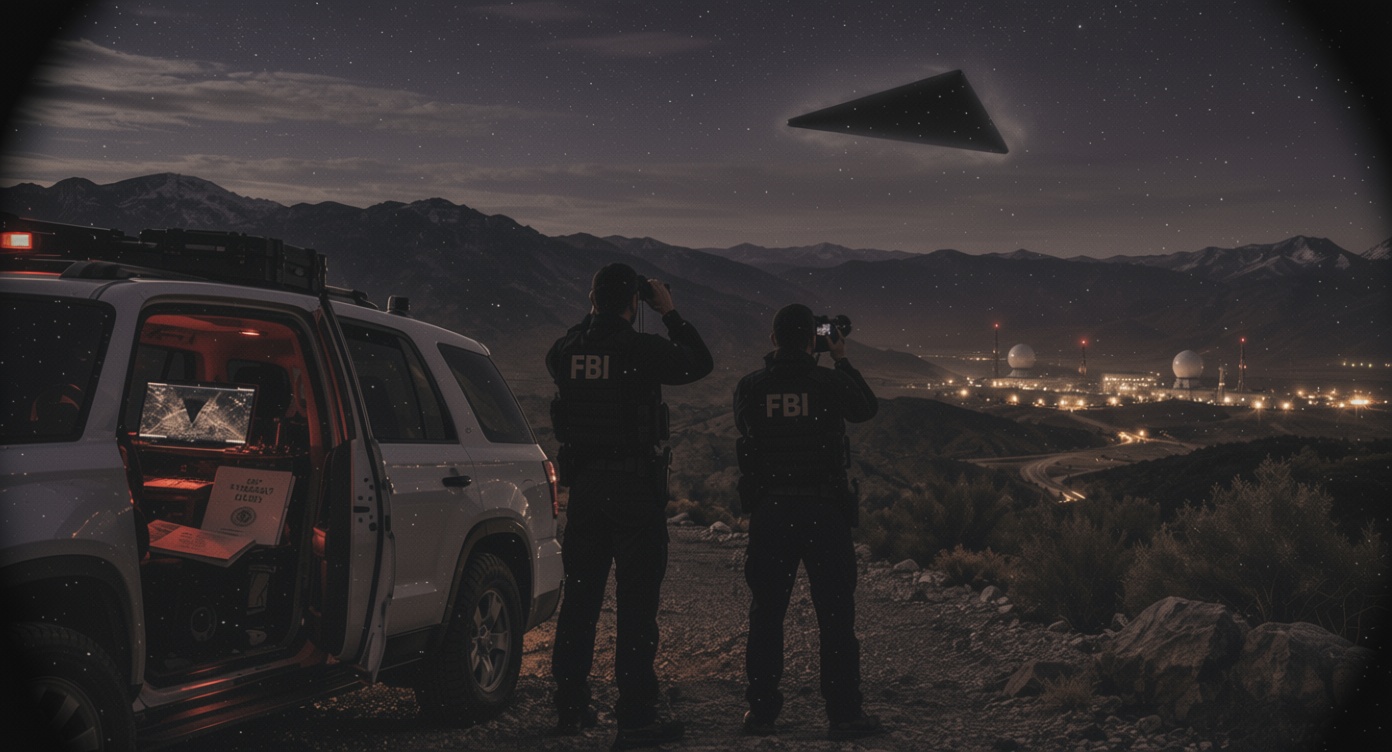
According to the review, several documents describe a dark triangular craft estimated at roughly 13 feet across, or approximately 13 feet long and nine feet wide, flying at low altitude near military installations. In the accounts summarized, the object reportedly traveled about 1.5 miles in less than three seconds, made little or no sound, displayed no visible lights and lacked an obvious conventional heat signature.
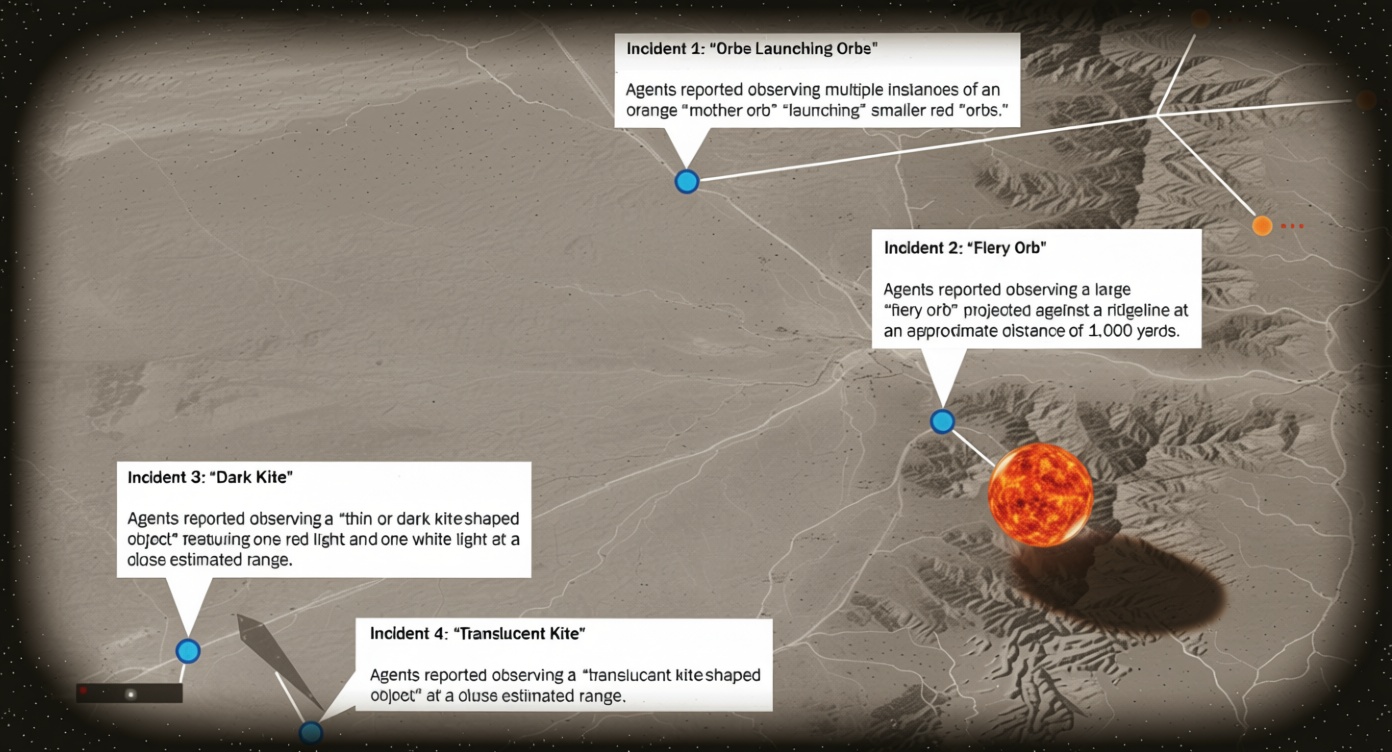
A separate FBI FD-302 interview report is said to describe two agents observing a black triangle rise vertically over a ridgeline before covering a similar distance in approximately three seconds. Commentators cited by the review have calculated that such movement would imply extreme acceleration—potentially 45 to 50 times the force of gravity—if the estimates are accurate. The reported absence of a sonic boom or other expected aerodynamic effects is presented as another unresolved feature.
The review also references an AARO memorandum within a document collection called the PURSUE files. That case, identified as D176, allegedly involved federal agents observing a small triangular object hover and then move rapidly into a canyon. While commentators interpret similarities among the reports as evidence of a recurring pattern, the source notes that the underlying sensor logs, full-motion video and other primary data have not been made available for independent analysis.
Roswell and Competing Narratives
The same discussion turns to Roswell-related testimony, including a 2002 sworn statement reportedly describing an egg-shaped metallic craft and child-sized bodies. The available excerpt ends before providing the full details of that testimony, and it does not identify independent verification of the claims. Roswell remains one of the most persistent subjects in UFO culture, but official explanations have attributed the 1947 debris to classified military balloon and surveillance programs. Advocates of an extraterrestrial interpretation continue to dispute that account.
The review portrays the triangle reports and Roswell testimony as part of competing narratives about who possesses the most important UAP evidence. Some researchers, including astrophysicist Avi Loeb, have called for quantifiable measurements, physical samples and direct access to alleged hardware rather than relying primarily on testimony or descriptions. Others argue that historical programs, government offices or defense contractors may have retained significant evidence, although the material provided does not substantiate those assertions.
The Evidence Question
The central issue is therefore not simply whether the objects described are unusual, but whether the available documentation can withstand independent scrutiny. Witness statements and official summaries may help identify cases for further investigation, yet precise conclusions about speed, acceleration or propulsion require calibrated instruments, complete metadata and access to original imagery.
For now, the reported black triangle incidents and Roswell accounts remain unresolved claims rather than confirmed discoveries. The continuing release of documents may clarify what investigators knew and when, but meaningful progress will depend on publishing primary evidence that allows scientists, journalists and the public to test the competing explanations.