Overview
Donald Trump’s push to declassify UFO-related material has moved UAPs — or Unidentified Anomalous Phenomena — from the cultural margins into official government business. What was once the preserve of late-night television, internet speculation and conspiracy forums is now being handled through a searchable public archive created by the Department of War, under a program called the Presidential Unsealing and Reporting System for UAP Encounters, or PURSUE. The latest releases include everything from video clips and images to decades-old PDF records, signaling that the U.S. government is treating unexplained aerial and other anomalous incidents as a matter of public record, not just private curiosity.
What the new archive contains
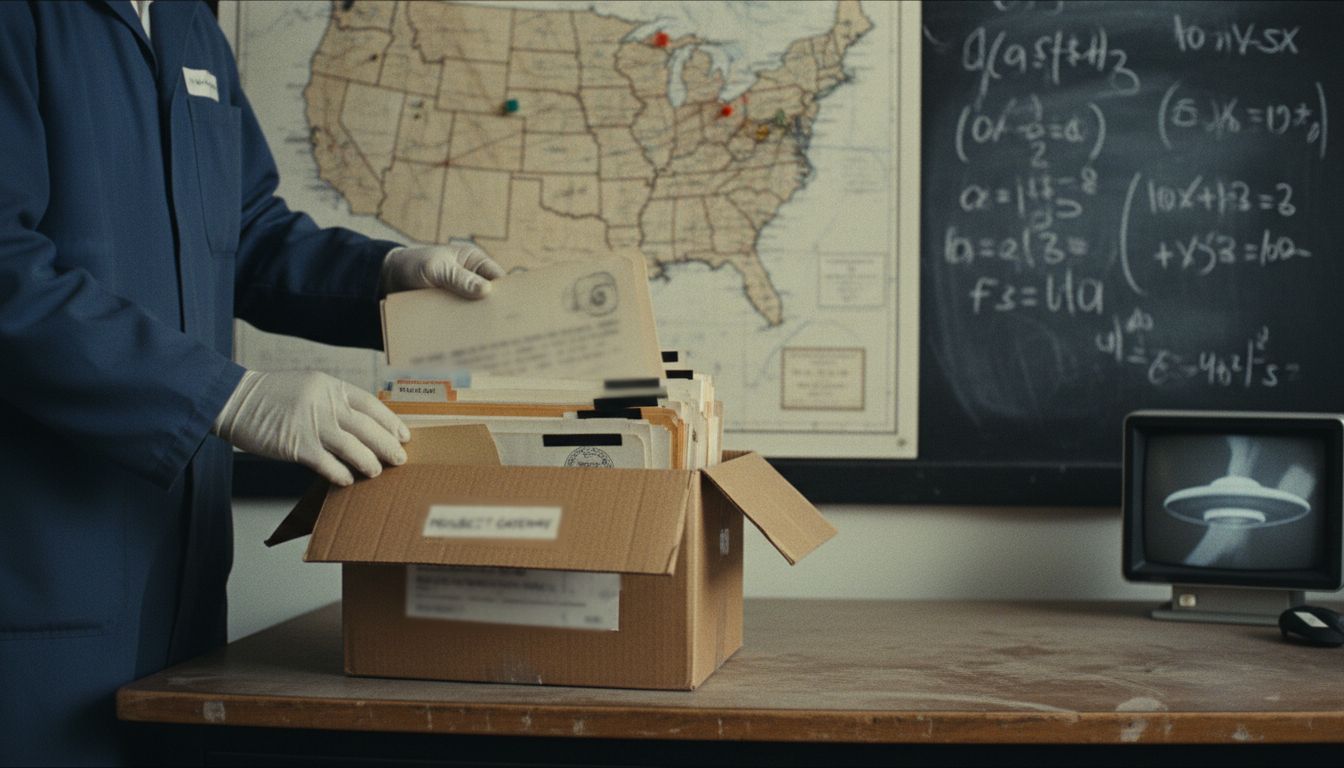
According to the reporting cited in the source material, PURSUE is designed to find, review, declassify and release unresolved UAP records across the federal government. That process spans dozens of agencies and, by the government’s own estimate, involves “tens of millions of records,” many still on paper. The latest tranche contains 41 files in total, including more than a dozen videos, three images and a collection of PDF documents. The oldest file dates to 1953, while the newest comes from this year, illustrating how long the U.S. bureaucracy has been collecting material that remains unresolved or only partially explained.
The archive was first made public on 8 May 2026, and by 7 August it had expanded to a fifth release, with 375 files visible in the database. The records span multiple agencies, including the FBI, NASA, the Department of Energy, the Executive Office of the President, and the Office of the Director of National Intelligence. The broad agency footprint suggests that UAP reporting is no longer confined to defense circles alone; it is now a cross-government documentation effort, with federal institutions compiling and preserving cases for potential review by both officials and the public.
Trump’s role and the political shift
Trump’s involvement has been central to that shift. In February, he said he would direct officials to begin releasing files related to “alien and extraterrestrial life, unidentified aerial phenomena (UAP), and unidentified flying objects (UFOs)”, citing the “tremendous interest shown” in the topic. While the language is striking, the actual archive is careful not to claim proof of extraterrestrial visitation. Instead, it frames the material as a set of unresolved cases — a bureaucratic acknowledgment that some incidents remain unexplained because the evidence is incomplete.
Official caution, public fascination
That caution is echoed by the Pentagon’s UAP office, the All-Domain Anomaly Resolution Office (AARO), which says many sightings can be traced to sensor errors, bad data, satellite flares, forced perspective and parallax. The National Archives has also created Record Group 615 for UAP records under the 2024 National Defense Authorization Act, further formalizing the issue inside federal recordkeeping. In practical terms, that means the government is not confirming alien activity — but it is also no longer ignoring the subject. The result is a notable shift: UFOs have moved from the fringe to the filing cabinet, where public analysis now has an official place to begin.