Overview
A new essay by astrophysicist Avi Loeb examines the gap between UAP storytelling and UAP evidence, using an upcoming theatrical production in Illinois as a point of departure. Published October 15, 2026, on Loeb’s Medium publication, “UAP Storytelling Versus UAP Reality: ‘We Interrupt This Program …’” describes his participation in a hybrid live event that combines satire, archival imagery and a public discussion about whether some unidentified anomalous phenomena could represent nonhuman technology.
Loeb’s essay does not present a new UAP case or announce a confirmed discovery. Instead, it focuses on how stories, cultural expectations and entertainment shape public interpretations of unexplained aerial observations. The article’s supplied text ends mid-sentence while introducing Loeb’s argument that the distinction between narrative and reality requires moving beyond verbal testimony.
A Satirical Broadcast Interrupted
The event, titled “We Interrupt This Program,” is scheduled at the historic Virginia Theatre in downtown Champaign, Illinois. Its central theatrical component is an original satirical play written by four-time Emmy winner Bill Odenkirk, known for work on The Simpsons, Futurama and Mr. Show.
The play follows a small Midwestern radio station attempting to rebroadcast Orson Welles’ 1938 radio drama The War of the Worlds. In the production’s fictional scenario, the broadcast is interrupted by reports that an actual alien spacecraft has appeared over an Illinois cornfield. The premise draws on the long history of public anxiety surrounding Welles’ program while updating it for a period in which UAP claims are widely discussed across government, science and popular culture.
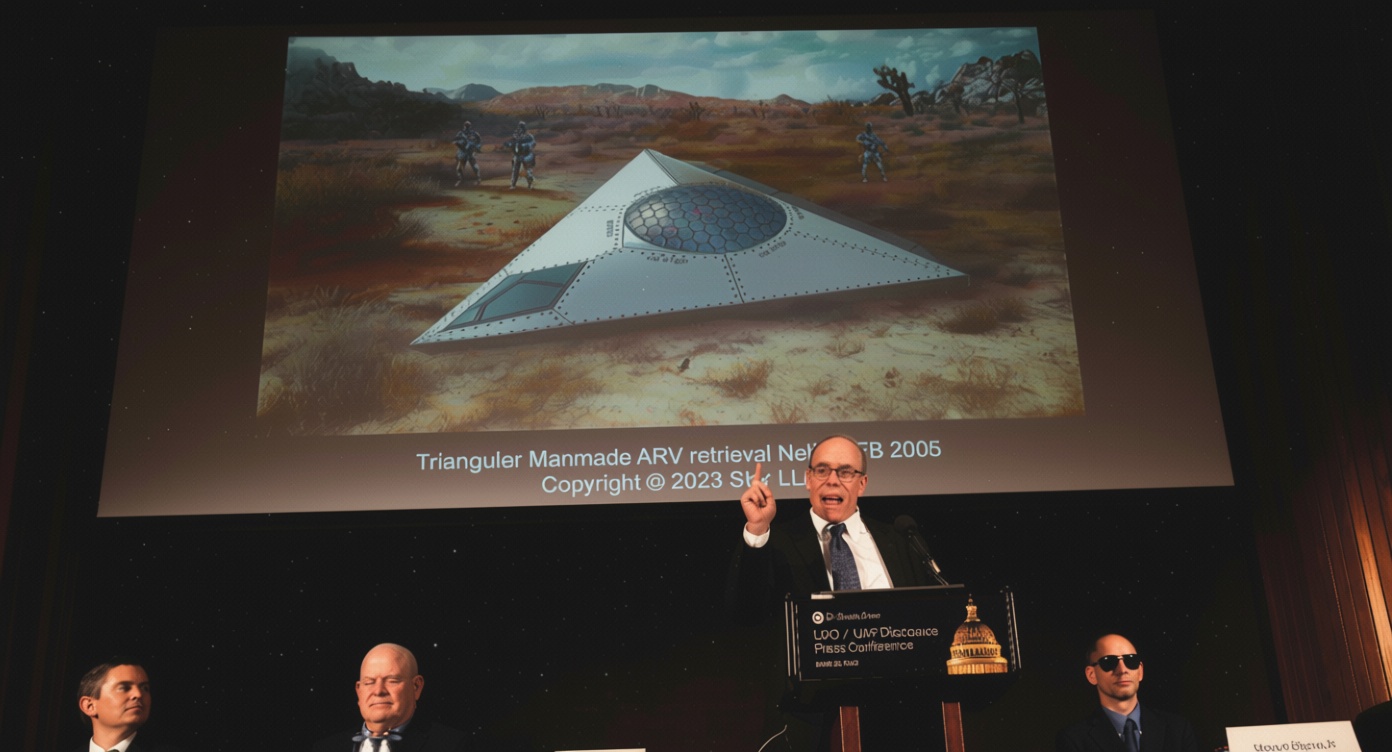
The “Show” features actors Bob Odenkirk, known for Better Call Saul and Breaking Bad, and Jill Talley, whose credits include Mr. Show and SpongeBob SquarePants. Music and large-scale visual projections are also part of the production. According to Loeb, archival footage associated with UAP reports will be displayed on the theatre’s screen, presenting viewers with visual material that can be considered during the accompanying discussion.
From Entertainment to Public Debate
The second portion, the “Tell,” is described as a live, unscripted panel titled “Is the Truth Out There?” PBS host Sarah Edwards is scheduled to moderate a discussion involving Loeb, Bill Odenkirk and actor Ahmed Best. The panel is intended to examine arguments both for and against the possibility that at least some UAP could reflect alien technology, while also considering how personal biases and cultural narratives influence belief.
The format reflects a broader trend in UAP communication: pairing scientific or policy-oriented discussion with entertainment in an effort to reach audiences beyond specialist communities. Such events can encourage public engagement, but they also present a challenge for evidence-based reporting because dramatic presentation may blur the boundary between documented observations, speculation and fictional scenarios.
Evidence, Testimony and the Limits of the Source
Loeb also says he is scheduled to deliver a seminar at the University of Illinois titled “Searching for Extraterrestrial Technological Artifacts Near Earth: Are There Packages in Our Mailbox?” He presents the lecture as a prelude to the theatre event and says he will discuss updates involving the “Presidential Unsealing and Reporting System for UAP Encounters,” viewed from his stated leadership role with the UAP Science Advisory Council.
The supplied article does not provide supporting documentation, technical findings or specific case evidence for those updates. Nor does it complete Loeb’s referenced argument about how to distinguish “UAP reality” from “UAP storytelling.” Its central message, based on the available text, is methodological: claims about UAP should ultimately be tested against verifiable data and material evidence rather than relying solely on narratives or testimony. The event therefore occupies an unresolved space between performance and inquiry—using theatre to explore extraordinary claims while leaving the question of what, if anything, UAP represent open to further evidence.