Overview
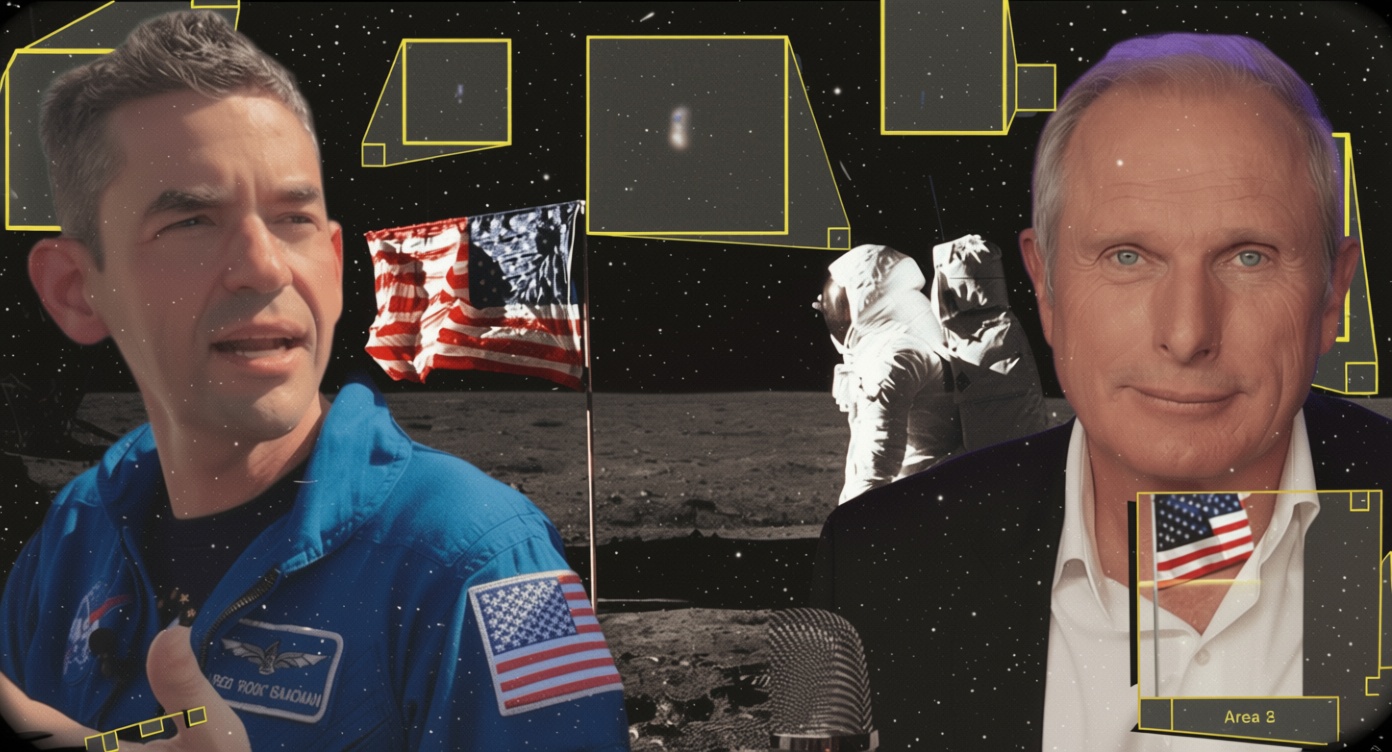
A newly resurfaced Apollo 16-era NASA audio recording is fueling fresh speculation among UFO enthusiasts about a possible “alien base” on the Moon’s far side, though the clip offers no confirmed evidence of extraterrestrial activity. According to a WION report, the audio appears in the latest batch of UAP-related files released by the Pentagon, and includes an informal exchange from a post-mission NASA briefing that some online observers have interpreted as unusually suggestive. The conversation, however, appears to be based on speculation rather than hard data, and experts have not identified anything in the recording that validates the existence of a lunar base.
Apollo 16, launched in April 1972, was NASA’s fifth crewed Moon landing mission and focused on the lunar highlands. Astronauts John Young and Charles Duke explored the surface, while command module pilot Thomas “Ken” Mattingly remained in orbit. The newly released 55-minute briefing discussed a range of mission findings, including lunar gravity measurements, laser experiments, and features observed on the Moon’s hidden hemisphere. The audio has gained attention because it captures scientists and mission personnel discussing a prominent depression near Van de Graaff crater, a region known for its unusual magnetic and geological characteristics.
What the audio reportedly says
In the segment drawing the most attention, one participant describes a “big hole” in the Van de Graaff region. Another voice then casually interjects that it “could be an alien star base or something” before the discussion quickly moves on to the next slide. It is this offhand remark that has been widely shared by UFO communities and conspiracy forums as supposed evidence of a concealed lunar installation. Yet the context matters: the comment appears to be speculative banter during a technical review, not a disclosure of classified findings or a formal scientific conclusion.
The timing of the renewed interest is also significant. The clip surfaced alongside the third batch of UFO files released by the Pentagon, a document drop that has kept public attention focused on the broader debate over UAP transparency. The inclusion of an Apollo-era recording has given the story added traction, particularly because the Moon’s far side has long been a subject of fascination in both scientific and fringe discussions. Still, the WION report stops short of endorsing the claim, instead highlighting how a brief, joking remark can take on outsized meaning once removed from its original setting.
Separating speculation from evidence
Despite the dramatic framing, there is no verified evidence in the released material showing an alien structure on the Moon. The Van de Graaff crater area may be scientifically interesting, but unusual terrain or magnetic readings do not amount to proof of artificial construction. In the broader context of lunar science, many unexplained observations from the Apollo era were later examined through better mapping, improved instrumentation, and decades of follow-up research. That history underscores why isolated audio snippets should be treated cautiously.
For now, the Apollo 16 recording is best understood as a curious archival artifact—one that illustrates how easily casual remarks can be recast as extraordinary claims. The renewed attention may satisfy long-running UFO lore, but without independent confirmation, the notion of an “alien base” remains speculation, not evidence.