Overview
A new historical roundup from UFO researcher Susan Demeter revisits a string of unusual aerial episodes stretching from 1915 to 1967, arguing that long before the modern “flying saucer” era, witnesses were already reporting patterns that would later become familiar in UFO studies. The post connects the “Phantom Air Raid of 1915” in eastern Ontario with later military and civilian sightings, including 1947 reports over Muroc and 1966 cases in North Dakota, to show how recurring features such as mass sightings, official uncertainty, and attempts at ridicule have shaped the subject for more than a century.
Demeter frames the 1915 incident as especially significant because it occurred during World War I, a time she describes as marked by fear and social instability. In her account, UFOs or anomalous aerial events often appear during moments of crisis, affecting not just individuals but whole societies. She notes that the response to these sightings — including skepticism, ridicule, and efforts to explain them away — closely resembles the treatment of later UFO waves. That historical continuity, she argues, makes the case more than a forgotten wartime curiosity.
The Phantom Air Raid of 1915
The centerpiece of the roundup is the “Phantom Air Raid of 1915,” a case that was later discussed in the press and by historians as one of the most remarkable early aerial mysteries in Canadian history. According to the post, witnesses across eastern Ontario reported mysterious aircraft crossing the night sky, triggering military preparations, a government blackout, and fears that Canada was under attack. The event unfolded years before the modern UFO era officially began in 1947, making it an important precursor in the broader history of anomalous aerial reports.
Demeter emphasizes that the significance of the 1915 episode lies not only in the sightings themselves, but in the way authorities and the public responded. The event reportedly anticipated later patterns seen in UFO waves: confusion over what was seen, institutional concern, and efforts to minimize or dismiss witness testimony. She credits researcher Eric Ouellet’s 2015 book, Illuminations: The UFO Experience As A Parapsychological Event, with exploring these social dynamics in depth.
From Military Reports to Modern Waves
The roundup then moves forward to later cases, including 1947 military reports over Muroc and 1966 sightings in North Dakota, positioning them as part of a longer historical arc rather than isolated incidents. This approach reflects a growing interest among researchers in comparing older reports with contemporary UAP waves, especially where there are similarities in witness descriptions, official uncertainty, and the public’s tendency to frame unusual events in terms of the technology of the day.
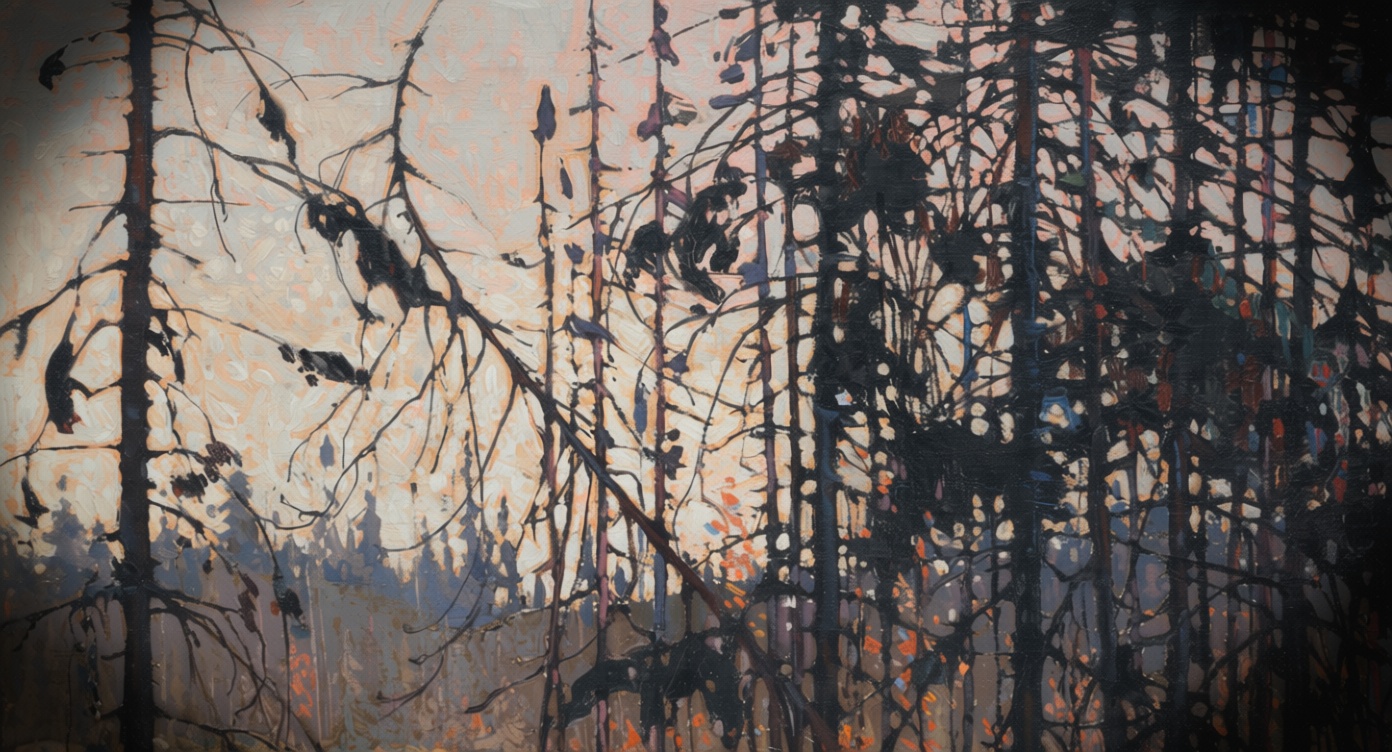
Demeter also highlights the atmosphere of the early 20th century, using Tom Thomson’s Northern River (1914–15) as a visual reference point for the era. While the painting does not depict UFOs, she uses it to evoke a world still defined by wilderness, transition, and the first stirrings of a new technological age. That contrast — between an old landscape and a rapidly modernizing society — is presented as part of the cultural backdrop for early aerial mystery reports.
Archival Oddities and Continuing Debate
The post also references recent PURSUE releases, along with John Keel-related material, a 1967 prank case, and other archival oddities that continue to fuel debate within ufology. These materials, while more fragmented than the 1915 case, are presented as part of the same historical continuum: a record of how unusual sightings are documented, misinterpreted, mocked, or preserved for later study.
Taken together, the roundup underscores a central point in current UAP research: the history of the phenomenon may be as important as any single case. By linking wartime Canada, postwar military sightings, and later archival material, Demeter’s post suggests that the UFO story is not a modern invention, but a recurring social and evidentiary puzzle that has been unfolding for generations.