Overview
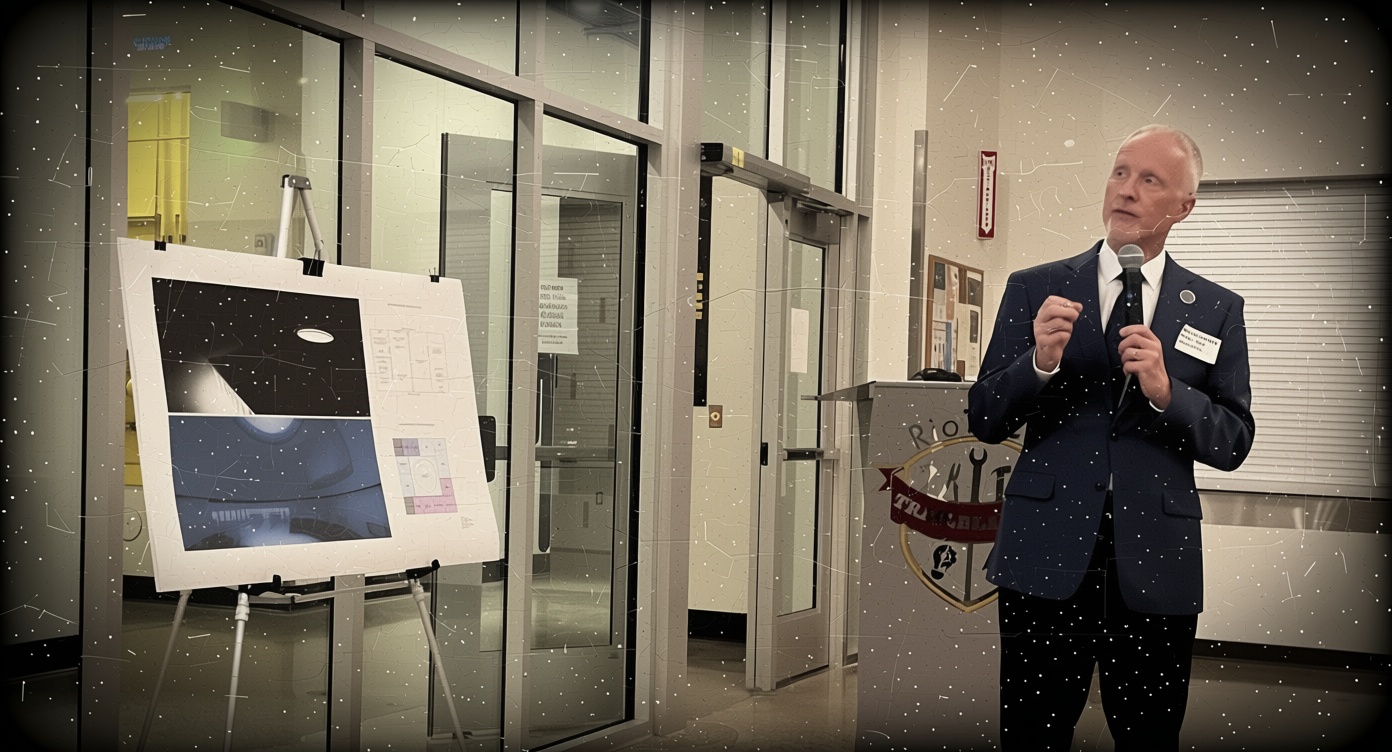
RIO RANCHO — The National UFO Historical Records Center is exploring a major expansion that could transform the modest archive in Rio Rancho into a broader public-facing museum, with officials saying the project could strengthen student learning while also giving the city a new tourism draw. The discussion unfolded last week at RioTECH, where center leaders, school district officials, current and former elected officials, and other community members gathered to consider how the collection could move beyond its current home in two portable classrooms at Martin Luther King Jr. Elementary School.
The center’s backers framed the proposal as both an educational and civic opportunity. David Marler, the center’s executive director, said the organization now holds what he described as “the largest gathering of UFO materials ever assembled in the history of the United States,” with documents and artifacts predating the 1947 Roswell incident. Marler said the mission is to “collect, preserve and provide historical UFO material to the general public and interested parties” in order to support serious research and preserve the record for future generations, regardless of belief.
A Collection With National Reach
The archive itself is substantial and unusually diverse. According to Marler, the center’s holdings include newspaper front pages, original photographs, artifacts from Project Blue Book, police reports, pilot reports, original military documents, audio recordings, and cassette reel-to-reel tapes dating back to the 1950s. Barry Roth, the center’s chief historian and archivist, estimated the collection at 175,000 files, noting that it incorporates material from what he called the “big three” UFO research groups: the Center for UFO Studies, the National Investigative Committee on Aerial Phenomena, and the Aerial Phenomena Research Organization.
Roth also said the archive has expanded internationally, with material arriving from organizations in Britain and Australia. That breadth, supporters argue, makes the Rio Rancho center more than a local curiosity. Marler said it is “the largest collection of historical UFO case files ever assembled in the history of North America,” a claim that underscores the potential significance of the site if it is developed into a more accessible public destination.
Education and Community Impact
The partnership with Rio Rancho Public Schools remains central to the center’s identity and future plans. Michael Baker, chief operations officer for the district, said the school system made 2,600 square feet available at MLK Jr. Elementary in 2024 in exchange for lectures aimed at helping students sharpen critical thinking. Baker emphasized that the district’s goal is not to prove or disprove extraterrestrial life, but to use the subject as a teaching tool.
“Our purpose instead is to give our students some skills and some tools in order to engage in some critical thinking,” Baker said, adding that UFO does not necessarily mean extraterrestrial. He also argued the archive should not be isolated from the public, calling it a resource that ought to be shared more widely with the community and beyond. For district leaders, the center’s unusual subject matter is secondary to its educational value: teaching students how to analyze evidence, compare claims, and make collaborative decisions.
Expansion Prospects and Public Interest
Supporters of expansion say the timing may be right. Marler said public interest in UFOs is stronger than it has ever been during his 36 years in the field, and he argued that increased attention from government and the public alike creates momentum for a larger facility. Backers at the RioTECH meeting also pointed to the potential economic upside, suggesting a true museum could become a tourist attraction for Rio Rancho and help distinguish the city within a growing national conversation about unidentified aerial phenomena.
The proposal has also drawn positive notice from local and national figures, strengthening the case that the center is becoming an institution with influence beyond its current footprint. While no final expansion plan was announced, the meeting made clear that advocates see an opportunity to turn a little-known archive into a regional destination — one that combines historical preservation, classroom learning, and public curiosity in a single, more visible venue.