Overview
A report in International Business Times UK has reignited online speculation about Mars after UFO researchers claimed a NASA rover image appears to show what they describe as an “alien missile.” The image, shared and discussed widely in fringe-ufology circles, has prompted some commentators to suggest it could be evidence of an extraterrestrial conflict on the Red Planet. However, the claim is based on the interpretation of a single photograph, not on any independently verified discovery, and there is no scientific evidence that the object is artificial or connected to life on Mars.
What the Image Purports to Show
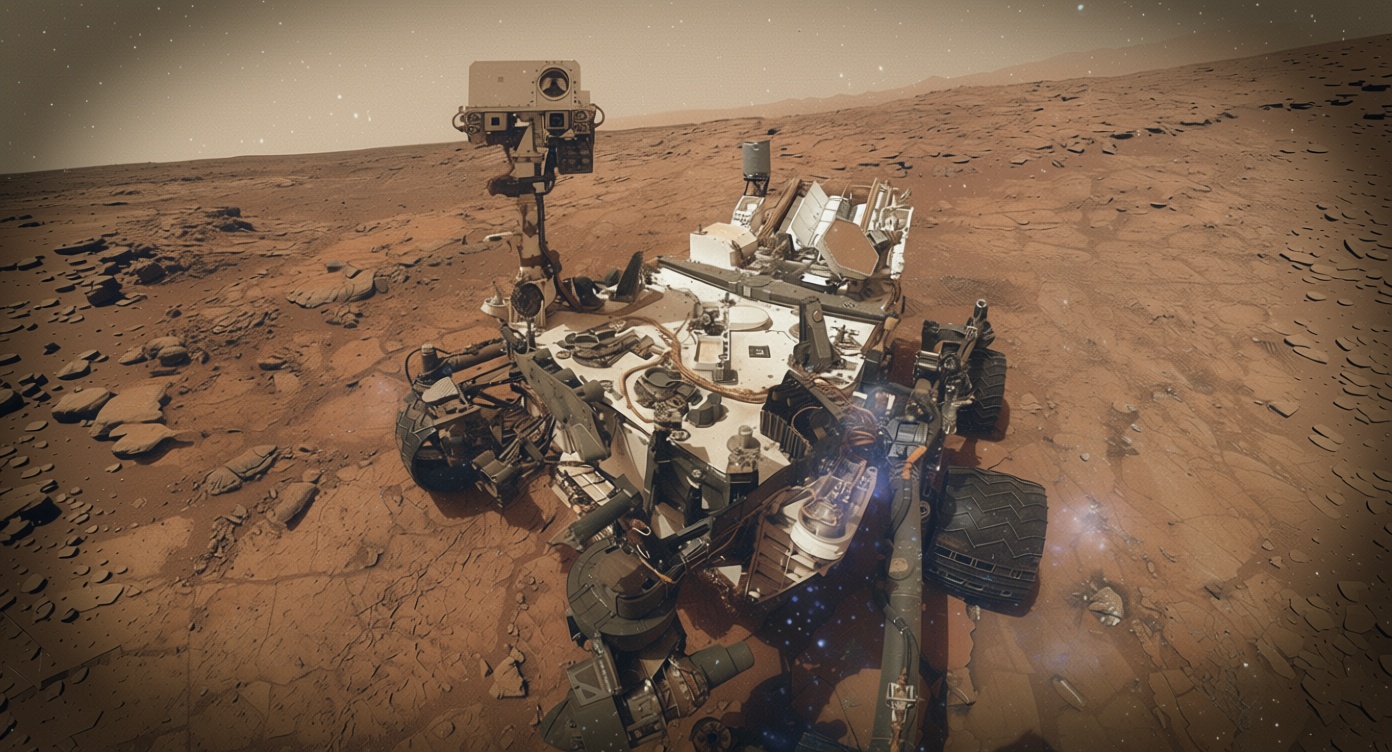
According to the report, the disputed image was taken by one of NASA’s Mars rovers and shows a long, cylindrical shape standing out from the surrounding terrain. UFO researchers argue that the object’s form is unusual enough to resemble a projectile or missile-like device, rather than a natural rock formation. Some online observers have gone further, framing the image as possible evidence of advanced technology or even remnants of a war between non-human civilizations.
That interpretation, however, depends heavily on angle, lighting, and perspective. Mars rover images are often captured in harsh, low-contrast environments where shadows and erosion can make ordinary geological features appear highly unusual. In the absence of additional imaging, scale references, or material analysis, the “missile” explanation remains speculative.
Why Scientists Urge Caution
Scientists and planetary researchers have repeatedly warned that Mars imagery is especially prone to misinterpretation. The human brain is skilled at finding familiar shapes in random patterns, a phenomenon known as pareidolia. On Mars, this has historically produced endless debates over “faces,” “statues,” and other supposed artificial structures that later turned out to be natural formations.
NASA and its scientific partners typically rely on multiple lines of evidence before drawing conclusions about any object of interest, including repeated imaging from different angles and, where possible, compositional data. Without that kind of corroboration, experts say it is impossible to determine whether the shape is a rock, debris, a geological outcrop, or something else entirely. In other words, a dramatic interpretation does not make the object a credible anomaly.
Broader Context for Mars Anomalies
This latest claim fits a long-running pattern in UFO and anomaly-spotting communities, where rover photos often become the basis for theories about ancient civilizations, hidden structures, or abandoned technology. Such discussions tend to spread quickly on social media because Mars remains one of the most visually compelling and scientifically important targets in planetary exploration. Its landscapes are remote, unfamiliar, and difficult for the public to interpret without technical context.
At the same time, the popularity of these claims underscores a broader public fascination with the possibility of life beyond Earth. While that curiosity can fuel useful engagement with space science, researchers caution that speculation can easily outpace evidence. In this case, the leap from an unusual-looking rock to an extraterrestrial missile is a particularly large one.
Bottom Line
For now, the so-called alien missile remains an interpretation, not a confirmed discovery. The image may be intriguing, but there is no verified evidence that Mars has hosted alien warfare or that NASA has uncovered artificial military hardware on the planet’s surface. As with many viral Mars claims, the story is less about a proven anomaly than about the enduring tension between scientific caution and public imagination.