Overview
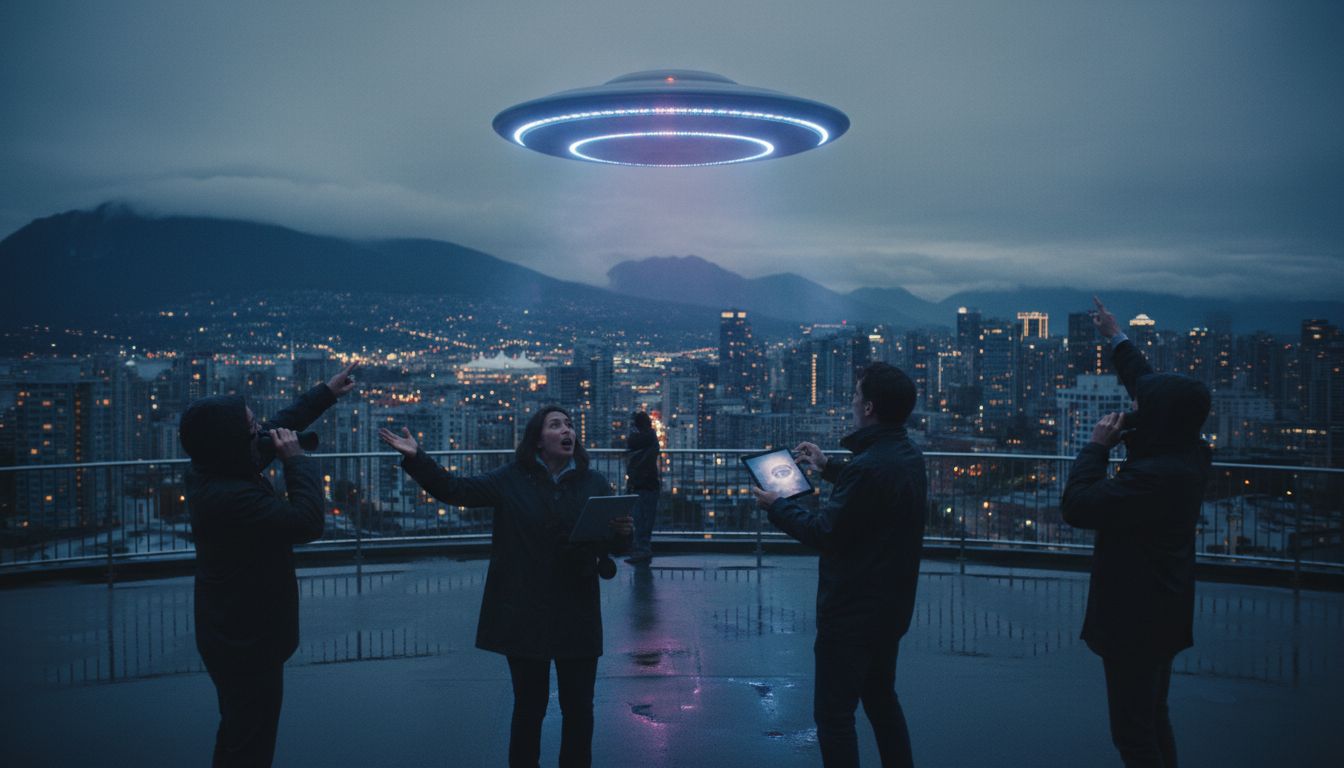
A Reddit post from Vancouver on June 15, 2026 has prompted renewed discussion in UFO and online eyewitness communities after a user asked, “Is this a UFO??” The sighting, described in connection with the Vancouver and Burnaby areas, was quickly picked up by users interested in anomalous aerial phenomena and began circulating as a potential recent UAP event. Based on the material available, the report remains unverified, and no official explanation has been provided.
The source material identifies the post as a community discussion rather than a formal incident report, which is typical for many modern UFO claims that emerge first on social platforms. In this case, the available information is limited, and no detailed witness narrative, video analysis, or location-specific coordinates were included in the provided text. That means the claim currently rests on the original poster’s assertion and whatever discussion followed in the thread.
What the Report Shows
Even without a full technical breakdown, posts like this often gain traction because they reflect a familiar pattern in UAP reporting: an observer sees something unusual in the sky, shares it online, and asks the public to help identify it. In the Vancouver case, the sighting was framed as a question rather than a conclusion, leaving room for a range of interpretations. The fact that it was associated with both Vancouver and Burnaby increased interest locally, since sightings spanning multiple municipalities can suggest a larger visible object or a broader line of observation.
The post’s wording is important. By asking whether the object was a UFO, the user did not claim an extraterrestrial origin. In journalistic terms, UFO simply means an unidentified flying object, not necessarily a non-human craft. That distinction matters, especially when social media discussions can quickly leap from “unexplained” to “extraordinary” without evidence.
Online Interest and Community Response
According to the summary, the sighting was shared widely in UFO communities, which is consistent with how such posts often spread. Enthusiasts and amateur analysts frequently examine these reports frame by frame, looking for clues about lighting, movement, aircraft navigation patterns, or possible drone activity. However, the source material provided here does not include any verified forensic analysis, so any definitive identification would be premature.
This kind of online amplification can be both helpful and limiting. On one hand, it allows witnesses to compare notes and receive feedback quickly. On the other, it can also encourage speculation before enough evidence is available. For that reason, responsible coverage of these reports requires caution and a clear distinction between witness account and confirmed fact.
Broader Context
The Vancouver-Burnaby sighting arrives at a time when public interest in UAPs remains high across North America, fueled by a mix of military disclosures, congressional hearings, and widespread smartphone recording. As a result, even brief local posts can attract attention beyond their immediate geography. Still, the core journalistic question remains unchanged: what was actually observed, and can it be independently verified?
At present, the answer for this case is that the report is intriguing but unconfirmed. Without additional evidence—such as clearer imagery, multiple witnesses, or official corroboration—the Vancouver sighting should be treated as an open claim rather than a proven anomaly.