Overview
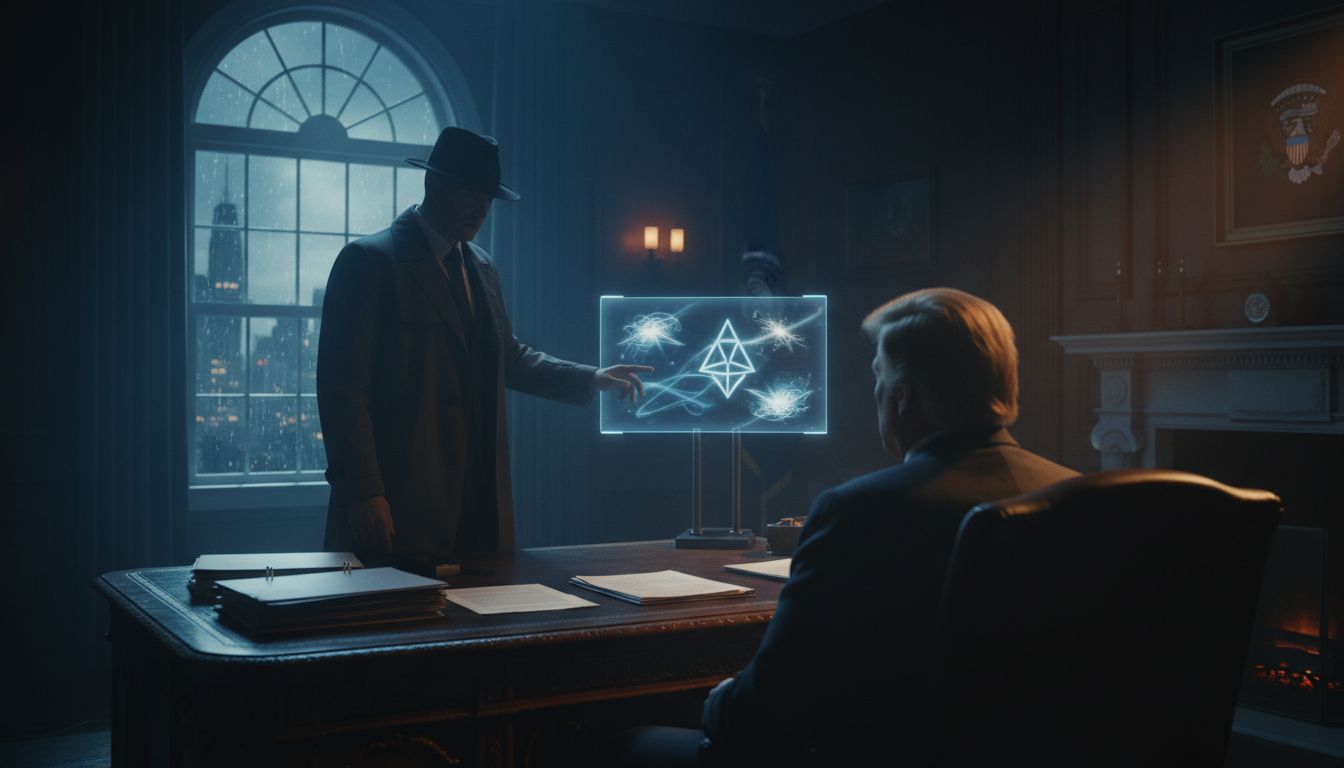
A memorandum dated Jan. 7, 2024, signed by former Department of Defense (DoD) counter‑intelligence officer Luis D. Elizondo—the most prominent former intelligence whistleblower on unidentified aerial phenomena (UAP)—was addressed to President Donald J. Trump following his reelection. In the 10‑page document, Elizondo urges the president to create a White House “UAP czar” within the National Security Council to coordinate the United States’ response to what he terms “Emerging All‑Domain Technologies” (EADT). The recommendation comes amid growing bipartisan pressure for a single authority to oversee UAP investigations, a topic that has moved from fringe speculation to a matter of national‑security policy.
Key Details of the Recommendation
Elizondo’s memo frames UAP alongside unmanned aerial systems (UAS) and other advanced platforms that operate across air, space, and sea. He writes, “UAP are even more perplexing, possessing capabilities that defy our conventional knowledge… Mastery of UAP technology would, however, eclipse yesteryear’s splitting of the atom.” The proposed senior advisor would be tasked with three core responsibilities:
- Coordinate the U.S. government’s EADT response across the DoD, intelligence community, and civilian agencies.
- Formulate policy that addresses both security risks and the need for transparency.
- Conduct domestic and international outreach to align allies and inform the public.
Elizondo draws on his experience leading the DoD’s UAP investigation and cites recent incidents—drone incursions over New Jersey and the 2023 Chinese spy balloon—to illustrate the current “critical gap” in whole‑of‑government coordination.
Political and Legislative Context
The call for a UAP czar reflects a shift that began with the 2022 congressional UAP hearings, where lawmakers from both parties pressed the Pentagon for greater oversight. In the 2023 National Defense Authorization Act, a modest “UAP Office” was created within the Office of the Secretary of Defense, but critics argue it lacks the authority to compel inter‑agency cooperation. Senate Majority Leader Chuck Schumer (D‑NY) and Representative Mike Turner (R‑OH) have both introduced bills that would elevate the office to a cabinet‑level position. Elizondo’s memo, released to the press through NewsNation, adds a direct appeal to the executive branch, bypassing the slower legislative route.
Reactions from the Security Community
Experts who have followed the UAP issue cautiously welcomed the proposal. Dr. Sean Kirkpatrick, former director of the Pentagon’s Airborne Object Identification and Management Synchronization Group, said, “A single point of authority could streamline data sharing that is currently fragmented across dozens of agencies.” Conversely, some defense analysts warned that creating a “czar” without clear statutory backing could lead to jurisdictional disputes. Laura Coates, senior fellow at the Center for Strategic and International Studies, noted, “The success of such a role will hinge on whether the president equips it with the necessary budget and legal authority to compel cooperation.”
Implications for National Security
If implemented, a UAP czar could accelerate the analysis of sensor data, improve risk assessments of potential hostile technologies, and guide diplomatic engagement with allies who have reported similar phenomena. Elizondo argues that without a coordinated response, “rogue actors could exploit UAP‑like capabilities to disrupt critical infrastructure, surveil sensitive installations, or even conduct kinetic strikes.” The memo also stresses that understanding UAP may have broader scientific ramifications, potentially reshaping physics and aerospace engineering. However, the initiative will need to balance secrecy—given the classified nature of many sightings—with the public’s demand for transparency, a tension that has defined the UAP debate for years.
Next Steps
The Trump administration has not yet commented publicly on Elizondo’s recommendation. According to sources familiar with the transition team, senior White House officials are reviewing the memorandum alongside ongoing briefings on emerging technologies. Congressional committees are expected to hold a follow‑up hearing in early 2026, where Elizondo may be called to testify. Whether the president will act on the proposal remains uncertain, but the growing convergence of legislative, military, and intelligence voices suggests that a dedicated UAP authority is becoming an increasingly likely fixture of U.S. national‑security architecture.