Overview
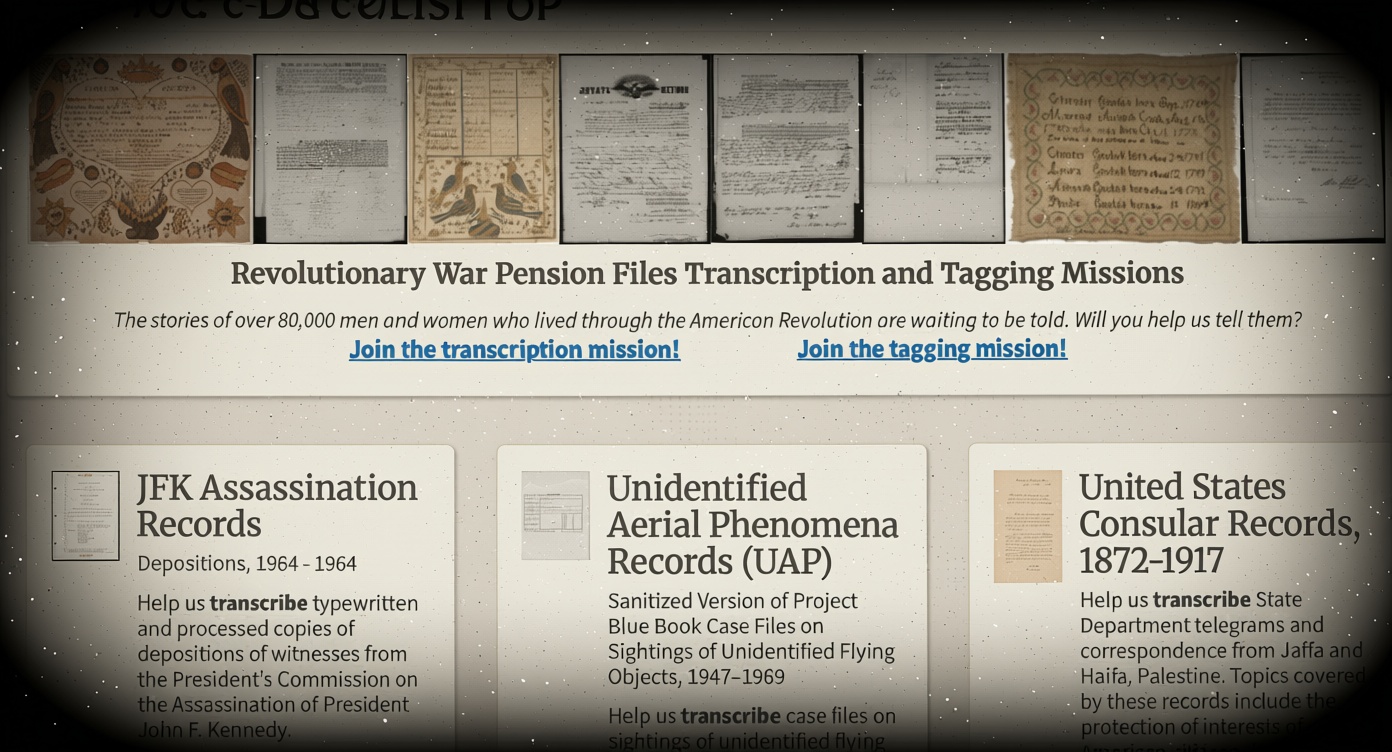
The U.S. National Archives is inviting members of the public to help transcribe a collection of historical records documenting investigations into unidentified flying objects. The Unidentified Aerial Phenomena (UAP) Transcription Project focuses on Office of Special Investigations (OSI) files dating from 1948 through 1968, offering volunteers an opportunity to make handwritten and typed government records more accessible to researchers.
The material is available through the National Archives Catalog under a Citizen Archivist contribution project. The online search currently displays 32 results, with the first 20 listed on the initial results page. The records are drawn from the series titled “Records of Investigations of Unidentified Flying Objects (UFOs) Relating to the Office of Special Investigations.”
What the Records Contain
According to the project description, the files include investigative reports, correspondence and photographs connected to reported UFO sightings. The documents are organized largely by OSI district and folder, reflecting the military investigative structure used to collect and evaluate reports during the early Cold War era.
Catalog entries include files such as “OSI-18th District, 24-185-18,” “OSI-19th District, 24-185-19,” and “OSI-21st District, 24-185-21.” Several of these are divided into multiple folders, preserving the original organization of the material. Each file unit has a National Archives Identifier, or NAID, allowing users to locate and cite the records individually.
Archival Context
The collection is maintained within Record Group 341, Records of Headquarters U.S. Air Force (Air Staff). The catalog identifies the records’ creators as including the Project Blue Book Office within the Air Force Systems Command’s Foreign Technology Division, as well as the earlier Technical Intelligence Division of the Air Materiel Command.
Project Blue Book was the Air Force’s formal program for collecting and analyzing UFO reports, operating from 1952 until 1969. The OSI files provide a related but distinct perspective, documenting investigations conducted through the Air Force’s security and counterintelligence organization. Their contents may therefore illuminate how individual reports were handled at the district level, rather than simply presenting the conclusions of a centralized UFO program.
Why Transcription Matters
Transcription can significantly improve access to archival material. Digitized images allow researchers to view original documents, but searchable text makes it easier to identify names, locations, dates and recurring investigative practices across thousands of pages. Volunteer contributions can help transform difficult-to-search scans into usable historical evidence while preserving the visual record of the originals.
The project also allows participants to engage directly with primary sources. However, transcriptions should be understood as access tools, not replacements for the original documents. Historical names, abbreviations, marginal notes and uncertain handwriting may require comparison with the scanned images and, where necessary, review by other researchers.
Public Access and Research Value
The National Archives’ initiative comes as interest in historical UAP records continues among journalists, historians and the public. The files do not, by themselves, establish that reported sightings represented extraordinary craft or nonhuman technology. Instead, they document how military personnel received, investigated and recorded claims during a period marked by rapid technological development and heightened national-security concerns.
Researchers and volunteers can explore the project through the National Archives Catalog, where each file unit is identified by its title, NAID and container information. By contributing transcriptions, the public can help preserve and interpret a body of government records that offers a detailed look at the administrative history of UFO investigations between 1948 and 1968.