Overview
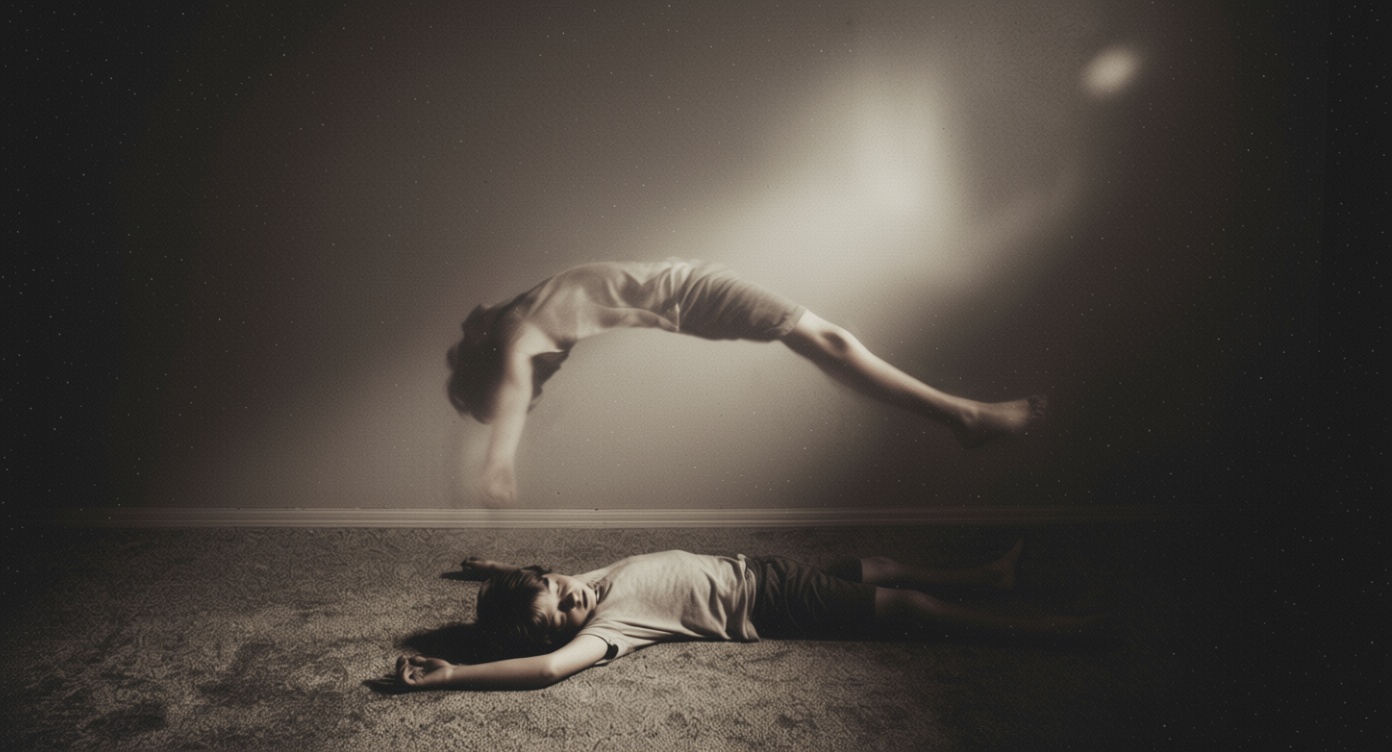
A new University of Virginia experiment has added another cautious data point to a long-running scientific debate over out-of-body experiences: whether people who say they can separate their consciousness from their body can actually perceive hidden targets at a distance. In the carefully blinded test, 21 experienced out-of-body practitioners were asked to identify an image concealed in another room. None of the participants correctly identified the target, leaving the study without any verified evidence that the phenomenon allows remote viewing under controlled conditions.
Still, the results were not entirely straightforward. Two participants reported seeing human activity in a different room, an observation the researchers say they cannot explain from the available data. The finding does not establish paranormal perception, but it did surprise the team enough to warrant further investigation. Lead neuroscientist Marina Weiler said the study should encourage researchers to “think creatively about how we test these experiences,” while also emphasizing that any unusual result must be tested prospectively and under rigorous conditions before conclusions can be drawn.
How the experiment was designed
The UVA team built the study to eliminate the kinds of ambiguity that have historically complicated out-of-body research. Participants were placed in a first room and connected to an EEG machine to monitor brain activity, but otherwise were given the freedom to sit or lie down in comfortable conditions that suited their preferences. Researchers occupied a second room, while a third room contained the target: a laptop displaying one randomly selected image from a pool of 100 objects. The screen faced a wall so that no one could accidentally see it.
Crucially, the image selection was randomized and blinded. A researcher initiated the program, turned the laptop toward the wall, and left before the image appeared, meaning the target remained unknown to everyone involved until the analysis phase months later. The setup was intended to prevent cueing, accidental leakage, or any possibility that participants might obtain the answer through ordinary visual means. During each session, the participant remained in the room for 60 to 90 minutes, attempting to perceive the hidden target across the rooms.
What the results showed
Despite the high level of control, no participant succeeded in identifying the hidden image. That outcome is consistent with many previous attempts to test claims of extrasensory perception or remote observation during out-of-body states, which have often produced mixed or contested findings. The result also underscores the core scientific challenge in this field: subjective experiences can be intense and meaningful to participants, but they do not necessarily translate into measurable access to hidden information.
The unexpected element came from the two participants who described seeing people in another room. The study did not resolve whether those reports reflected coincidence, misinterpretation, incidental sensory cues, or some other factor not captured by the protocol. The researchers have not claimed the observations demonstrate a paranormal mechanism; rather, they describe them as unexplained within the limits of this experiment and worth pursuing under even stricter conditions.
Scientific context and next steps
Claims of perception during out-of-body experiences have a long and disputed history, stretching back to earlier experiments such as the famous 1968 “Miss Z” study, which itself remains controversial. More broadly, out-of-body experiences are widely reported in spiritual, esoteric, and near-death contexts, but they have never been scientifically verified as a reliable way to access information beyond ordinary senses. That makes the UVA study notable not because it confirms the phenomenon, but because it illustrates how difficult it is to test extraordinary claims without either overinterpreting anecdote or missing subtle variables.
Weiler’s message is measured: the findings are not proof, but they may provide a starting point for better-designed studies. If future research can reproduce the unexplained observations under tighter controls, the field may gain a more useful framework for understanding what people report during out-of-body experiences. For now, however, the clearest conclusion is that no verified identifications were made in this experiment, even as a small number of anomalous reports left the door open to further inquiry.