Overview
The U.S. military has released additional footage and associated records involving unidentified anomalous phenomena (UAP), including groups of small, spherical objects reportedly tracked at speeds approaching 480 mph. The material, covering observations made between 2022 and 2025, is part of continuing Pentagon efforts to provide greater public visibility into incidents that military personnel detect but cannot immediately identify.
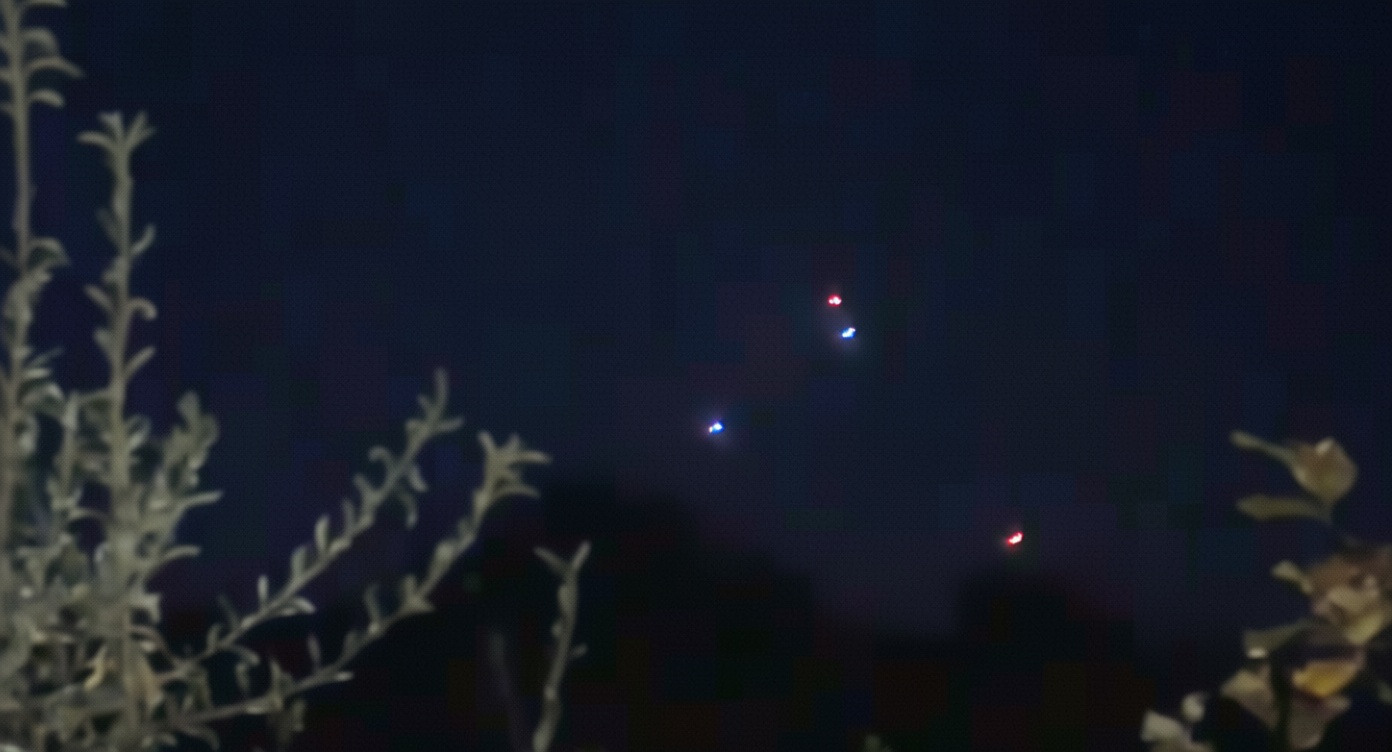
The footage reportedly shows several bright orbs moving across the sky and changing direction repeatedly. While the objects’ appearance and motion have drawn attention, the released material does not establish that they are extraterrestrial or demonstrate technology beyond known human capabilities. UAP is a government term for aerial observations that remain unresolved after initial investigation.
What the footage shows
According to a report published by the New York Post on Sept. 18, the newly publicized cases include small spherical objects moving in groups. Some were tracked at speeds of about 480 mph, or roughly 770 kilometers per hour—well below the speed of sound at typical sea-level conditions, but still significant for objects whose size, distance and propulsion method may be difficult to determine from video alone.
The objects also appeared to make frequent changes in direction. Such movements can be difficult to interpret because military sensor systems may combine radar, infrared imagery and other data, each with its own limitations. Apparent speed and maneuvering can be affected by viewing angle, range estimates, sensor tracking errors, atmospheric conditions or the movement of the observing aircraft.
The release, as described in the report, does not appear to provide a definitive explanation for the objects. An unresolved observation is not the same as proof of extraordinary technology. Investigators generally need corroborating data—including reliable distance measurements, multiple sensors, weather information and flight records—before drawing conclusions about an object’s capabilities.
Pentagon transparency efforts
The disclosures come amid a broader government effort to standardize the collection and review of UAP reports. The Pentagon’s All-domain Anomaly Resolution Office, known as AARO, was established to examine incidents involving objects or events observed in the air, at sea, in space or across multiple domains. Its work includes reviewing historical cases, assessing potential threats and distinguishing genuine anomalies from misidentified aircraft, balloons, drones, satellites and other conventional sources.
Military officials have said the issue is primarily one of flight safety and national security. Unknown objects operating near military training areas or sensitive installations can pose risks even when they are ultimately identified as ordinary aircraft or commercial and recreational drones.
Why the cases remain difficult to assess
Publicly released UAP footage is often brief, low-resolution or missing the technical information needed for independent analysis. A video can show an unusual-looking object without revealing its exact range, altitude, size or acceleration. The same limitation applies to claims based solely on apparent movement in a two-dimensional image.
The latest release therefore adds to the public record but does not resolve the larger question of what the objects were. Further assessment would depend on the release of supporting sensor data and investigators’ findings. For now, the reported sightings underscore both the continuing presence of unexplained aerial observations and the limits of drawing firm conclusions from isolated military footage.