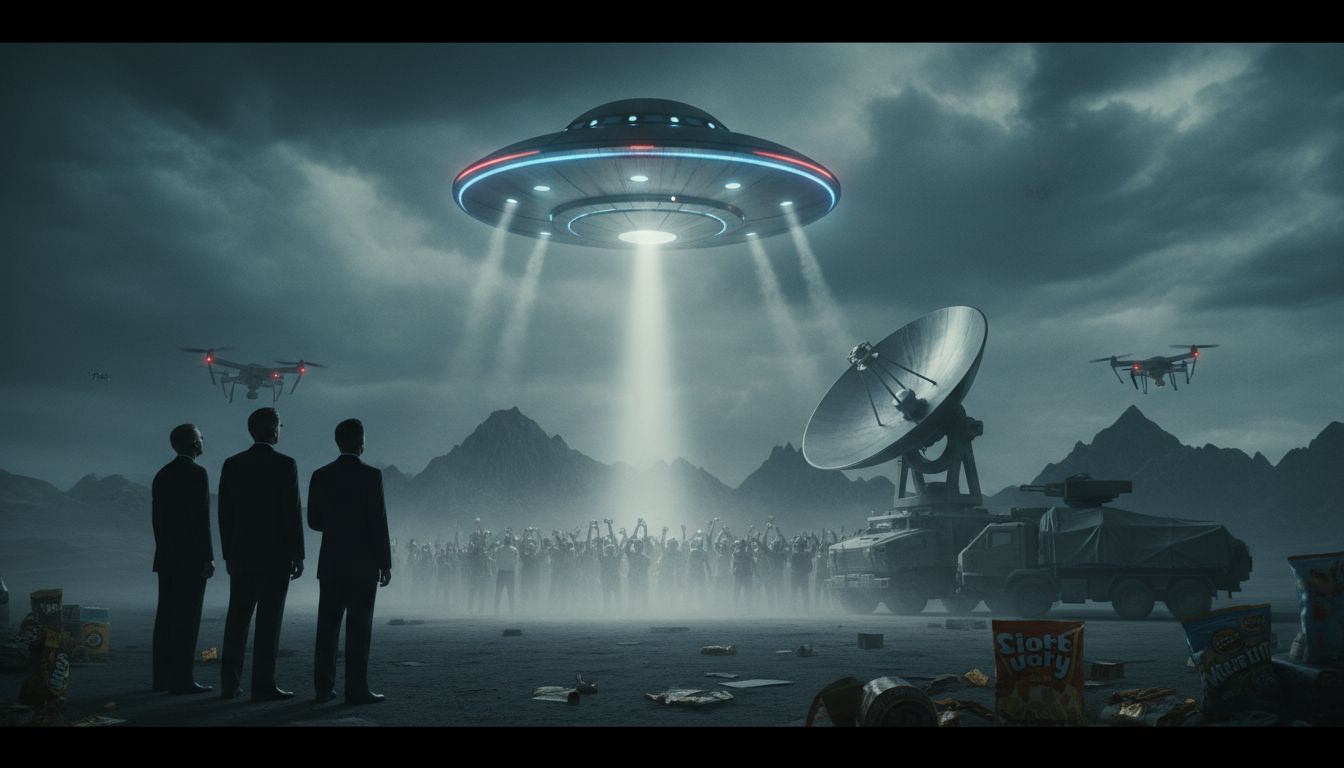
Overview
A report in The Telegraph alleges that the United States government is deliberately leveraging the public’s fascination with aliens and unidentified aerial phenomena (UAP) to mask the deployment of sophisticated surveillance technologies. According to the article, senior officials within the intelligence community have adopted the extraterrestrial narrative as a “smokescreen” for covert operations that would otherwise attract scrutiny from Congress, the media, and civil‑rights groups.
Context and Historical Background
Interest in UFOs surged after the Pentagon’s 2020 release of the Unidentified Aerial Phenomena Task Force findings, prompting a wave of declassified footage and a brief period of official transparency. While the government has since confirmed that many sightings involve foreign drones or sensor anomalies, the Telegraph piece suggests that a parallel, less publicized effort continues: using the UFO theme to distract from the testing and fielding of next‑generation intelligence‑gathering platforms.
Historically, U.S. agencies have employed “cover stories” to protect classified programs—from the Cold War’s “weather balloon” explanations for early spy satellites to the more recent “commercial satellite” guise for reconnaissance constellations. The article positions the current alien narrative as the latest iteration of that tradition.
Alleged Methods
The investigation cites unnamed “senior defense officials” who claim that the Department of Defense (DoD) has intentionally released ambiguous UFO videos and encouraged speculative media coverage. In one instance, a former Air Force officer, speaking on condition of anonymity, said:
“We know that when a strange object appears on a sensor, the immediate reaction is to label it ‘UFO.’ That label buys us time—time to collect data, time to test new radar signatures, and time to keep the real purpose of the system out of the public eye.”
According to the report, the DoD has also coordinated with the Office of the Director of National Intelligence (ODNI) to embed advanced electronic‑signal‑intelligence (ELINT) payloads in aircraft that are publicly described as “UFO research platforms.” These payloads, the article alleges, are capable of intercepting communications, mapping electronic emissions, and tracking the movement of adversary assets across contested regions.
Official Response
When approached for comment, the Pentagon’s public affairs office declined to confirm or deny the specific allegations, reiterating a standard position that “the United States remains committed to transparency regarding unidentified aerial phenomena while safeguarding national security interests.” A spokesperson for the ODNI similarly emphasized that any “UAP-related programs are subject to congressional oversight and adhere to applicable laws.”
Civil‑rights groups, meanwhile, have expressed concern that using an extraterrestrial cover could obscure violations of privacy statutes. “If the government is hiding surveillance under the guise of alien research, that undermines the very oversight mechanisms designed to protect American citizens,” said Maya Patel, director of the Digital Freedom Alliance.
Implications and Outlook
If the claims hold merit, they raise questions about the balance between national security and democratic accountability. The alleged practice could complicate ongoing congressional hearings on UFO disclosures, potentially diverting attention from genuine intelligence‑gathering activities that may impact foreign policy and civil liberties.
Analysts at the Center for Strategic and International Studies note that while “the use of deception is not new in intelligence work, the public’s appetite for UFO stories provides a uniquely effective veil.” They caution that continued reliance on such tactics could erode public trust, especially if future leaks reveal the true nature of the programs.
As the debate over UAP transparency evolves, lawmakers are expected to request more detailed briefings on the scope and oversight of any surveillance initiatives linked to the extraterrestrial narrative. Until then, the Telegraph story adds a new layer to the ongoing discussion about how—and why—the United States chooses to hide certain aspects of its spycraft behind the allure of the unknown.


