Overview
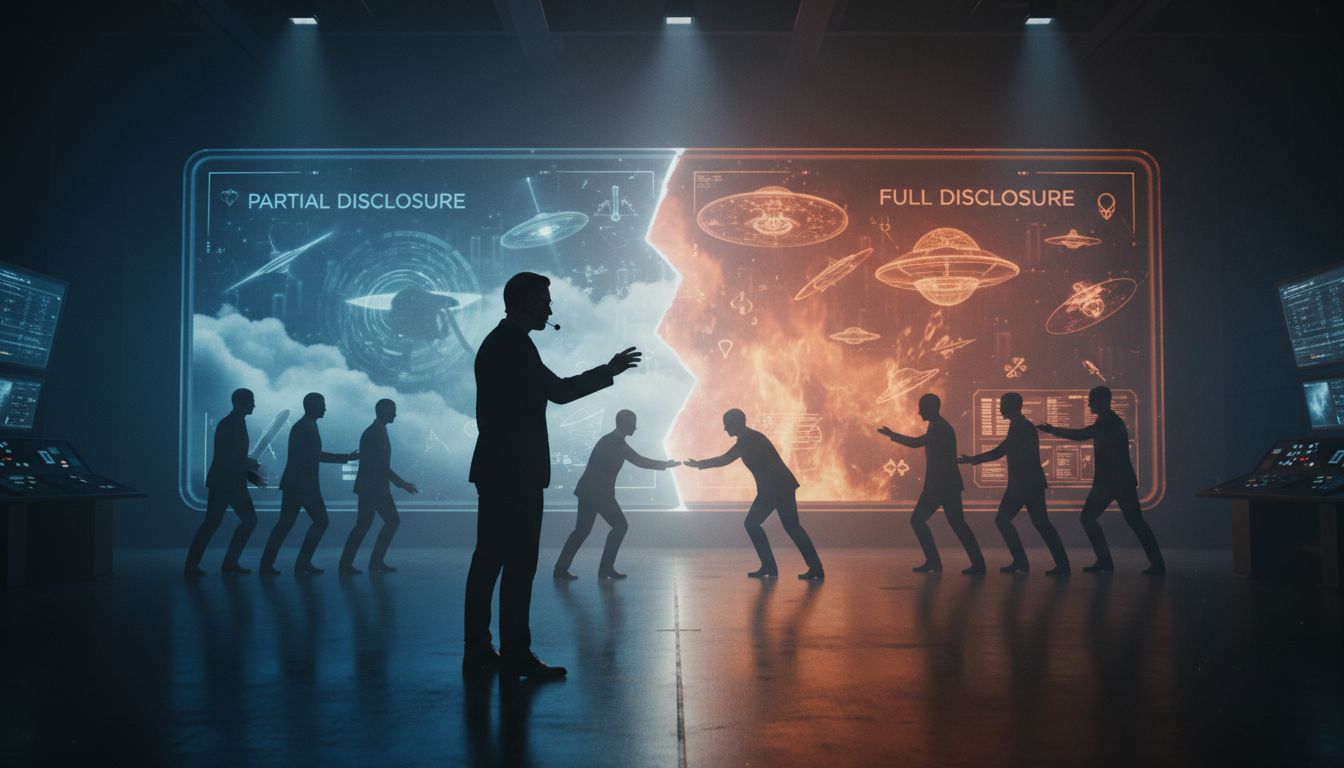
In a recent episode of “Reality Check” from a Washington, D.C., studio overlooking the Capitol, NewsNation host Ross Coulthart and producer Meagan Medick discussed what both described as a pivotal moment in the long-running debate over government transparency on Unidentified Anomalous Phenomena, or UAP. Coulthart said he had spent several days meeting with lawmakers and staffers, and argued that the issue is now marked by a widening divide inside the federal government between those favoring controlled, partial disclosure and those pressing for faster, fuller transparency. He framed the moment as one in which legislative action, whistleblower protections, and public trust are all converging.
Legislative Push and Whistleblower Protections
A major focus of the conversation was the reintroduction of the Unidentified Anomalous Phenomena Disclosure Act (UAPDA). Coulthart said Senator Mike Rounds confirmed to him that the measure would be brought back to the House, and he singled out Representative Mike Turner as a central figure who previously helped block the legislation. According to Coulthart, the bill is important not only because it would expand disclosure, but because it could provide legal protections and amnesty for whistleblowers who have come forward with claims about hidden programs. He pointed to cases such as Jeff Nusseltelli, saying those who speak out often face intimidation or career damage.
Divisions Inside Government and the UAP Debate
Coulthart described an internal schism between two camps: one that supports a tightly managed release of information and another that wants the public to see the full picture. He linked the more restrictive approach to parts of the intelligence community and what he called the “Legacy Program,” while also naming figures such as James Clapper and Lou Elizondo in the broader discussion. Coulthart said Elizondo is widely regarded as a patriot, but noted that some critics see him as part of a process that still limits how much of the story reaches the public. By contrast, he aligned himself with whistleblowers such as David Grusch, who have argued for full disclosure on alleged crash-retrieval and reverse-engineering efforts.
Religious Theories, Scientific Claims, and Wider Stakes
The episode also revisited controversial theories involving the so-called “Collins Elite,” a reported group of fundamentalist Christians within the Pentagon and Air Force who allegedly viewed UAP through a demonic lens. Coulthart said these ideas continue to influence the debate, even as he discussed broader questions about consciousness, non-human intelligence, and potential biological evidence. He referenced conversations with Professor Avi Loeb and claims by Eric Davis, while also suggesting the government may possess “biologics” from non-human intelligence — an assertion that remains unverified publicly. Coulthart further argued that any breakthrough in UAP technology could have major economic consequences, potentially affecting the oil industry and the petrodollar system.
Political Context and Outlook
Coulthart concluded that the U.S. is at a historical turning point and said any president willing to tell the truth about what he called an “80-plus year lie” would earn a place in history. He claimed Donald Trump is “deadly serious” about UAP disclosure and said Stephen Miller has been tasked with handling the brief. While many of the claims discussed on the program remain contested or unsupported by public evidence, the conversation reflects a broader shift: UAP is increasingly being debated not just as a curiosity, but as a matter of national security, legislative oversight, and public accountability.