Overview
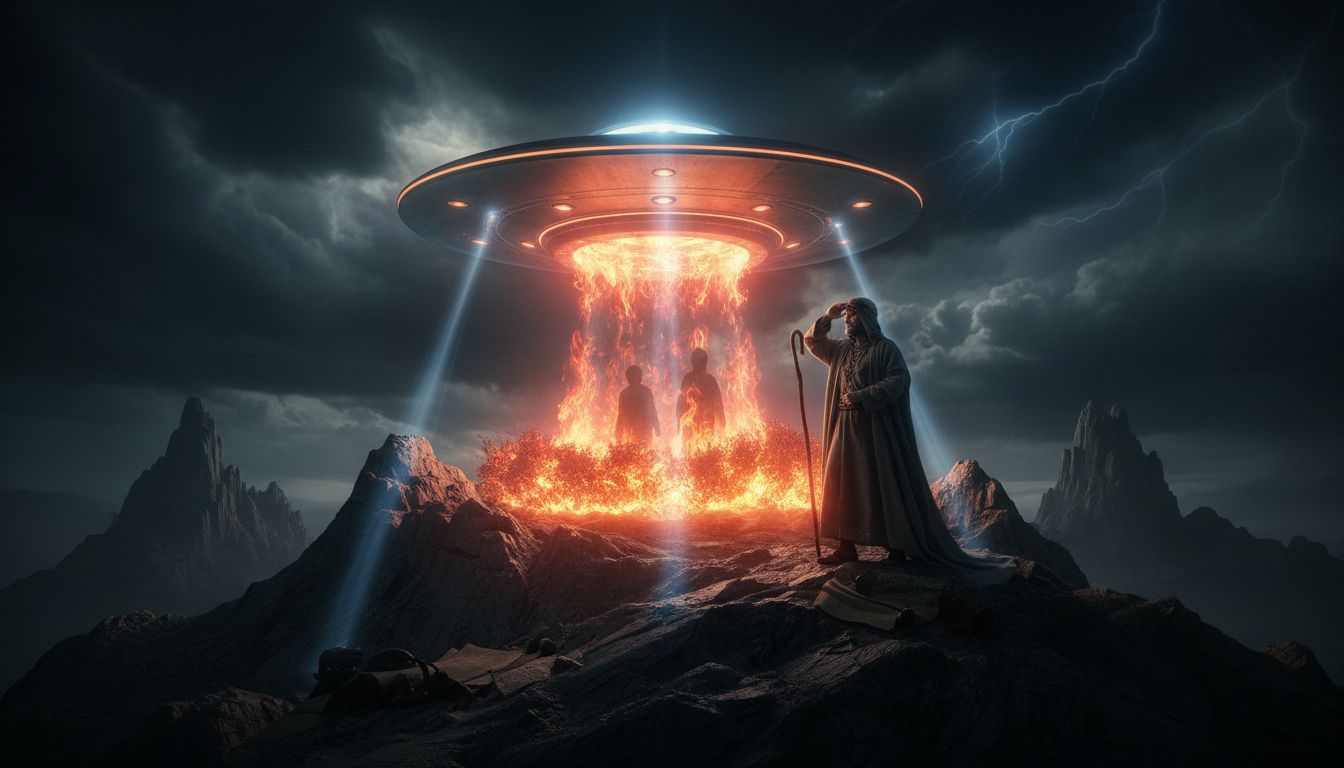
The debate surrounding extraterrestrial life continues to captivate the public imagination, with new interpretations emerging from unexpected quarters—including religious texts. A growing number of theorists and enthusiasts are re-examining the Bible, particularly the Old Testament, for possible clues of ancient alien encounters. In a recent YouTube discussion, proponents of this perspective analyze the story of Moses on Mount Sinai, proposing that biblical descriptions of divine encounters may, in fact, be accounts of early UFO sightings or extraterrestrial visitations.
Ancient Astronaut Theory and Biblical Reinterpretation
At the heart of these arguments lies the ancient astronaut theory, popularized by Swiss author Erich von Däniken. According to this view, many supernatural or divine events described in ancient texts could be reinterpretations of encounters with advanced extraterrestrial beings. “The ancient authors who penned the Bible or the prophets in question just didn’t have the modern vocabulary to adequately explain what they were seeing,” the video explains. This limitation, proponents argue, could account for the mystical and ambiguous language used in the scriptures.
For example, when Moses encounters the burning bush or leads the Israelites through the desert, the descriptions allegedly mirror characteristics often associated with UFO phenomena—such as pillars of cloud and fire that behave in ways not consistent with natural or divine manifestations. “How can a cloud form into a pillar, and much more, how did it stand at the entrance of the tent?” the narrator asks, highlighting the peculiarity of these biblical events.
The Pillar of Cloud and Fire: Divine Manifestation or Alien Technology?
A focal point of this theory is the account in Exodus where the Israelites are led by a “pillar of cloud by day and a pillar of fire by night.” The video notes that “whenever the people saw the pillar of cloud standing at the entrance to the tent, they all stood and worshipped... The Lord would speak to Moses face to face as one speaks to a friend.” Traditionally interpreted as a miraculous manifestation of God, some now suggest these pillars could describe a hovering, luminous craft—a central image in UFO lore.
Skeptics and traditional believers contend that these forms are simply divine choices, consistent with God’s ability to appear however he wishes. As the video references from the Book of Job, “Believers might use this concept to dissuade others from digging any further and questioning God... it’s simply not our role as his creations to question him.” Yet, modern readers, influenced by contemporary understandings of technology and space exploration, find these ancient descriptions increasingly suggestive of alien technology.
Lost Biblical Texts and Suppressed Evidence
Adding another layer to the debate is the suggestion that earlier versions of the Bible may have contained more explicit references to extraterrestrial encounters. The video discusses theories that “when King James got his hands on the Bible and invented the King James Version, many of the books that got to the nitty-gritty of spacecraft, extraterrestrial machines, and beings from other planets were unceremoniously torn out and thrown away.” Some point to the omission of texts like the Book of Enoch and the Book of Jasher as possible evidence of deliberate suppression of potentially controversial accounts.
While mainstream scholars remain unconvinced by these arguments, dismissing them as speculative or fringe, the enduring fascination with biblical mysteries and the search for extraterrestrial life ensures that such theories continue to capture the imagination of many.
Conclusion
Whether a product of imaginative rereading or a legitimate reinterpretation of ancient texts, the theory that Moses’ encounters on Mount Sinai involved UFOs rather than purely divine manifestations remains a topic of lively debate. “Modern readers can’t help but look at the pillar of cloud and think that’s far too strange and random to simply be God’s intended form,” the video concludes, reflecting a broader curiosity that bridges faith, history, and the enduring mystery of whether humanity is truly alone in the universe.


