Overview
Over more than six years, the U.S. government’s public position on unidentified anomalous phenomena (UAP) has remained more cautious than many popular accounts suggest. Official documents have acknowledged that some military encounters are genuine, that certain cases remain unresolved, and that data quality often limits analysis. No publicly released government assessment has concluded that any UAP is extraterrestrial in origin.
The timeline, compiled from Pentagon statements, congressional records, intelligence assessments and UAP-related reports, also shows a distinction often lost in public debate: “unidentified” describes the status of an investigation, not the nature or origin of an object. A case may remain unresolved because of insufficient sensor data, poor-quality video or missing metadata—not because officials have determined that it represents technology beyond human capabilities.
The 2020 Navy Video Release
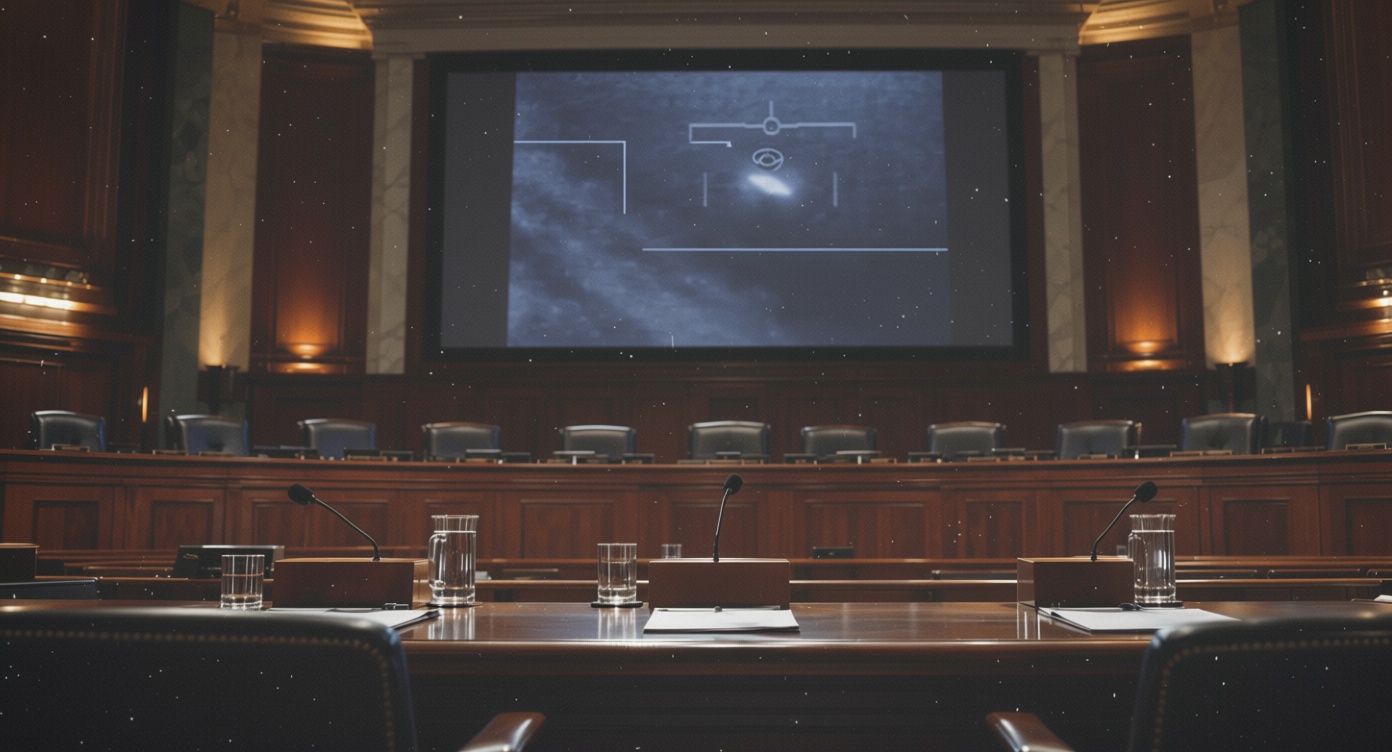
The modern phase of official UAP discussion began with three Navy videos commonly known as FLIR1, Gimbal and GoFast. Navy aircraft recorded the clips in November 2004 and January 2015. Although versions of the footage had circulated through leaks for years, the Department of Defense formally authorized their release on April 27, 2020.
The Pentagon said the release was intended to resolve public confusion about whether the videos were authentic. It confirmed that the footage was genuine Navy material and stated that the phenomena shown “remain characterized as ‘unidentified.’” The department did not identify the objects, claim they displayed extraordinary capabilities or suggest an extraterrestrial explanation.
That distinction became especially important in subsequent analysis. In February 2025, the Pentagon’s All-domain Anomaly Resolution Office (AARO) published an assessment of GoFast. As summarized by The Black Vault, AARO assessed with high confidence that the object was at approximately 13,000 feet and was not traveling at anomalous speeds. The office also acknowledged that it lacked the original file and metadata, forcing analysts to work from a compressed copy. The supplied timeline notes that no comparable AARO resolution report for Gimbal had been identified, leaving that case open in the public record.
From Task Force to AARO
The video release was followed by a broader institutional response. In 2020, the Pentagon established the Unidentified Aerial Phenomena Task Force, while Congress requested an unclassified intelligence assessment. The Office of the Director of National Intelligence released its Preliminary Assessment on June 25, 2021.
The nine-page report reviewed 144 reports from U.S. government sources between 2004 and 2021. Eighty incidents involved observations from more than one sensor. Officials said they could explain only one case with high confidence, while the remaining reports stayed unresolved. However, the report emphasized that the lack of sufficient data was a central obstacle to reaching firm conclusions.
What the Record Does—and Does Not—Show
Taken together, the public statements portray a government attempting to improve reporting, preserve national-security information and separate evidence from speculation. Officials have recognized that some encounters occurred and that a number remain unexplained. They have also indicated that many incidents could ultimately receive conventional explanations once better data become available.
The timeline’s account of 2026 file releases suggests that the public now has access to more raw material for independent review. That may alter understanding of individual cases, but it has not changed the government’s central public conclusion: unresolved UAP reports are not, by themselves, evidence of extraterrestrial activity. The official record remains one of investigation and uncertainty—not disclosure of alien origins.