Overview
On 20 February 2026 former President Donald Trump announced on Truth Social that he would direct U.S. agencies, including the Department of Defense, to “begin the process of identifying and releasing” government files on aliens, extraterrestrial life, unidentified aerial phenomena (UAP) and UFOs. The declaration followed a recent interview in which ex‑President Barack Obama said it was “statistically likely” that life exists beyond Earth, a comment that sparked intense media coverage and renewed calls for transparency. While Trump stopped short of confirming the existence of extraterrestrials, his order marks the most high‑profile political push for full disclosure in recent history and has reignited speculation about the broader consequences of a definitive public admission.
Political Context
Trump’s move came after a series of public statements that blurred the line between political posturing and genuine policy interest. In a brief appearance aboard Air Force One, he criticized Obama for “revealing classified information” about aliens, yet admitted he “doesn’t have an opinion” on their reality. The contrast between the two former presidents underscores the bipartisan nature of the UAP conversation, which has gradually shifted from fringe conspiracy theory to a topic discussed in congressional hearings and Pentagon briefings. The President’s directive, if followed, would require the National Archives, the Office of the Director of National Intelligence and the Defense Department to review thousands of pages of classified material—a task that could take months, if not years, to complete.
Potential Economic Impact
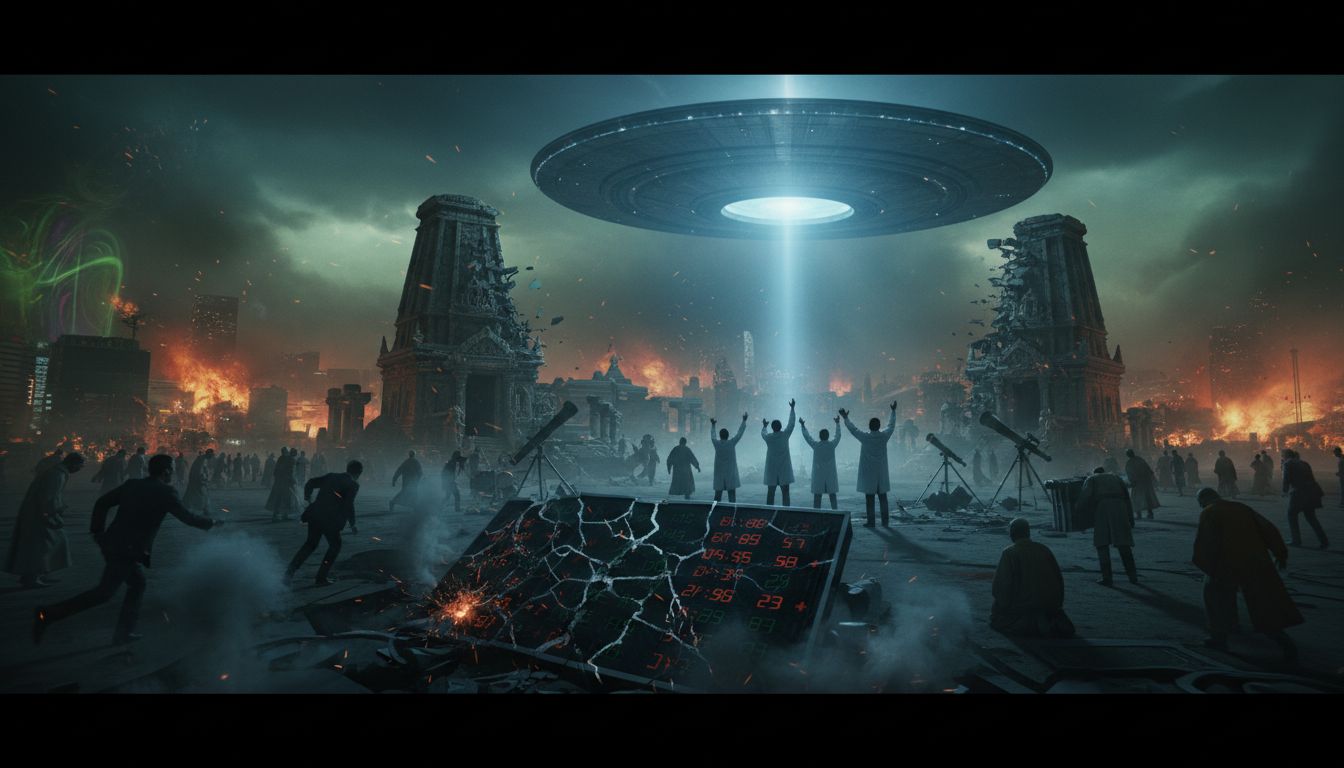
Analysts warn that a full release of extraterrestrial evidence could trigger sharp market reactions. The aerospace sector, already buoyed by commercial spaceflight ventures, might see a surge in investment as investors anticipate new technologies or government contracts. Conversely, defense stocks could experience volatility if the disclosed data suggest that current missile‑defence systems are ineffective against advanced, non‑human craft. A study by the Financial Stability Board earlier this year projected that a sudden shock to investor confidence could cause a short‑term dip of up to 4 % in major indices, followed by a period of “information‑driven reallocation” as markets adjust to the new reality.
Religious and Social Implications
A formal acknowledgment that humanity is not alone would reverberate through religious communities worldwide. Scholars of theology note that many faith traditions already incorporate the possibility of extraterrestrial life into doctrinal discussions, but a concrete disclosure could force a re‑examination of core teachings about humanity’s place in creation. In the United States, surveys conducted after Obama’s podcast appearance showed a rise in “spiritual uncertainty” among respondents who identified as “moderately religious.” Similar patterns have emerged in past moments of scientific upheaval, such as the Copernican revolution, suggesting that societies may experience a period of collective introspection before integrating the new paradigm.
Scientific Demands and Global Response
The scientific community is likely to demand rigorous, peer‑reviewed evidence before accepting any official claim. Universities and research institutions have called for access to raw sensor data, de‑classified radar logs and any physical samples that may exist. Dr. Elena Martínez, a physicist at the European Space Agency, warned that “without transparent methodology, the data risk being dismissed as propaganda, which would undermine public trust in both science and government.” Internationally, allies such as the United Kingdom and Japan have expressed willingness to coordinate on joint investigations, hinting at the possibility of a multilateral framework for sharing UAP findings, similar to existing arms‑control treaties.
Looking Ahead
While the Trump administration’s directive is a concrete step toward greater openness, the path to full disclosure remains uncertain. Legal hurdles, national‑security classifications and the sheer volume of material will shape the timeline. Nonetheless, the conversation has moved from the margins of fringe forums into mainstream political discourse, prompting economists, religious leaders, scientists and ordinary citizens to contemplate how a confirmed extraterrestrial presence would reshape economies, belief systems and the very notion of reality. As the review process unfolds, the world watches for the first substantive glimpse of what may be the most transformative revelation of the 21st century.