Overview
Public interest in unidentified anomalous phenomena appears to be colliding with growing skepticism, as years of blurry military footage and unverified whistleblower claims have produced few definitive answers. Avi Loeb, a Harvard astrophysicist and White House adviser on UAP science, says that frustration is understandable—but that the absence of reliable evidence should not end the scientific investigation.
In an interview with Cybernews published November 19, Loeb said he has not seen conclusive evidence that any UAP represents alien technology. The available material, he said, consists largely of insufficient observations involving objects described as orbs or triangular shapes. “I have not seen any conclusive evidence for alien technologies, only insufficient data on UAPs in the form of orbs or triangular objects,” Loeb said.
Secrecy and Military Sensors
Loeb also challenged the idea that government secrecy surrounding UAP reports is primarily intended to shield the public from a shocking revelation. In his view, classified information is more likely to concern the capabilities and limitations of military detection systems.
He suggested that adversaries such as Russia or China could use knowledge of U.S. sensors to develop drones or other systems designed to evade detection. That would make the protection of sensor performance—and not fear of public panic—the central reason for withholding some information.
Asked whether preventing mass panic was a factor, Loeb reportedly rejected the explanation. “No,” he said, adding that an inability to identify an object “flags incompetence.” His comments reflect a broader argument that unexplained sightings should be treated as an intelligence and scientific problem rather than automatically as evidence of extraterrestrial visitation.
The Galileo Project’s Independent Approach
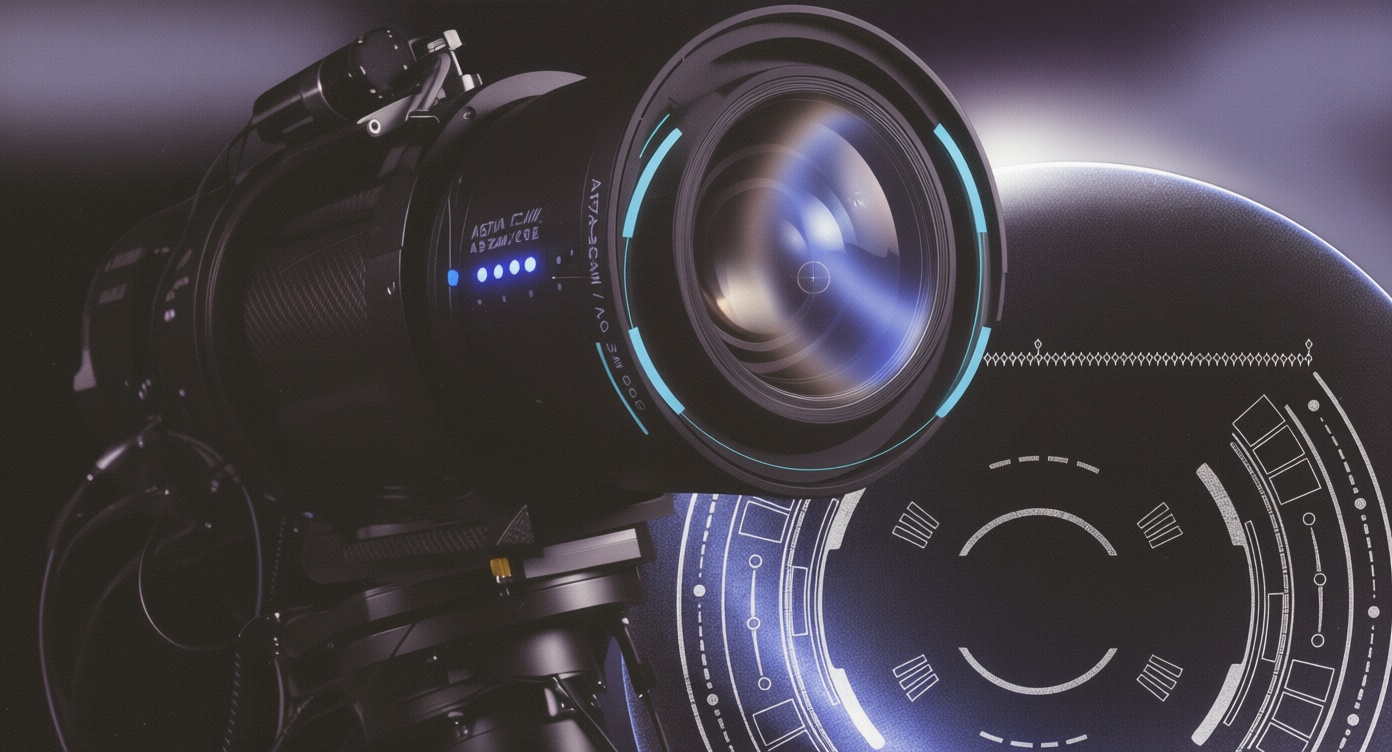
To improve the quality of available evidence, Loeb’s Galileo Project has secured $1.5 million to build an independent observatory. The initiative is intended to collect higher-resolution, systematically recorded observations using scientific instruments rather than relying exclusively on military videos, eyewitness testimony or material released through political channels.
That approach is designed to bypass what Loeb views as the influence of “gatekeepers and storytellers”—officials, insiders and online personalities who may control access to data or attach dramatic interpretations to ambiguous footage. An independent observatory could allow researchers to examine UAP reports with consistent equipment and methods, while preserving the possibility that ordinary explanations—such as aircraft, drones, balloons, atmospheric effects or sensor artifacts—will account for many observations.
The need for better data has become more urgent as questionable visual material continues to circulate online. Cybernews cited recent examples including alleged black-triangle footage that was edited by the FBI and AI-generated cube imagery that went viral. Such cases can intensify public interest while making it more difficult to distinguish genuine observations from manipulated or synthetic media.
A Discovery May Not Transform Daily Life Immediately
Despite the potentially profound implications of confirming extraterrestrial technology, Loeb suggested that society might respond more gradually than popular culture imagines. Even if credible evidence emerged, he argued, people could continue working, attending school and carrying out ordinary routines while governments and scientists assessed the discovery.
That prediction is not a claim that such an event would be unimportant. Rather, it reflects the possibility that public reaction would be shaped by the strength of the evidence, the pace of official confirmation and the practical consequences for public safety. For now, Loeb’s message is cautious: the existing UAP record does not establish an alien presence, but better independent observations could provide a more reliable basis for determining what these objects are.