Reported Discovery
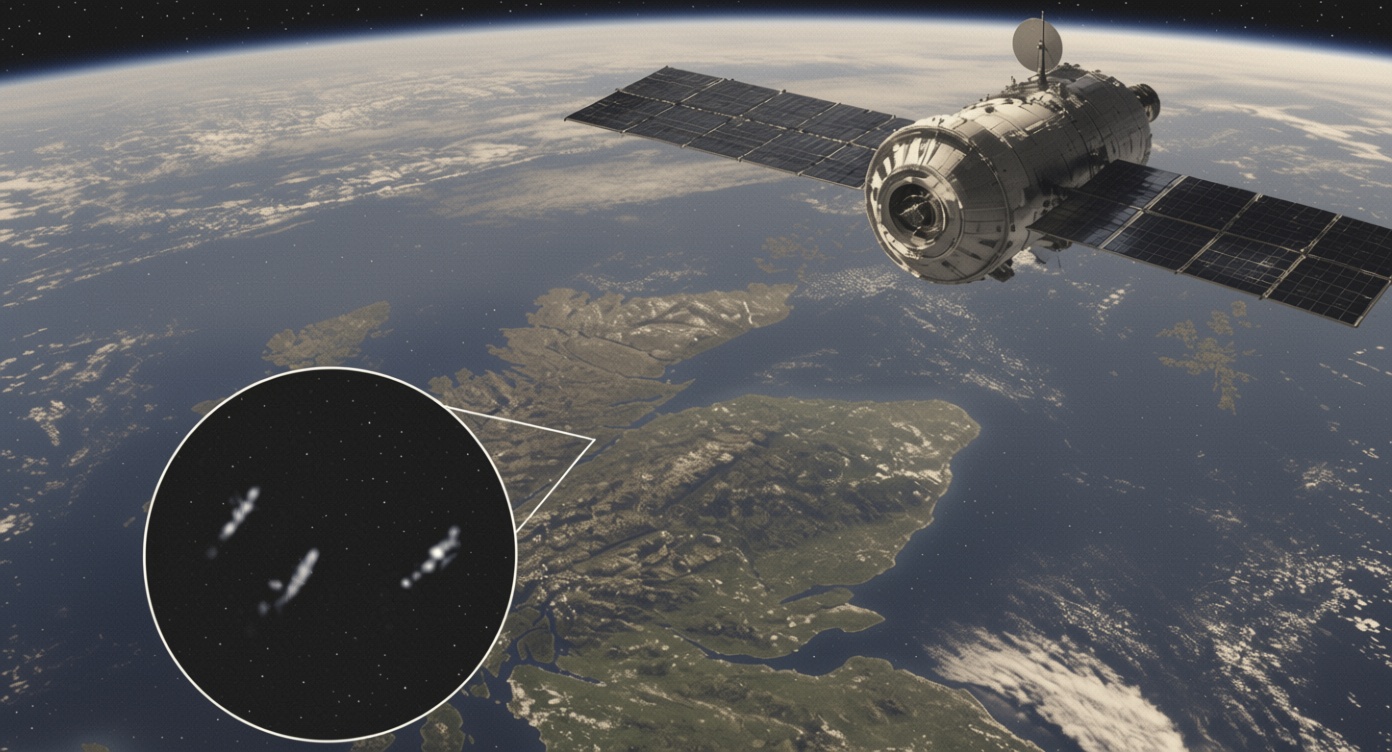
A woman has reported what she believes could be a possible sighting of the Loch Ness Monster in satellite imagery near Inverness. The images, viewed through Google Earth and Google Maps, appear to show three large, dark objects on or beneath the surface of the water.
The report was covered by the Inverness Courier on September 18, 2026, under the question of whether the legendary creature had been “spotted from space.” However, the imagery does not establish that the objects are animals, and no independent confirmation of the sighting has been reported.
Analyst’s Assessment
Roland Watson, a Loch Ness researcher and analyst who has examined alleged sightings of the creature, reviewed the images. According to the report, Watson said the shapes could potentially represent lifeforms rather than kayaks, while stressing that the evidence was inconclusive.
That assessment leaves open several possible explanations. The objects could be boats, watercraft, floating debris, shadows, surface disturbances or distortions produced by the satellite-imaging process. Without higher-resolution imagery, information about when the images were captured, or corroborating observations from people on the loch, it is not possible to determine their nature with confidence.
The apparent scale and arrangement of the objects have attracted attention because of their location near Loch Ness, a body of water long associated with reports of an unidentified animal. Yet satellite images provide only a static, overhead view and can make ordinary objects appear unusual, particularly when the water’s surface, lighting conditions and image stitching affect how shapes are recorded.
Loch Ness Sightings Context
Loch Ness has generated reports of unusual forms in the water for decades, ranging from eyewitness accounts and photographs to sonar readings and aerial imagery. Many alleged sightings have later been attributed to boats, waves, logs, wildlife or visual misidentification. Others remain unexplained, but unexplained does not necessarily mean evidence of a previously unknown creature.
The latest report is also distinct from a direct eyewitness encounter. The woman identified the possible objects by examining publicly available mapping imagery rather than observing them in real time. That makes the date and conditions of the alleged sighting especially important, although those details were not established in the available report.
Official Response Pending
The Official Loch Ness Sightings Register had not commented on the images at the time of publication. The register records reported observations connected with the loch, but inclusion in such a record would not by itself verify that an alleged object was the Loch Ness Monster.
Further analysis would require access to the original image files, their capture dates and coordinates, and any available imagery from other periods or sources. Comparing the shapes with known boat routes and examining whether they move or change position across sequential images could help determine whether they are vessels or natural features.
For now, the images remain an intriguing but unverified addition to the long-running Loch Ness mystery. Watson’s cautious view reflects the available evidence: the objects may look unusual, but the satellite imagery alone cannot establish that they are living creatures—or that Nessie has been detected from above.