Overview
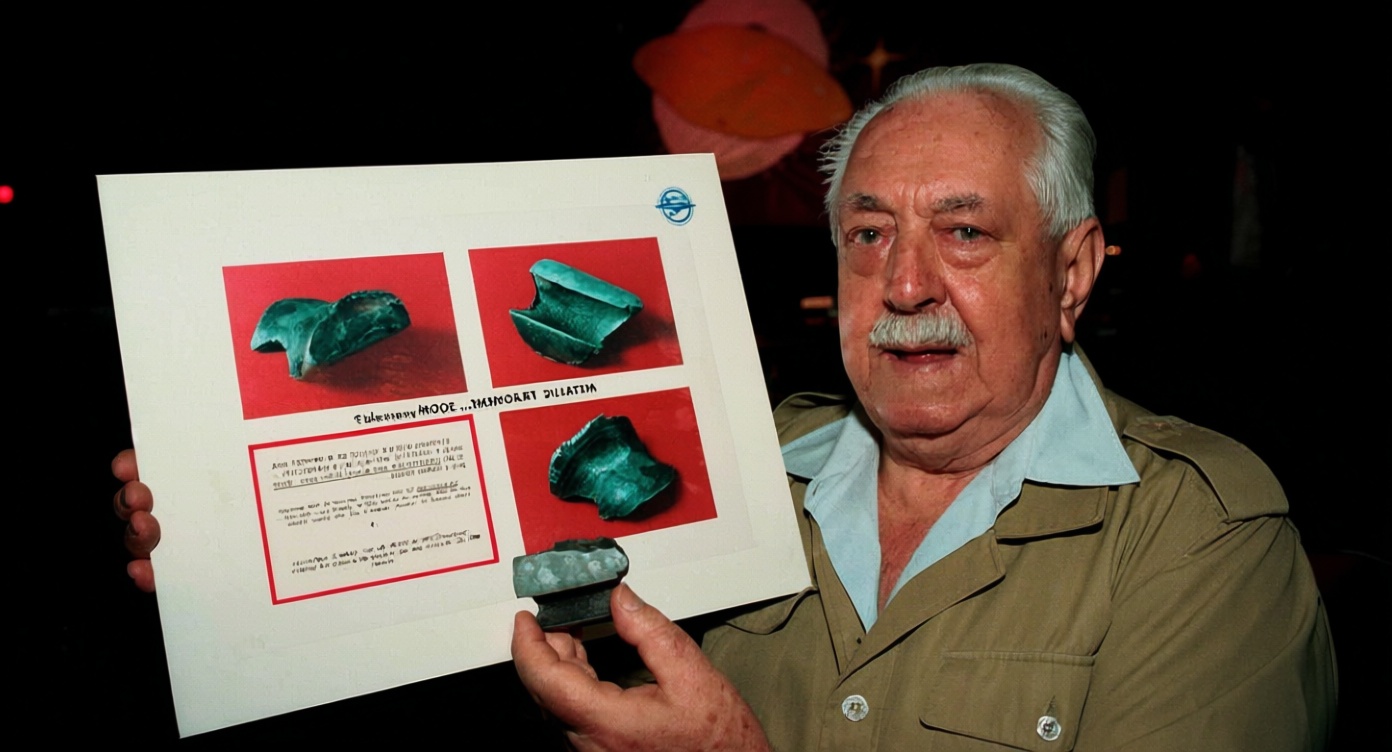
WV News recently highlighted Major Colman Von Keviczky in a post tied to UFO and UAP discussions, drawing attention to a figure whose name has long appeared in the historical margins of aerial anomaly reporting. The source material provided is limited and appears to center on an image asset rather than a full-length article, but the name itself suggests a link to the early era of military and civilian interest in unexplained objects in the sky. In that sense, the feature serves less as a breaking news report and more as a reminder of how long the UFO conversation has been shaped by military observers, researchers, and advocates who helped keep the issue in public view.
Historical Context
Von Keviczky’s association with UFO discourse places him among a generation of figures who emerged during the Cold War, when reports of strange aerial sightings often intersected with national security concerns, scientific skepticism, and public fascination. During that period, many military personnel, pilots, and researchers argued that unidentified objects deserved systematic study rather than dismissal. That broader debate remains central to today’s UAP conversation, especially as governments and defense officials continue to examine sightings that do not fit conventional explanations.
While the WV News feature does not provide detailed biographical background, the prominence of Von Keviczky’s name suggests he is remembered as part of that earlier wave of UFO commentary. Figures like him helped establish the language and framing that still shape the modern discussion: whether unusual aerial reports should be treated as misidentifications, technological anomalies, or something still not fully understood.
Why His Name Still Resonates
The continued appearance of historical names in contemporary UFO coverage reflects a growing interest in the origins of the topic itself. Public attention to UAPs has intensified in recent years, driven by military reporting, congressional hearings, and renewed scrutiny of government transparency. In that environment, archival references to earlier advocates and observers take on added significance because they show that the debate did not begin with the latest wave of Pentagon disclosures. It has been unfolding for decades, often in fragments, through images, testimony, and field reports.
Von Keviczky’s inclusion in a WV News feature also underscores the role local and regional outlets can play in preserving the historical record of unconventional subjects. Even when coverage is brief, image-based features can revive interest in older material and prompt readers to revisit figures who helped build the foundation of UFO research and speculation. That is especially relevant now, as journalists and researchers increasingly distinguish between entertainment-driven UFO narratives and the more serious question of unexplained aerial phenomena.
A Broader UAP Conversation
Although the provided source offers few specifics, the choice to feature Major Colman Von Keviczky speaks to a larger journalistic trend: the reexamination of early UFO-era personalities in light of modern UAP reporting. Today’s discussions are shaped by radar data, sensor footage, and official statements, but they still depend on the same fundamental questions that animated earlier generations—what is being observed, who is observing it, and how should institutions respond?
For readers, the WV News item functions as a historical touchpoint rather than a definitive account. With little accompanying text available, the image and name do most of the work, signaling the persistence of a subject that continues to straddle history, science, and public curiosity. In that respect, Major Colman Von Keviczky remains relevant not because of any one present-day revelation, but because his name is part of the long archival chain that still informs UFO and UAP discussions today.