Overview
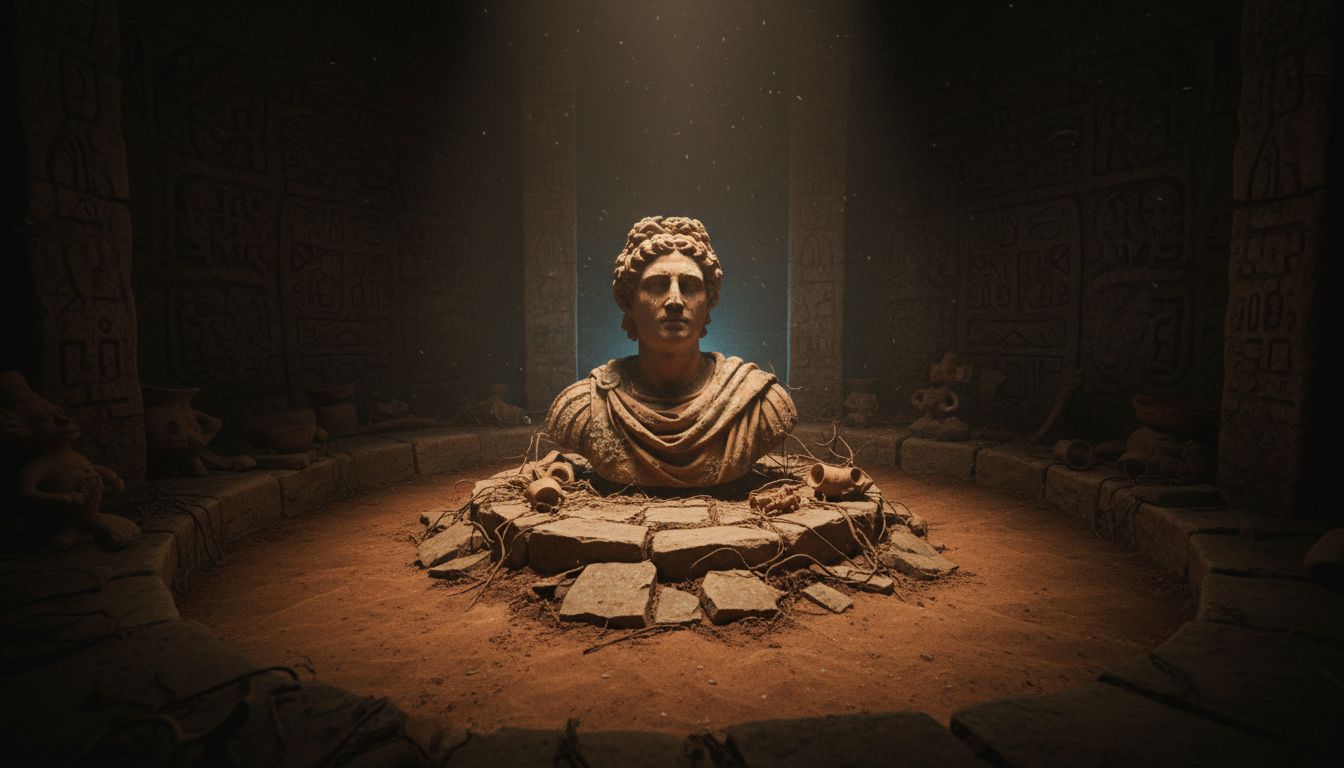
A terracotta bust unearthed from a burial site in the Mexican state of Veracruz has ignited renewed discussion about pre‑Columbian trans‑Atlantic contact. The artifact, described by the team that recovered it as “Roman‑style” in both form and craftsmanship, has been dated to approximately 2,000 years ago—roughly a millennium before the first recorded European voyages to the Americas. While the find does not prove that Romans set foot in the New World, it adds a tangible data point to a long‑standing scholarly debate about whether ancient Mediterranean peoples ever crossed the Atlantic.
The Find
The bust was discovered in early 2025 during a systematic excavation of a burial complex associated with the Classic‑period Maya at the site of El Zapote. The ceramic figure, measuring 23 cm in height, depicts a bearded male wearing a laurel wreath—a motif common in Roman portraiture of the Severan dynasty (193‑235 CE). The burial context, including accompanying pottery and obsidian tools, initially suggested a local Maya provenance, but the distinctive Roman iconography prompted further investigation.
Lead archaeologist Dr. María López‑García of the National Institute of Anthropology and History (INAH) noted, “When we first lifted the bust from the earth, its stylistic features were unmistakable. It did not align with any known Mesoamerican artistic conventions.” The team photographed the object in situ and transferred it to a laboratory in Mexico City for detailed analysis.
Scientific Analysis
To establish the bust’s age, researchers employed thermoluminescence (TL) dating, a method that measures the accumulated radiation dose in ceramic materials since their last firing. The TL results returned a calibrated date range of 1,850 ± 120 years BP, placing the creation of the piece firmly within the early third century CE. Complementary compositional analysis using X‑ray fluorescence (XRF) indicated a clay matrix consistent with Mediterranean sources, though the possibility of local imitation cannot be excluded.
Stylistic assessment was carried out by Dr. Evan Sullivan, a classical art historian at the University of Cambridge. He remarked, “The bust’s facial proportions, the treatment of the hair, and the laurel wreath are hallmarks of Severan portraiture. It is not a generic ‘ancient bust’; it bears the hallmarks of a specific Roman artistic tradition.” The researchers also compared the figure to known Roman copies of Greek originals, finding a close match with a surviving marble portrait of Emperor Severus Alexander.
Scholarly Debate
The artifact’s provenance has sparked a spectrum of interpretations. Some scholars, such as Dr. Ana Martínez of the University of Puebla, argue that the bust could be the result of accidental drift—a Roman shipwreck whose cargo washed ashore and was later incorporated into a Maya burial. “Maritime drift is a documented phenomenon; we have examples of Roman amphorae found on Atlantic coasts far from their origin,” she said.
Others entertain the more speculative notion of deliberate early voyages. Historian Prof. James Keller of the University of Chicago points to classical texts that describe Roman interest in Atlantic navigation, noting, “While there is no direct documentary evidence of a Roman expedition to the Americas, the technological capability for long‑distance sailing existed.” Still, a third camp cautions against over‑interpretation, emphasizing that trade networks and cultural diffusion could have transmitted Roman artistic motifs to the New World via intermediary peoples, such as Phoenician traders or North African Berbers, without direct contact.
Implications and Next Steps
If the bust is confirmed as a genuine Roman import, it would represent the earliest securely dated European artifact found in the Americas, reshaping narratives of early global interaction. However, researchers stress that a single object does not constitute proof of sustained contact. Ongoing excavations at El Zapote aim to locate additional artifacts that might corroborate the bust’s origins, while comparative studies of clay signatures across Mediterranean sites are planned.
The discovery underscores the importance of interdisciplinary collaboration—combining archaeological context, scientific dating, and art‑historical expertise—to evaluate extraordinary claims. As Dr. López‑García concluded, “Our responsibility is to let the evidence speak, not the imagination. This bust opens a fascinating line of inquiry, and we will follow it wherever the data lead.”


