Overview
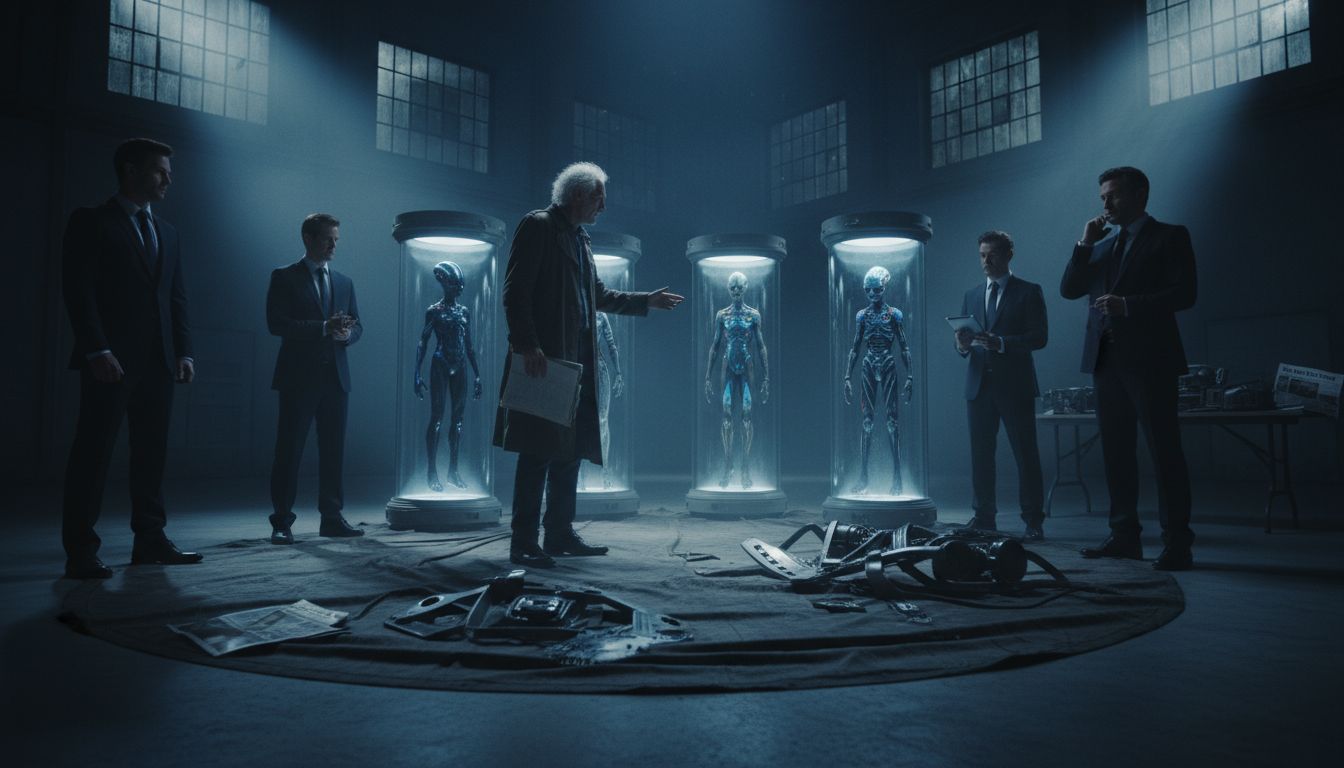
An individual who previously worked on classified government programs has asserted that four distinct alien species were recovered from the wreckage of multiple crashed unidentified aerial phenomena (UAP). The claim, reported by the New York Post on May 16, 2026, adds a new layer to the ongoing public debate over extraterrestrial life and the degree of secrecy surrounding UAP investigations. No independent verification of the alleged specimens has been presented, and officials from the Department of Defense have not confirmed the report.
The Claim
The researcher, identified only as “Dr. Evan Morrison,” said he was part of a covert analysis unit that examined debris from three separate UAP incidents between 2018 and 2024. According to Morrison, forensic teams extracted “biological material that did not match any known Earth organism” and, after extensive laboratory work, classified the material into four separate taxa: a gelatinous, bioluminescent form; a carbon‑based, multi‑limbed entity; a silicon‑rich, crystalline lifeform; and a “nanoscopic swarm” that behaved like a coordinated cloud of particles. Morrison told the Post that the specimens are stored in a secure, undisclosed facility and that “the data we have could rewrite biology as we know it.”
Context of Government UAP Efforts
Morrison’s statements come amid heightened congressional scrutiny of UAPs. In 2023, the Office of the Director of National Intelligence released a 144‑page report acknowledging 144 sightings that could not be readily explained, prompting the establishment of a permanent UAP Task Force within the Pentagon. Since then, the Department of Defense has declassified several videos showing anomalous flight characteristics, but it has consistently refrained from commenting on any recovered material. The alleged retrieval of alien specimens, if true, would represent a dramatic escalation from “unidentified aerial objects” to confirmed extraterrestrial biology.
Expert and Scientific Reaction
Scientists and former intelligence officials have responded with cautious skepticism. Dr. Lydia Khan, a molecular biologist at the University of California, Berkeley, noted, “Extraordinary claims require extraordinary evidence. Without peer‑reviewed data, it is impossible to assess the credibility of these alleged species.” Former UAP program director Rear Admiral James Parker, who oversaw the 2022‑2023 investigations, said, “We have no record of any biological recovery that meets the description provided. If such material existed, it would have triggered a coordinated inter‑agency response.” Advocacy groups, such as the Mutual UFO Network (MUFON), have called for transparency, urging the government to release any relevant findings to the scientific community.
Implications and Next Steps
If Morrison’s account proves accurate, the ramifications would extend far beyond aerospace security, touching on bioethics, planetary protection protocols, and international law. The National Academy of Sciences has previously warned that the discovery of non‑Earth life would necessitate a global framework for study and containment. However, until tangible evidence—such as samples, high‑resolution imagery, or corroborating testimony from additional officials—emerges, the claim remains unsubstantiated. Congressional committees overseeing UAP matters have scheduled a hearing for later this summer, where they may request testimony from individuals like Morrison. Until then, the story underscores the tension between public curiosity, governmental secrecy, and the scientific rigor required to validate any assertion of alien life.


