Overview
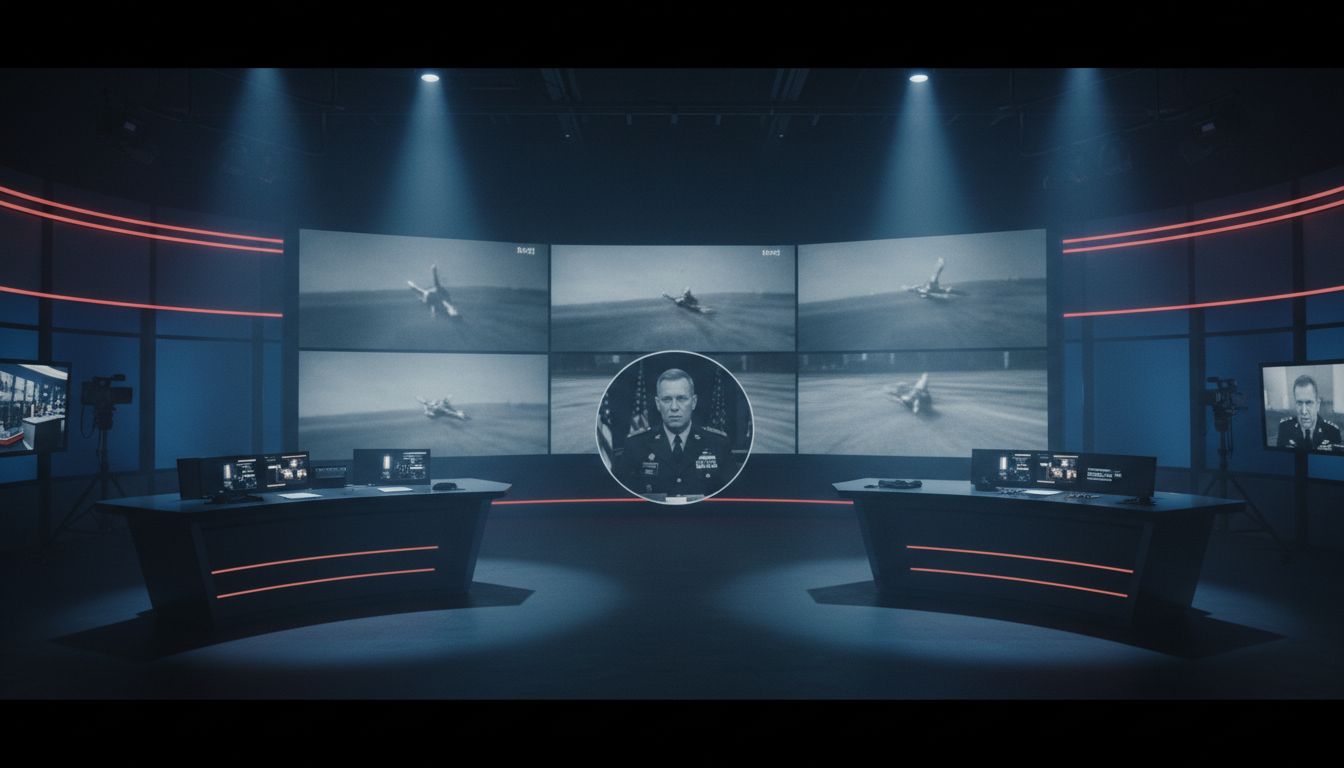
CBS News’ April 12 segment on the Pentagon’s Unidentified Aerial Phenomena (UAP) program brought several recent developments into public view. The network highlighted the release of two previously classified Navy videos that show “unexplained aerial objects” captured during training exercises, announced a forthcoming congressional hearing to assess the possible national‑security ramifications of these sightings, and reported a modest but notable increase in federal funding for UAP research. Together, these steps signal a shift toward greater governmental transparency on a topic that has long been shrouded in secrecy.
Newly Declassified Navy Footage
The two videos, taken in 2024 off the Atlantic coast, depict fast‑moving objects that execute abrupt accelerations and maneuvers beyond the capabilities of known aircraft. The footage, originally recorded by the U.S. Navy’s Advanced Airborne Sensor (AAS) system, was declassified last month after a review by the Office of the Secretary of Defense. Pentagon spokesperson Lisa Hernandez said the release “provides the public with a clearer picture of the data our analysts are reviewing” and emphasized that the Department is “still evaluating the technical characteristics and origins of these phenomena.” While the videos do not conclusively identify the objects, they have reignited scientific and defense‑community interest in understanding whether they represent advanced foreign technology, sensor artifacts, or something else entirely.
Congressional Hearing on Security Implications
In response to growing public and legislative pressure, the House Committee on Armed Services scheduled a hearing for June 10 to examine the potential security implications of UAP encounters. Committee Chair Rep. James Miller (R‑CA) announced that the hearing will feature testimony from senior officials of the Department of Defense, the Office of Naval Intelligence, and the newly created UAP Task Force. “Our responsibility is to ensure that any technology—whether domestic or foreign—does not compromise the safety of our forces or the American public,” Miller stated in a press release. The hearing is expected to address gaps in data collection, inter‑agency coordination, and the need for standardized reporting protocols across all branches of the military.
Funding Boost for UAP Research
The segment also noted that the FY 2027 defense appropriations bill includes an additional $45 million earmarked for UAP investigation, raising the total annual budget for the program to roughly $150 million. This increase, approved by the Senate Appropriations Committee, reflects a bipartisan consensus that the phenomenon warrants systematic study. According to the Department of Defense’s Office of the Under Secretary of Defense for Research and Engineering, the new funds will support advanced sensor development, data‑analysis tools, and collaborations with civilian scientific institutions. “A modest but steady investment allows us to move from ad‑hoc analysis to a more rigorous, research‑driven approach,” said Dr. Evelyn Chao, director of the Defense Advanced Research Projects Agency’s (DARPA) UAP Initiative.
Calls for Greater Transparency
Despite the recent disclosures, advocacy groups and former military officials continue to press the Pentagon for broader openness. The To The Stars Academy, which has long championed UAP transparency, released a statement urging the Department to “publish a comprehensive, unredacted report on all UAP encounters recorded since 2004.” Former Navy pilot Cmdr. Randy Wagner, who participated in the original video recordings, echoed this sentiment, noting that “the more information the public receives, the better we can collectively assess any potential threats.” The Pentagon has responded by pledging to release an annual summary of UAP findings, though it stopped short of committing to full public access to raw data.
Outlook
The convergence of declassified evidence, legislative scrutiny, and increased funding suggests that the U.S. government is moving toward a more systematic and open-ended inquiry into unidentified aerial phenomena. While the newly released Navy videos have not provided definitive answers, they have sharpened the focus on the need for robust data collection and inter‑agency cooperation. As the June hearing approaches, policymakers, scientists, and the public alike will be watching closely to see whether the next wave of disclosures will illuminate the nature of these enigmatic sightings or simply deepen the mystery.


