Overview
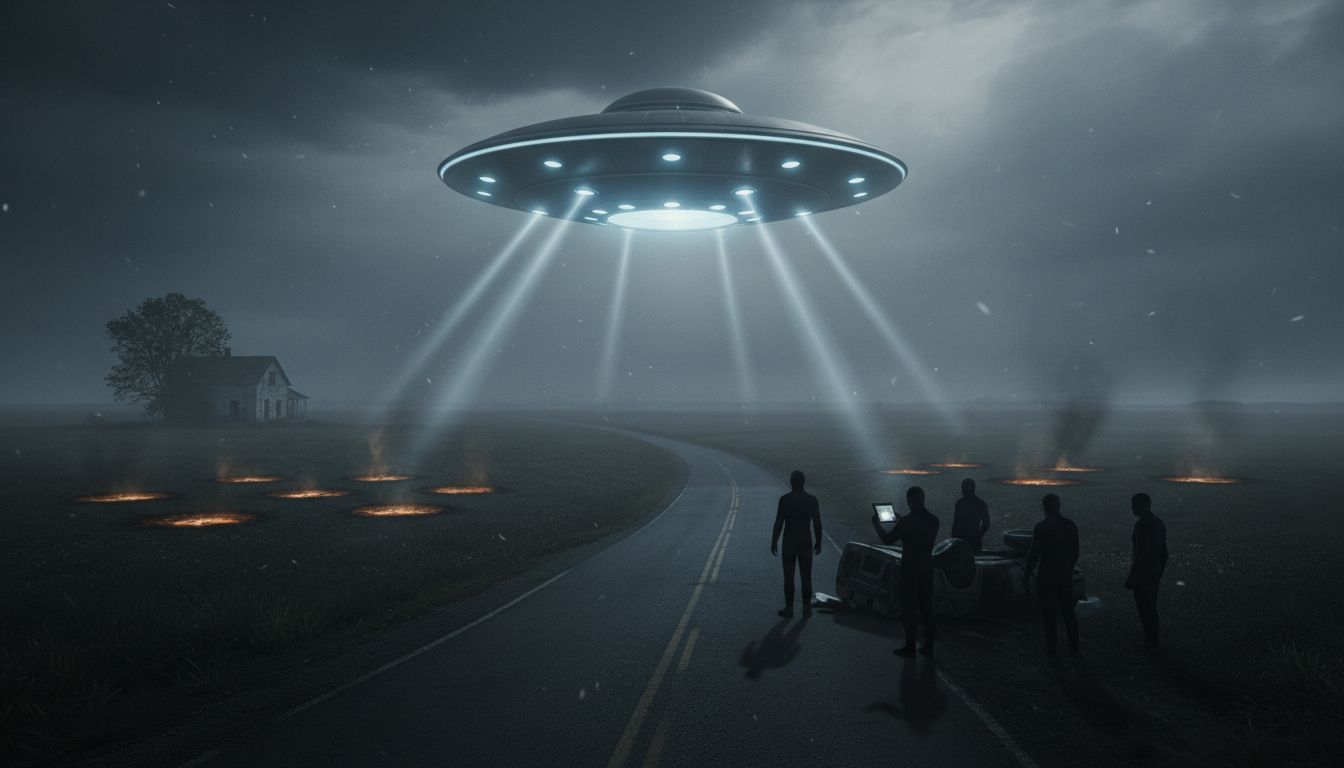
In recent weeks, renewed public interest in unidentified aerial phenomena (UAP) has been fueled by a Vice feature that catalogues seven particularly baffling sightings that have eluded definitive explanation by U.S. authorities. The cases span several decades, involve both civilian and military witnesses, and illustrate the persistent gaps in official documentation. While some incidents have been partially de‑classified, others remain shrouded in redacted reports or are outright omitted from public records, prompting analysts to question whether the government is unwilling or simply unable to provide clarity.
The Seven Unexplained Incidents
The 2004 “Nimitz” encounter – Navy pilots from the USS Nimitz carrier strike group captured infrared video of a “tic‑tac” shaped object performing maneuvers that defied known aeronautical capabilities. The Department of Defense later released the footage, but an accompanying investigative report concluded that “the sensor data could not be reconciled with any known aircraft.”
The 1997 Phoenix Lights – Over 200 residents reported a massive V‑shaped formation of lights drifting silently across Arizona. The Air Force initially attributed the phenomenon to flares dropped during a training exercise, a claim that was later retracted after witnesses, including local officials, disputed the explanation.
The 2015 O’Hare Airport sighting – A United Airlines flight crew and airport personnel observed a metallic disc hovering above Terminal 2 for several minutes before it accelerated upward at high speed. The Federal Aviation Administration (FAA) filed a brief incident report but classified the details, citing “national security concerns.”
The 2020 Pentagon UAP videos – Three separate clips released by the Office of the Director of National Intelligence (ODNI) show objects executing abrupt direction changes and rapid accelerations. An ODNI spokesperson emphasized that “the videos are authentic, but the nature and origin of the objects remain unknown.”
The 2022 “Lake Tahoe” radar anomaly – A civilian radar operator detected a high‑altitude, high‑speed target that appeared on multiple independent radar stations before vanishing. The Federal Aviation Administration’s Air Traffic Control (ATC) log records the event, yet no aircraft registration matches the data.
The 2023 “Mojave Desert” night‑time encounter – A group of pilots conducting a low‑altitude training sortie reported a luminous sphere that followed their formation for several minutes, emitting pulses of light. The U.S. Air Force’s investigative board issued a statement that “the incident remains under review, with no conclusive findings at this time.”
The 2025 “Alaska” magnetic disturbance – A research team studying the aurora borealis recorded a sudden, localized magnetic spike coinciding with a visual sighting of a disc‑shaped object. The National Oceanic and Atmospheric Administration (NOAA) released the magnetic data but declined to comment on the visual component, citing “ongoing scientific analysis.”
Government Stance and Transparency
The recurring theme across these cases is a lack of definitive public explanation. In a 2024 congressional hearing, Pentagon UAP director Dr. Sean Kirkpatrick acknowledged that “the data we have is compelling, yet we lack the means to fully characterize many of these phenomena.” Simultaneously, the Intelligence Community’s 2023 UAP Assessment report noted that “the majority of UAP incidents remain unexplained, and further collection and analysis are required.” Critics argue that extensive redactions in released documents hinder independent verification, while officials maintain that some details are withheld to protect sources and methods.
Ongoing Investigations and Scientific Interest
In response to mounting pressure, the Department of Defense established the All‑Domain Anomaly Resolution Office (AARO) in 2023, tasked with standardizing data collection across air, space, and maritime domains. AARO has begun collaborating with civilian researchers, leveraging sensor networks such as the All‑Sky Camera Array and commercial satellite telemetry. Academic institutions, including the University of Colorado’s Center for Astrophysics and Space Science, have called for a transparent, peer‑reviewed database to facilitate rigorous analysis.
Outlook
While the seven sightings highlighted by Vice underscore the enduring mystery surrounding UAPs, they also illustrate a gradual shift toward greater governmental acknowledgment of the phenomenon. As more data is systematically gathered and interdisciplinary partnerships expand, the hope among investigators is that future reports will move from “unexplained” to “explained.” Until then, the line between curiosity and concern remains thin, and the public will continue to watch closely for any substantive revelations from the agencies tasked with investigating the skies.


