Overview
Archaeologists have announced the first successful decipherment of a 2,000‑year‑old script uncovered at the ancient Mesoamerican metropolis of Teotihuacan. The breakthrough, led by Magnus Pharao Hansen and Christopher Helmke of the University of Copenhagen, appears in the latest issue of Current Anthropology and suggests the symbols represent an early Uto‑Aztecan writing system. If confirmed, the finding could fill a centuries‑old gap in our knowledge of the city’s language, social organization, and its links to later cultures such as the Cora, Huichol, and Nahuatl‑speaking Aztecs.
The Decipherment
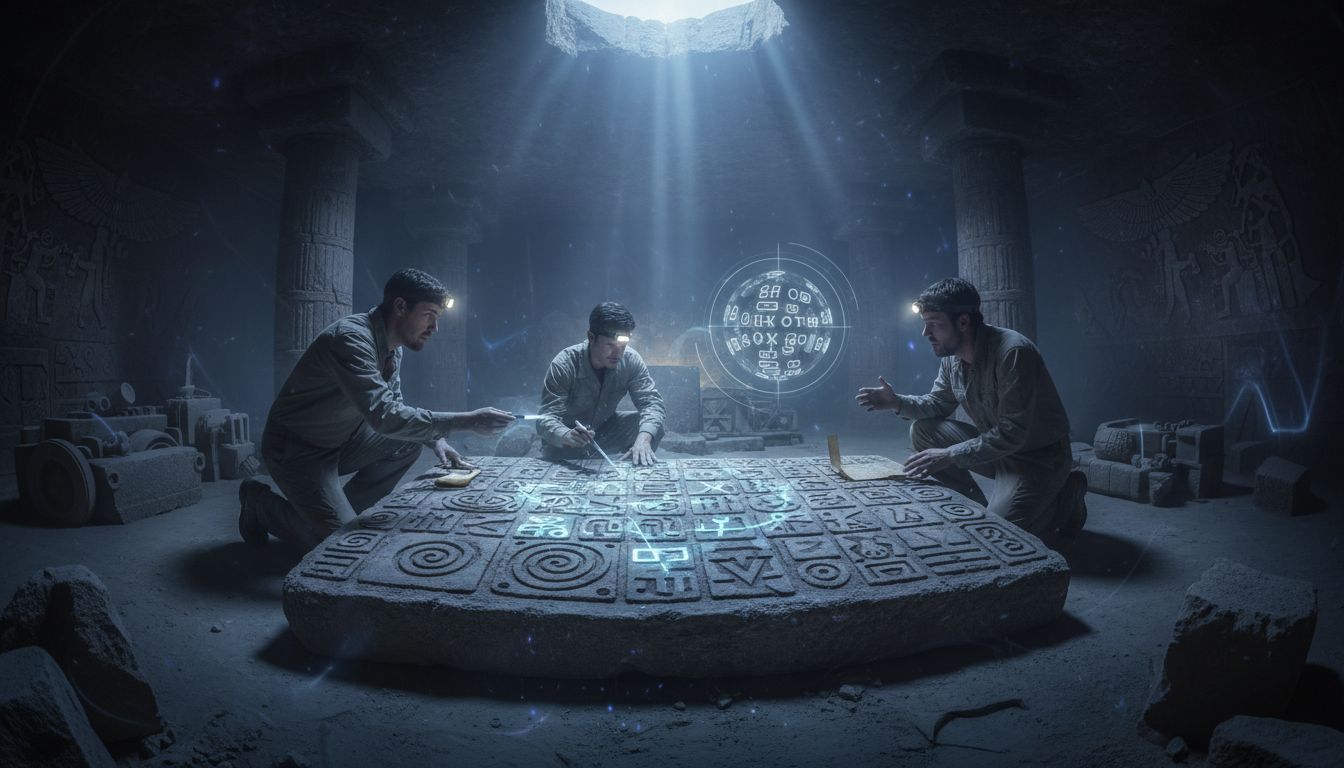
The research team focused on a corpus of glyphs etched on mural fragments, pottery sherds, and architectural plaster throughout the site’s central avenues. By cross‑referencing the symbols with known lexical items in modern Uto‑Aztecan languages, the scholars identified recurring patterns that correspond to basic nouns (e.g., “water,” “fire”) and grammatical markers. “We were able to map a consistent phonetic value to several of the most common signs,” Hansen explained in a press statement, “which then allowed us to reconstruct short phrases that match ritual terminology recorded in later Aztec codices.” Helmke added that the script shows evolutionary stages, hinting at a developmental trajectory from Teotihuacan to contemporary indigenous languages.
Implications for Teotihuacan Studies
For decades, scholars have debated whether Teotihuacan possessed a true writing system or relied solely on iconography. The new evidence tilts the balance toward the former, offering a tangible means to probe the city’s political hierarchy, religious practices, and trade networks. It also provides a plausible answer to the long‑standing question of what language the city’s inhabitants spoke—a mystery that has hampered attempts to connect Teotihuacan with later Toltec and Aztec societies. “Understanding their script gives us a direct line into their worldview,” noted Dr. Laura Mendoza, a Mesoamerican specialist at the National Institute of Anthropology and History, who was not involved in the study.
Parallel Breakthroughs in Global Archaeology
The Teotihuacan decipherment arrives amid a wave of high‑profile discoveries reshaping ancient histories worldwide. Recent radiocarbon revisions have pushed the chronology of Mohenjo‑Daro back by several centuries, suggesting the Indus Valley civilization may have flourished earlier than previously thought. In Europe, a Roman villa unearthed in southern England has yielded a mosaic floor with inscriptions that illuminate the daily lives of Roman soldiers stationed far from the empire’s core. Moreover, the nascent field of space archaeology—using satellite imaging and orbital LiDAR to locate hidden sites—has identified dozens of previously unknown pre‑Columbian settlements across the Amazon basin, underscoring how technology is accelerating the pace of discovery.
Looking Ahead
The research team plans to expand their corpus by analyzing symbols from peripheral Teotihuacan sites and comparing them with early texts from neighboring regions. If the proposed phonetic values hold up under peer review, a digital database of the script could be released, enabling scholars worldwide to test hypotheses about trade routes, mythic narratives, and administrative practices. As Hansen remarked, “Every new glyph we decode is another piece of the puzzle that brings Teotihuacan’s people back into the conversation of world history.” While the findings are still provisional, they promise to transform Teotihuacan from a “mysterious ruin” into a literate civilization whose written voice can finally be heard.


